August 28, 2026
Hardened Steel vs Ordinary Stainless: What Blade Steel Means for Your Doner Knife
What hardening actually does
Steel is iron with carbon — and its properties are set less by the recipe than by the heat treatment. Hardening means heating the steel and cooling it rapidly, locking its structure into a harder state, then tempering it back to controlled toughness. For a blade, that hardness translates into one thing above all: edge retention — how long the sharpened edge stays an edge under work.
Why it matters more for circular blades
A doner blade is not a chef's knife that cuts a few hundred strokes a day. On a busy cone it is in contact with meat for hours, spinning, with the whole circumference sharing the work. Small differences in edge retention multiply:
- A soft edge folds early → slices tear → you press harder → the edge folds faster. The spiral ends in wedge-shaped slices and daily frustration.
- A hardened edge keeps its geometry through the shift, so the daily touch-up is genuinely enough for weeks before a proper regrind.
The difference does not show at unboxing — both blades are sharp on day one. It shows in month two and three, in how often you sharpen and how soon the blade grinds down small. That is where cheap blade steel gets expensive.
Hardness is a trade-off, not a race
Harder is not automatically better. Push hardness too far and steel turns brittle — a bad property for a disc spinning at high RPM near hands. Blade steel is therefore tempered to a working balance:
| Property | Too soft | Balanced (blade steel) | Too hard |
|---|---|---|---|
| Edge retention | Poor | Good | Excellent |
| Toughness | High | Good | Brittle |
| Sharpening | Easy but constant | Straightforward | Difficult |
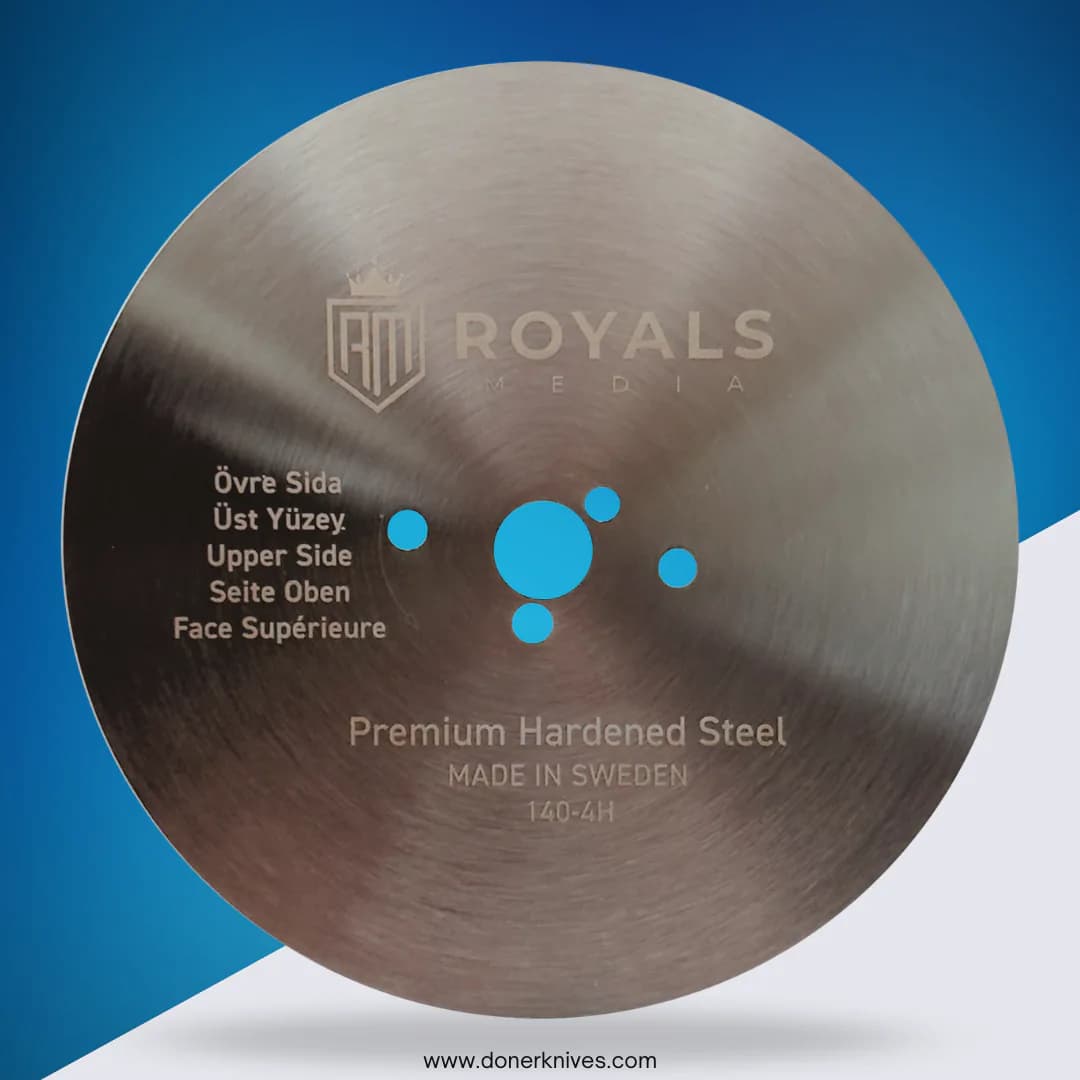
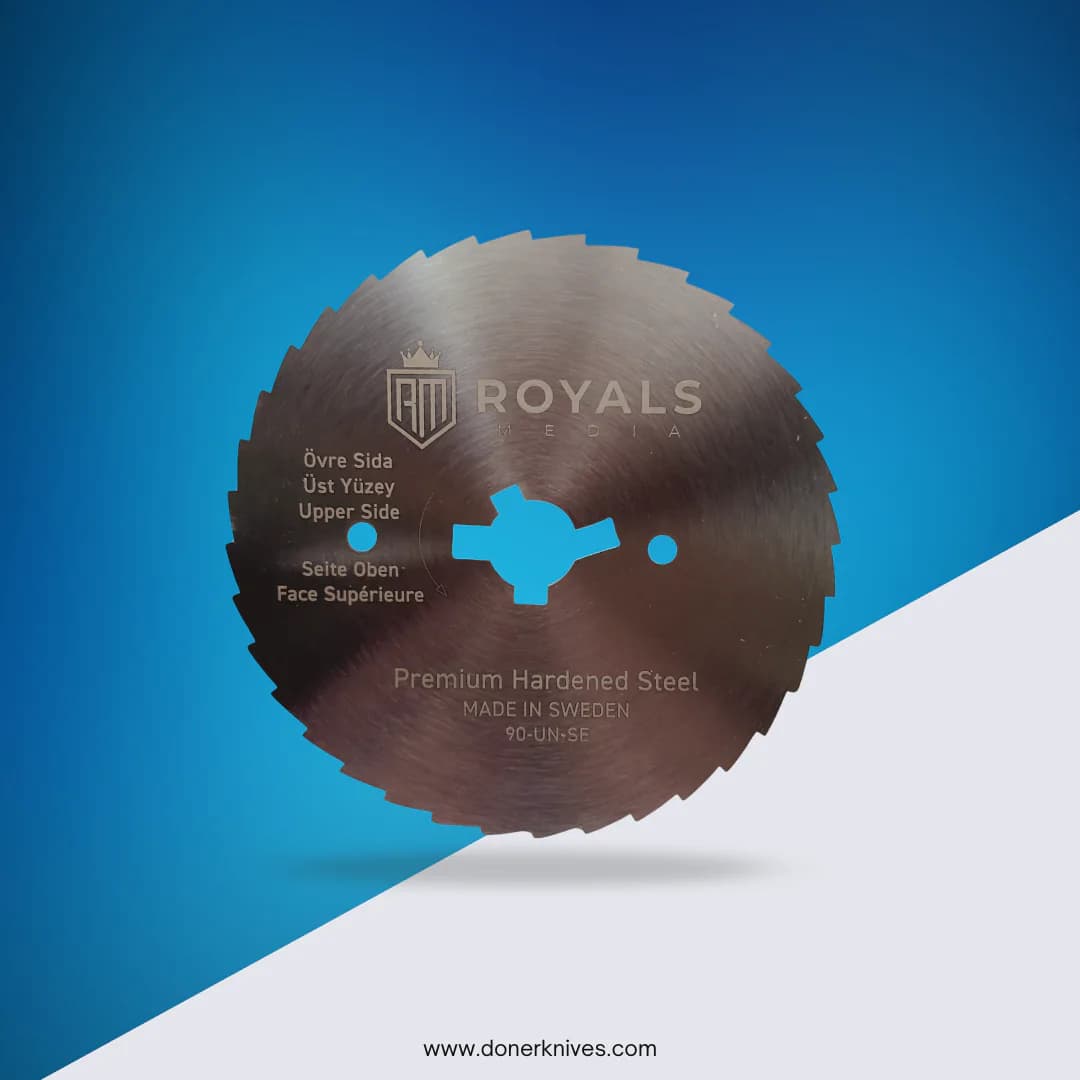
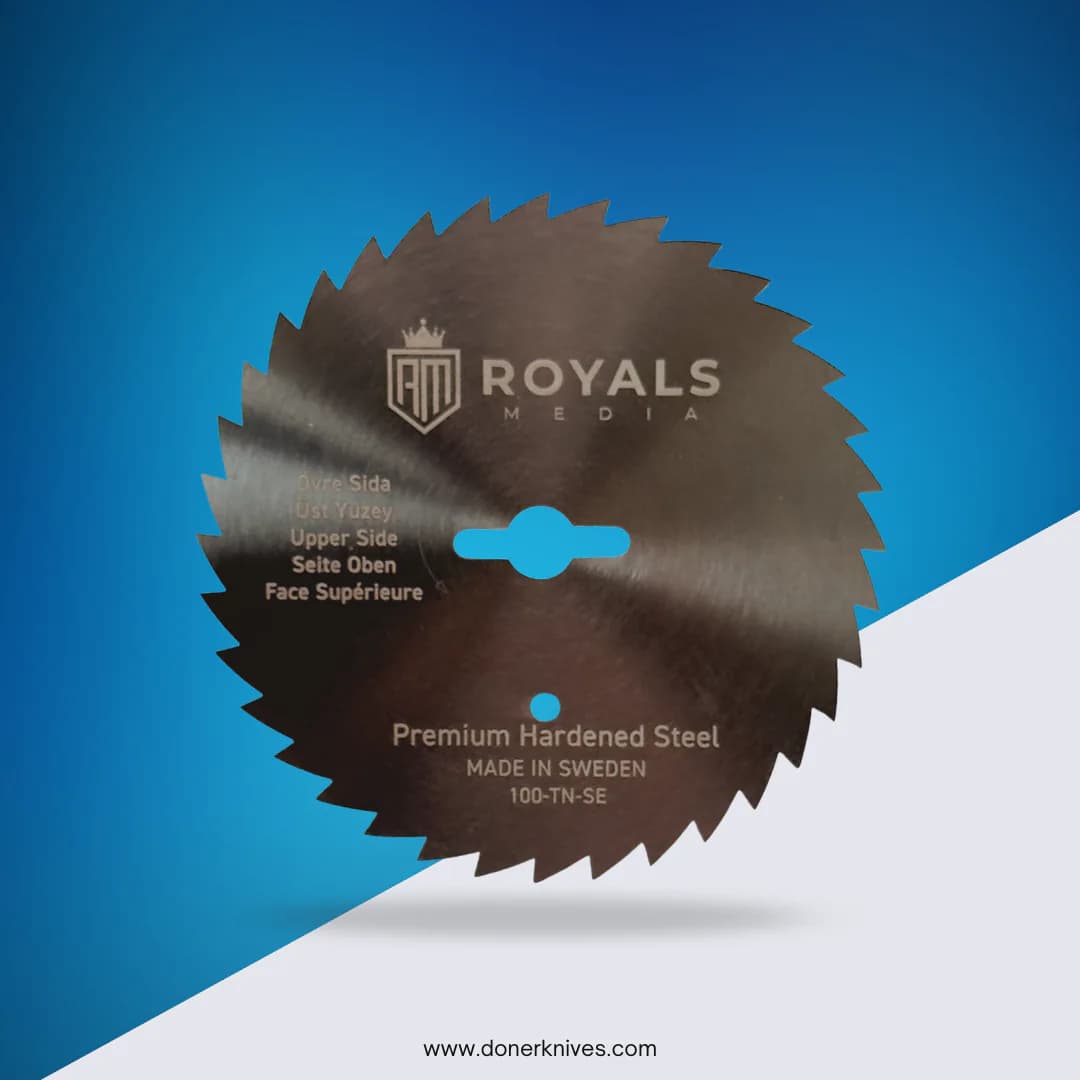
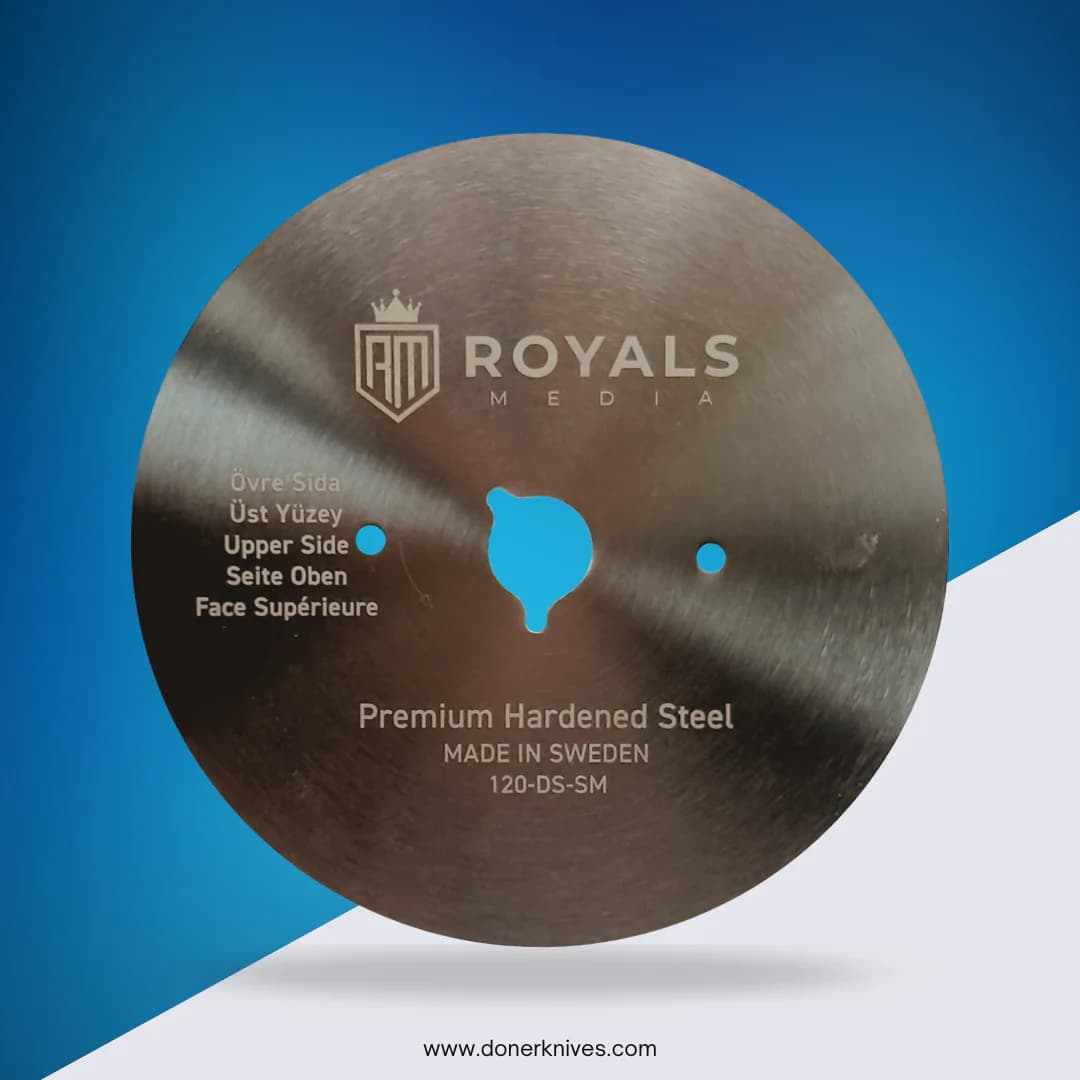
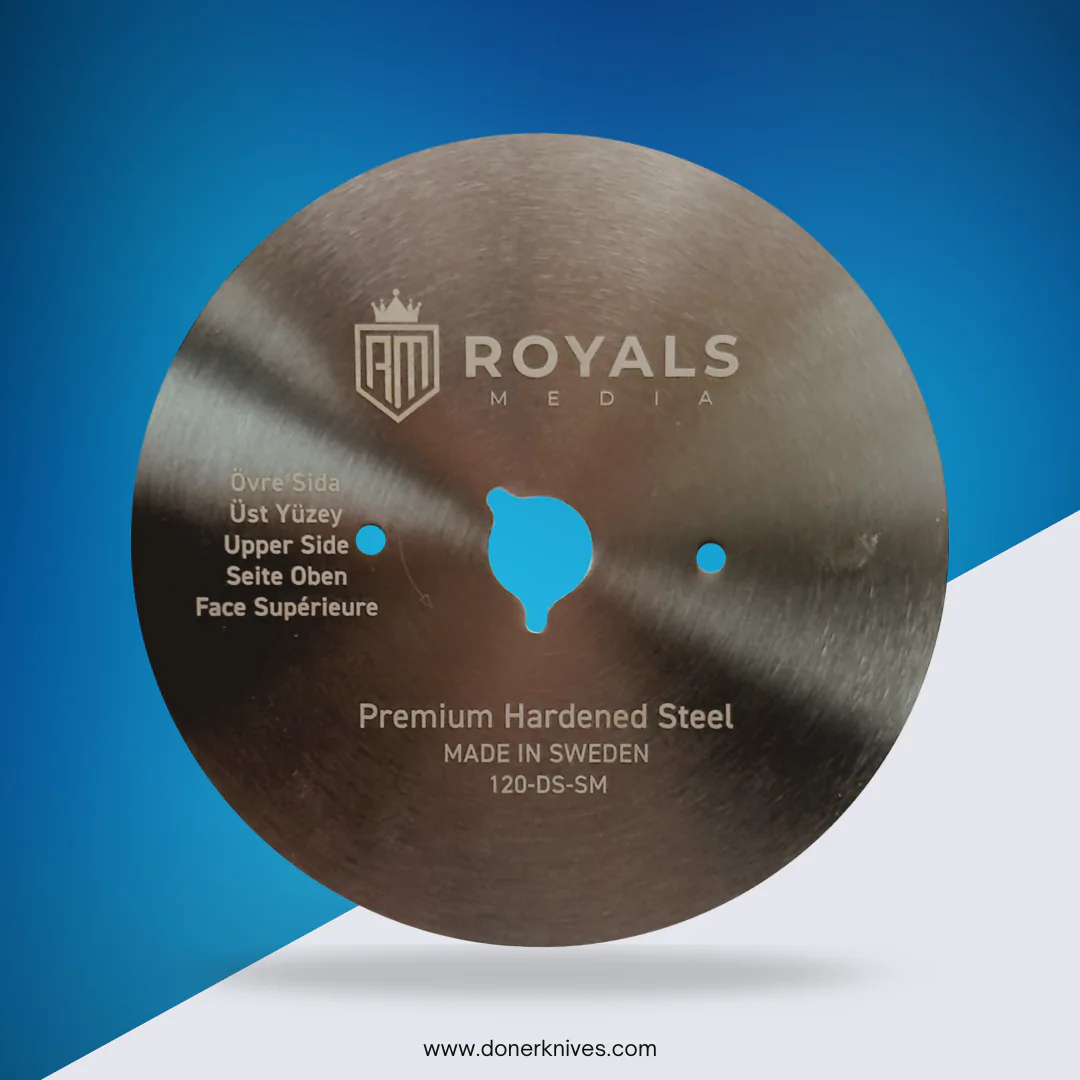
Our blades are stamped from premium hardened steel tempered for exactly this middle ground: an edge that lasts, on a disc that stays tough.
Corrosion: mostly a care question
Blade steels resist rust under normal kitchen conditions — rinse, dry, store dry. What defeats any steel is standing moisture and dishwasher chemistry: detergent attacks the fine edge first, which is why dishwashers dull blades long before they visibly rust. The care rules are the same for every steel: wash by hand, dry, cover.
What this means when buying
You cannot see heat treatment in a product photo — but you can see its consequences in use. Signs you are holding a properly treated blade: the edge survives full shifts without collapsing, resharpening restores it fully, and the blade wears by slow even grinding rather than chipping. All blades in our range are hardened steel, from €18 excl. VAT — and when repeated sharpening has finally consumed the hardened zone, that is your replacement signal.
FAQ
Is stainless steel bad for doner blades?
No — corrosion resistance is valuable in a kitchen. The point is that stainless without proper hardening trades away edge retention. Good blade steel is both: corrosion-resistant enough for kitchen life and hardened for lasting sharpness.
How can I tell if a blade is properly hardened?
In use: the edge holds through shifts, sharpening restores it fully, and wear is slow and even. An edge that folds within hours, or feels gummy on the stone, points to soft steel.
Do hardened blades rust?
Under normal care — rinse, dry, store dry — no. Standing moisture and dishwashers are the enemies, for every blade steel.
Are harder blades more fragile?
Beyond a point, yes — which is why blade steel is tempered to a balance rather than maximum hardness. A quality blade is hard at the edge and tough in the disc.
Related articles
Get the right blade for your machine
Professional doner knife blades. Fast delivery across Europe.