July 28, 2026
How Often Should You Replace a Doner Blade? Wear Signs and Timing
The short answer
There is no fixed date — a doner blade gets replaced when wear visibly degrades the work. In daily professional use that typically means every few months; with lighter use, correspondingly less often. What decides is not the calendar but three measurable signs: shrinking diameter, fading cut quality despite sharpening, and mechanical damage.
Wear signs that announce a replacement
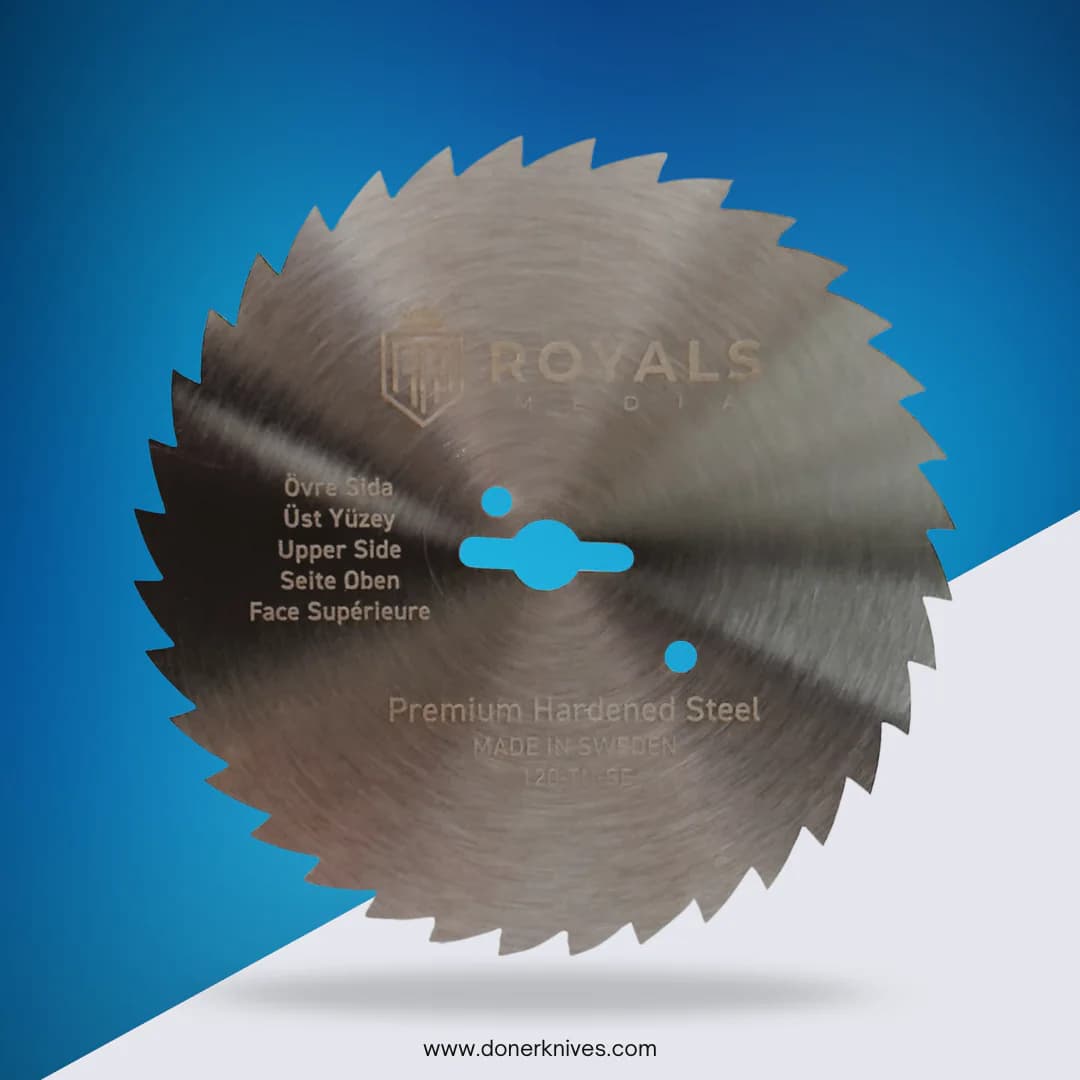
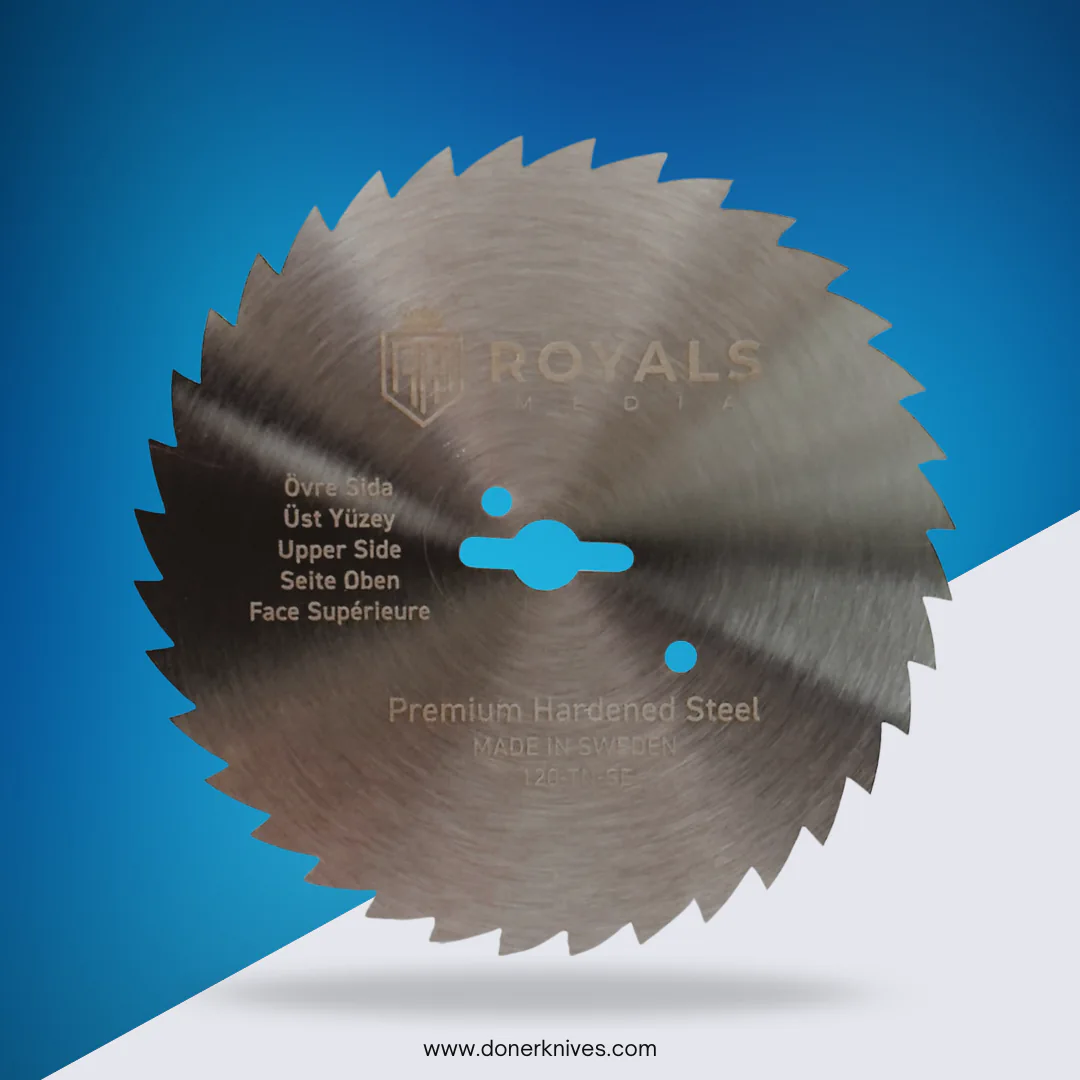
1. The diameter has visibly shrunk. Every sharpening removes material. A 120 mm blade that has become clearly smaller after many sharpening cycles no longer cuts in the geometry the machine was built for — contact pressure is off, and slices turn uneven.
2. Sharpening lasts shorter and shorter. Freshly sharpened, the blade cuts well, but it tears again after a single shift — the sign that the hardened edge zone has been ground away. From here, sharpening stops paying off.
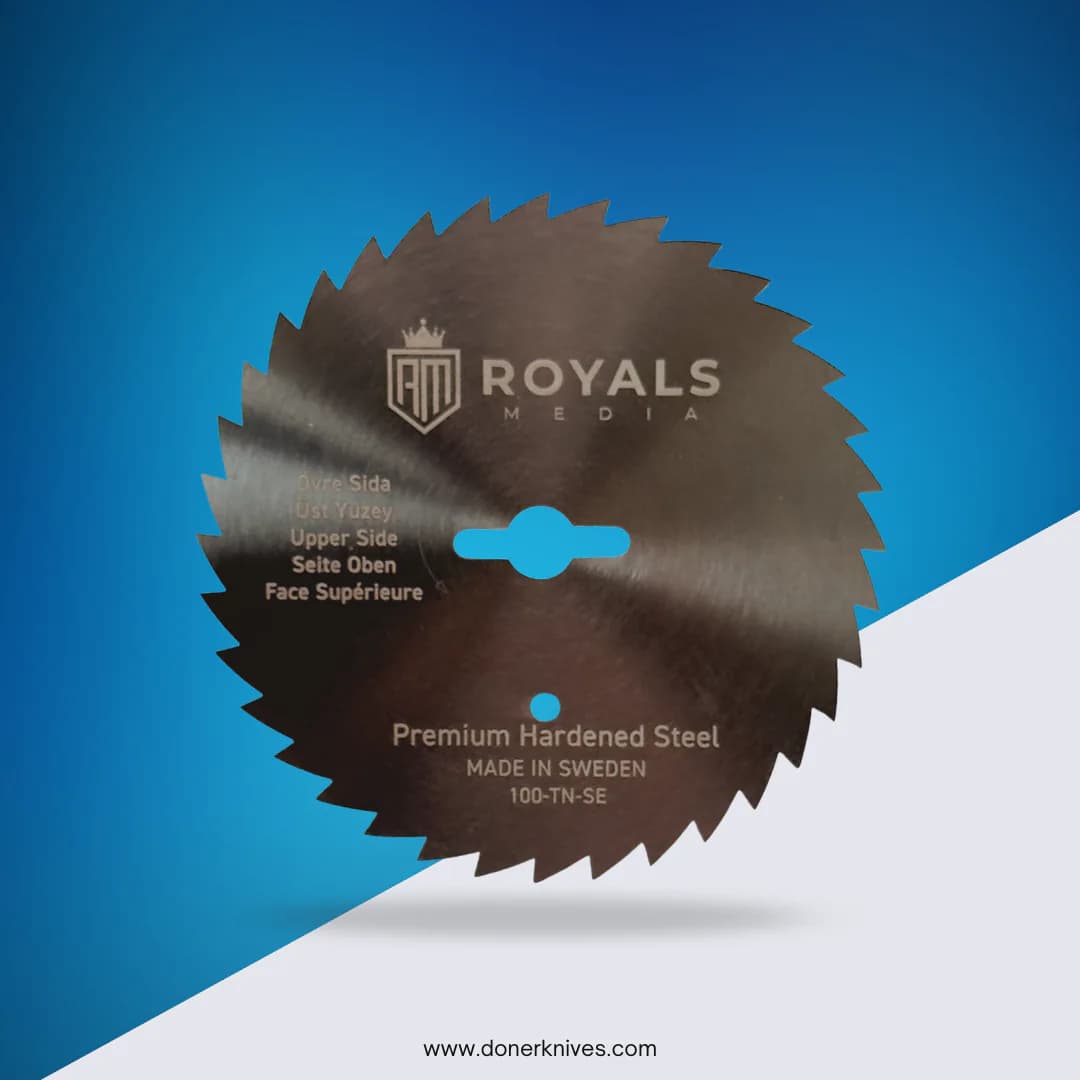
3. Mechanical damage. Broken teeth on serrated blades, cracks, warping or a wobbling, vibrating run: replace immediately. A damaged blade is a safety risk, not a saving.
4. The cut picture tips over. Wedge-shaped, frayed or unevenly thick slices despite correct technique point to a spent edge.
Typical intervals by usage
| Usage | Sharpening | Replacement |
|---|---|---|
| Daily operation, several cones | light touch-up per shift | every 2–4 months |
| Daily operation, one cone | several times a week | roughly every 4–6 months |
| Weekend/part-time operation | weekly | roughly every 6–12 months |
These ranges are guidelines — meat type, marinade, freezing depth and technique shift them in both directions.
Make it last: how to spare the blade
- Rinse and dry after the shift, no dishwasher — detergent and heat dull the edge prematurely.
- Cut flat and with light pressure; pressing wears.
- Match the edge to the meat: serrated or smooth.
Planned replacement beats forced replacement
The most expensive replacement is the unplanned one — mid-service, with waiting time for a spare. Keep a reserve blade on hand: blades cost from €18 excl. VAT and arrive in 2–5 business days. Which blade fits your machine is covered in the specifications guide.
FAQ
How often does a doner blade need sharpening?
In daily operation: a light touch-up every shift, a proper resharpening as soon as touch-ups stop holding. Sharpening is maintenance — replacement comes when sharpening no longer helps.
How do I know sharpening is no longer enough?
When the blade tears again within hours of sharpening, or when the diameter has visibly shrunk from many sharpening cycles. Both show the edge is spent.
Can I keep cutting with a damaged blade?
No. Broken teeth, cracks or warping are a safety risk and ruin the cut — replace immediately.
Is a reserve blade worth it?
Yes. An unplanned stop mid-service costs more than the blade. From €18, the reserve is the cheapest insurance in the shop.
Related articles
Get the right blade for your machine
Professional doner knife blades. Fast delivery across Europe.