July 17, 2026
Doner Knife Blade Specifications Explained: Size, Mount, Edge & Steel
What doner knife blade specifications actually mean
Every doner knife blade is described by four core specifications: diameter, mounting hole pattern, edge type and steel quality. Reading them correctly is the difference between a blade that snaps onto your machine in seconds and one that goes straight back in the box. This guide explains each specification, so you can match any blade to any kebab slicer with confidence.
Blade diameter: 80 mm to 140 mm
The diameter is always measured across the full circle of the blade, in millimetres. It must match what your machine's motor head is built for — a blade that is too large will not clear the guard, and one that is too small cuts unevenly.
| Diameter | Typical use | Machines |
|---|---|---|
| 80 mm | Compact slicers, small doner cones | Universal, Ceylan, Gurden, Potis |
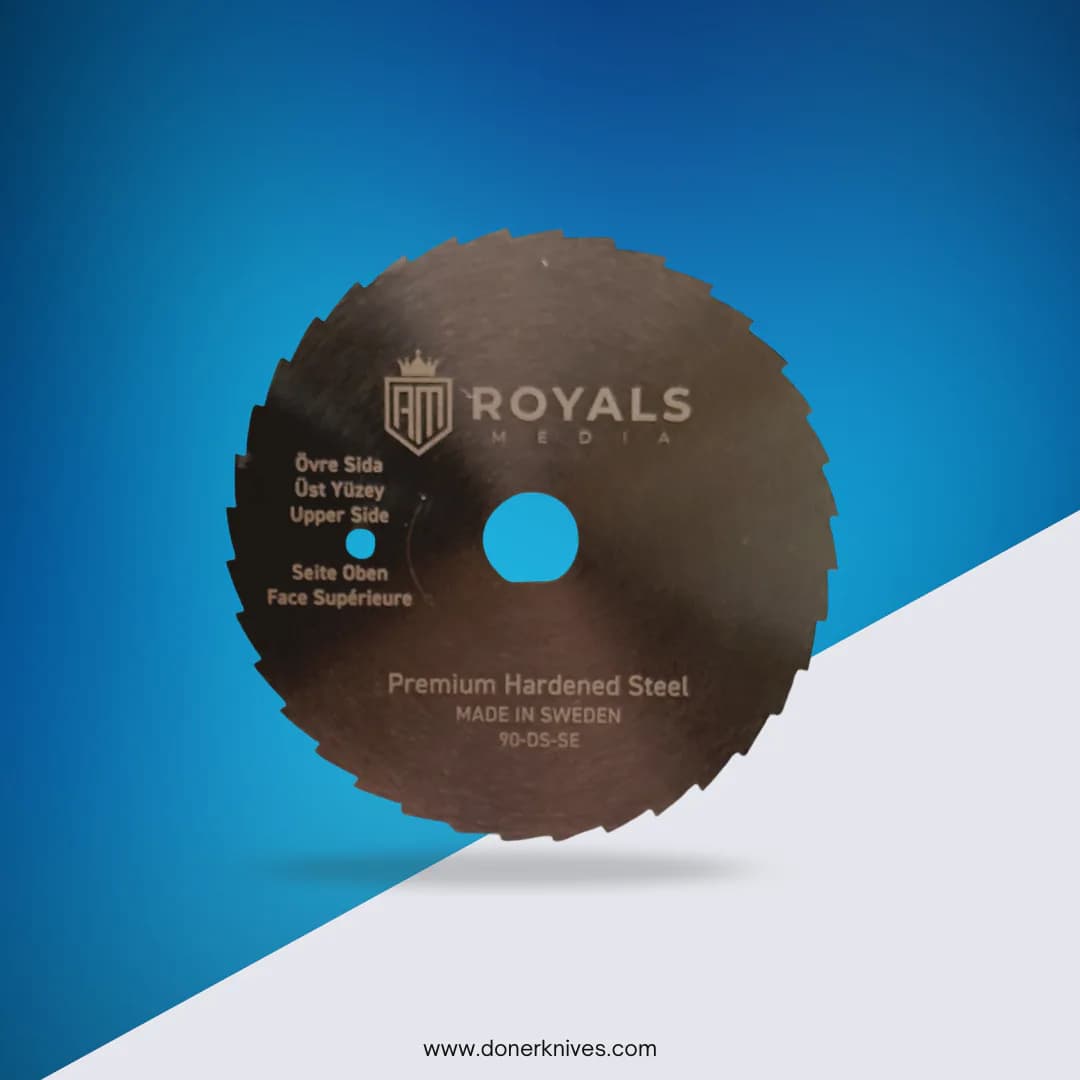
| 90 mm | The most common size for handheld slicers | Dost, Universal |
| 100 mm | Mid-size machines, faster slicing | Tandir |
| 120 mm | High-volume restaurants | Dost, Jet, Tandir |
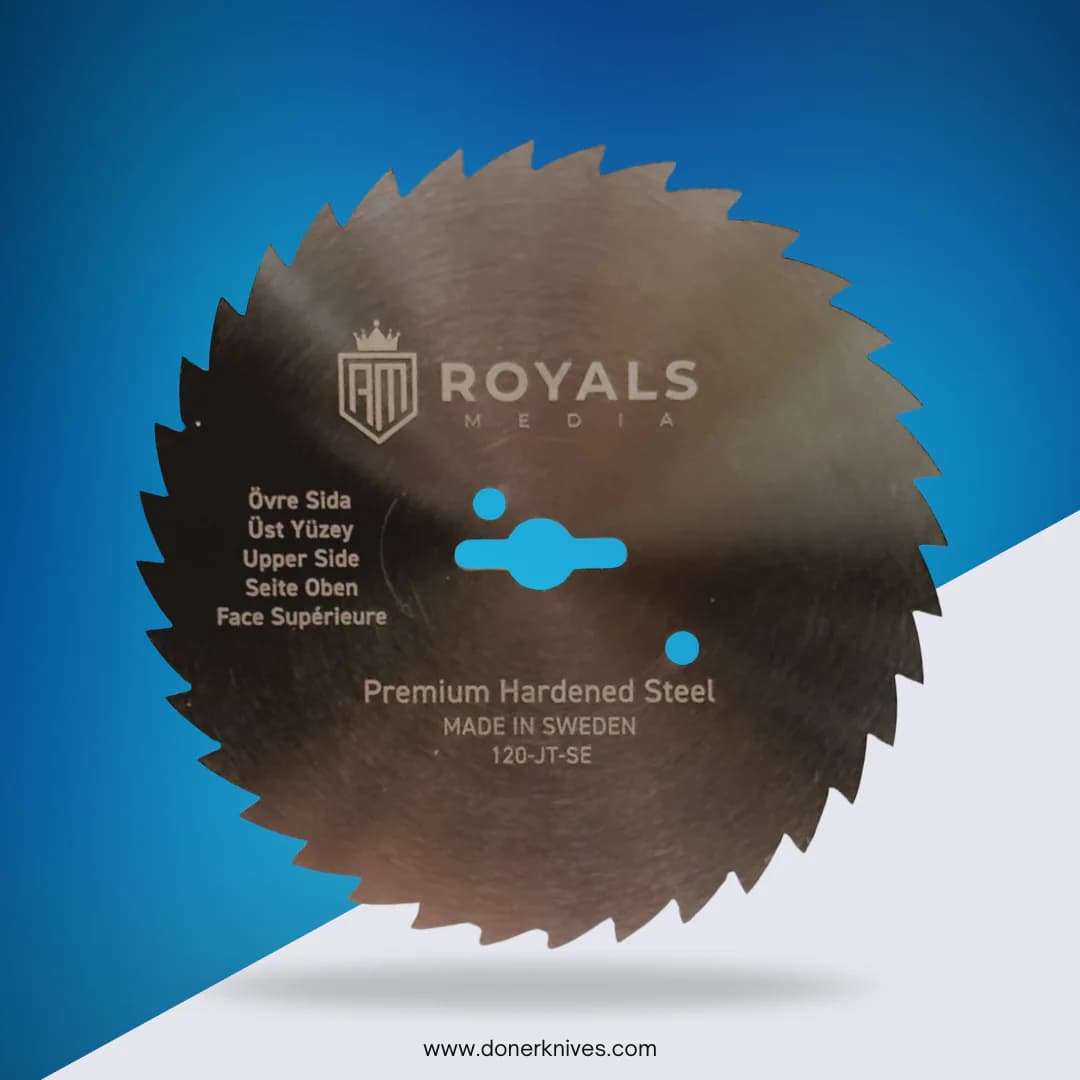
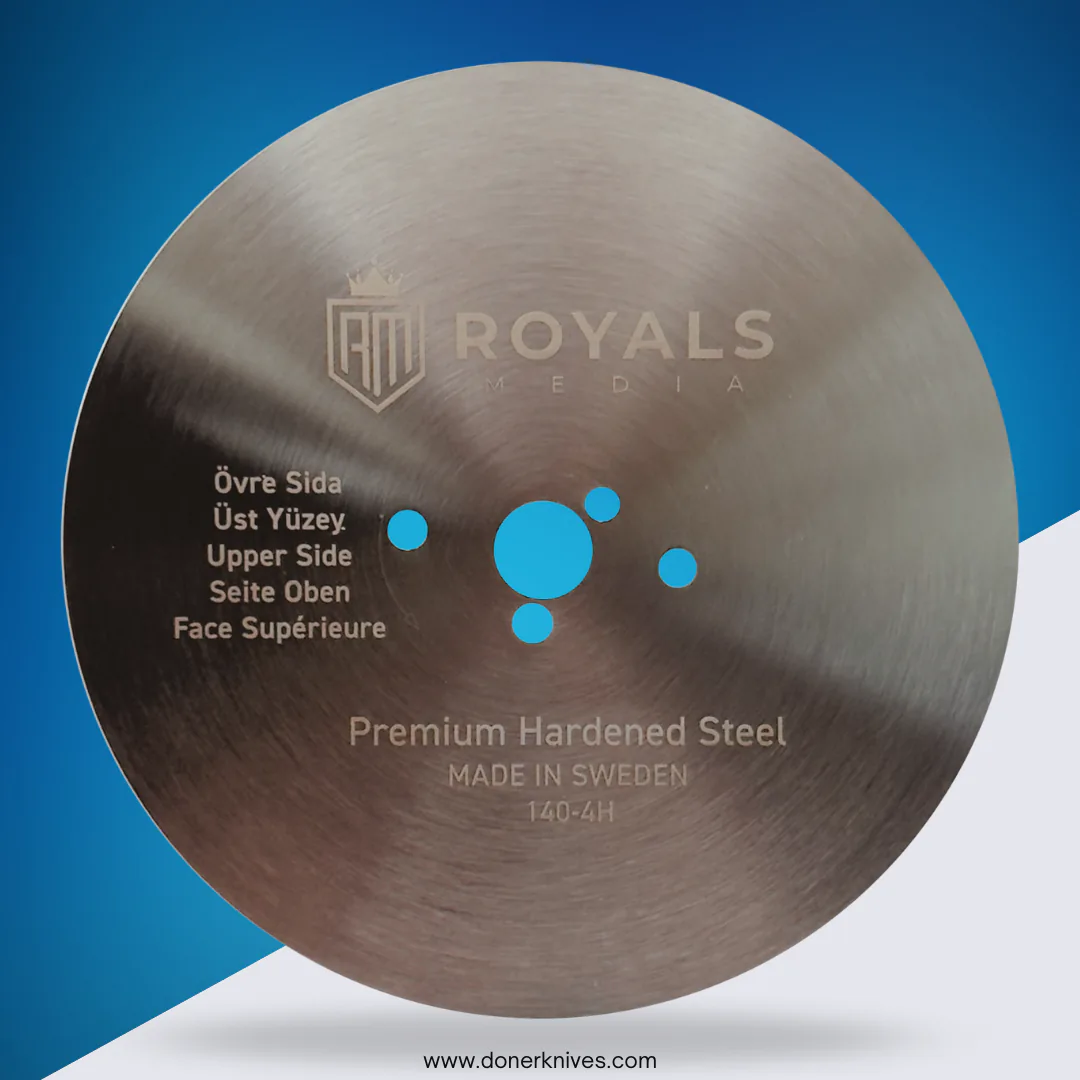
| 140 mm | Large machines with multi-hole mounts | Alkadur, Atalay, IDM, Korkmaz, Potis |
If you are unsure which size your machine takes, our size comparison guide walks through every diameter in detail.
Mounting and hole pattern
The centre of the blade tells you how it attaches to the machine shaft:
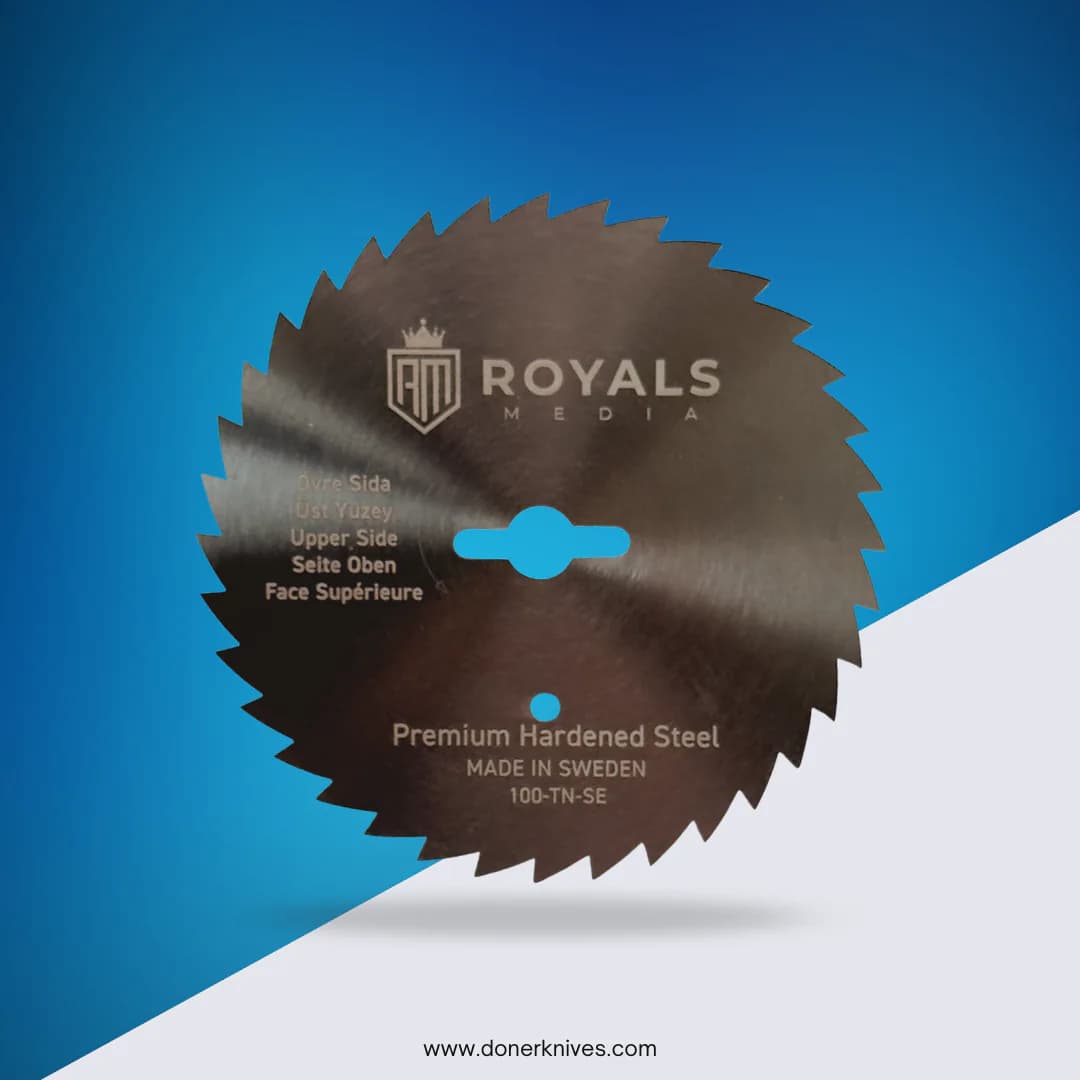
- Universal keyhole mount — a shaped centre cut-out with a small side pin hole. Fits most 80 mm and 90 mm machines, which is why these blades are labelled "Universal".
- Dost mount — a round centre hole sized for Dost machine shafts (90 mm and 120 mm).
- Jet and Tandir mounts — brand-specific centre cut-outs for 120 mm (Jet, Tandir) and 100 mm (Tandir) machines.
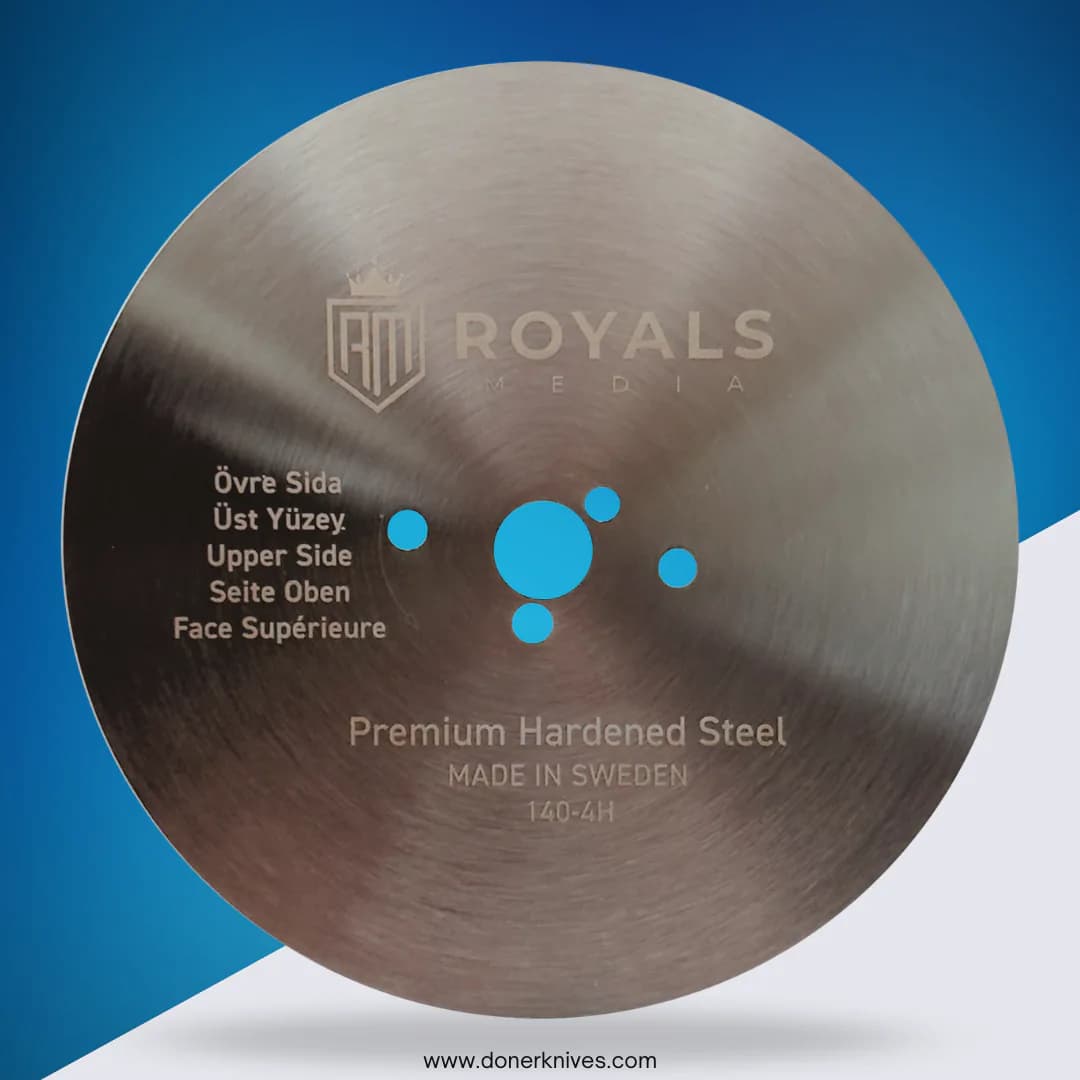
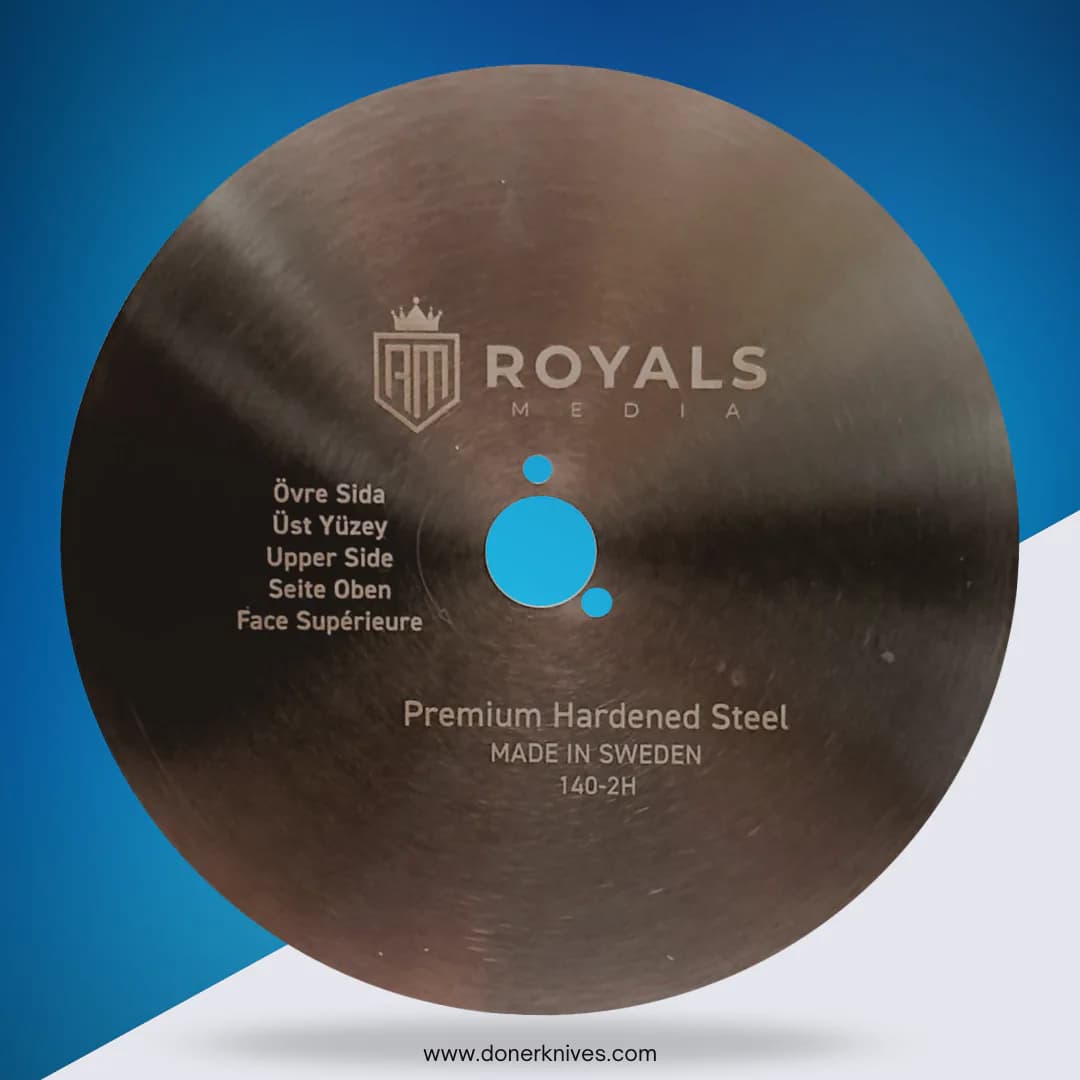
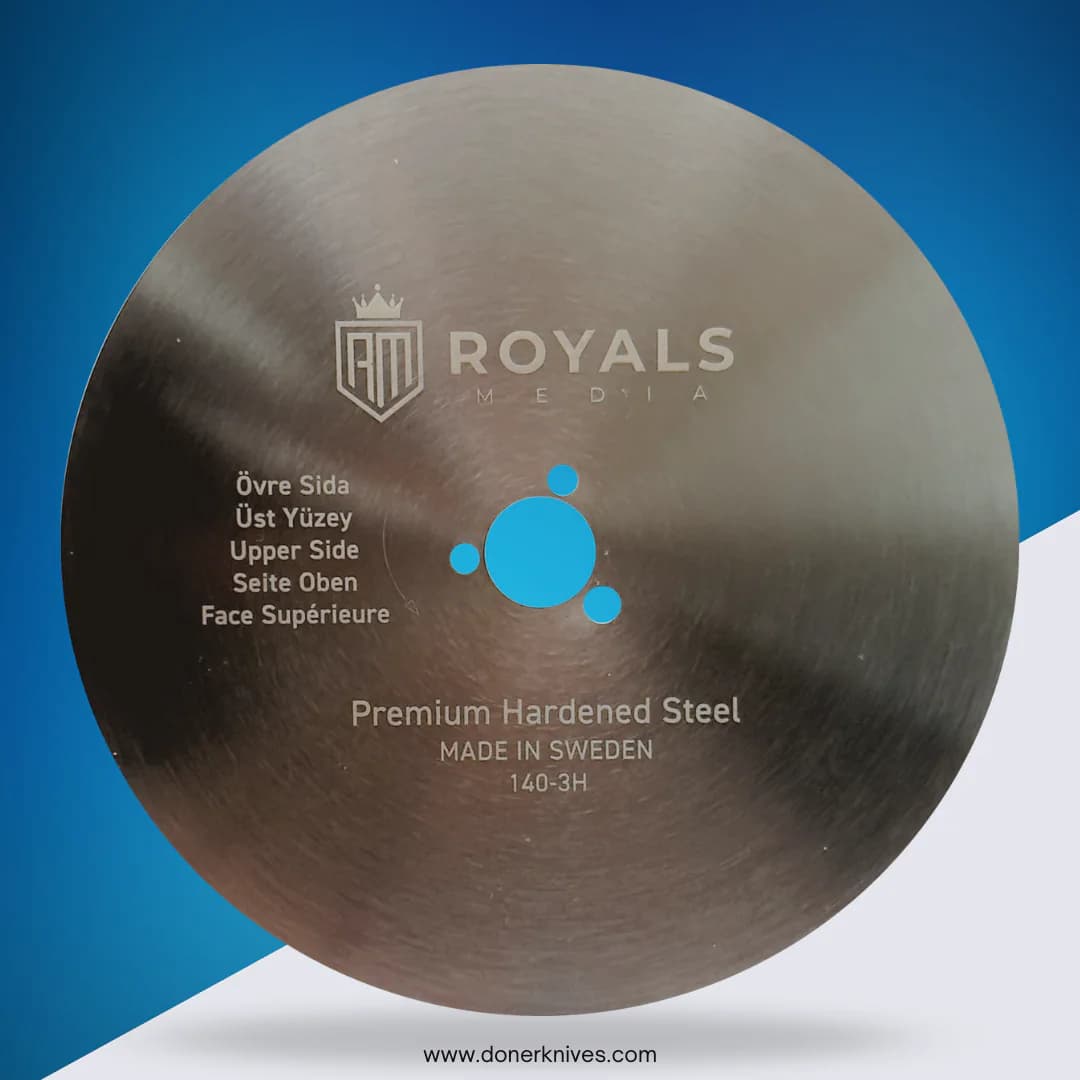
- 2, 3 or 4 hole (140 mm) — large blades are bolted on through separate screw holes instead of a keyhole. Count the holes on your old blade: 2-hole, 3-hole (Alkadur, IDM, Korkmaz) or 4-hole (Atalay).
The safest method when replacing a blade: take the old blade off and compare the centre cut-out and hole count before ordering.
Edge type: serrated or smooth
Both edge types come in every size, and the choice affects how the blade cuts:
- Serrated edge — teeth grip fibrous, marinated meat and keep cutting well between sharpenings. The usual choice for classic doner and gyros cones.
- Smooth edge — a clean continuous edge that leaves the neatest cut surface, preferred for thin slicing and easier resharpening.
Our serrated vs smooth comparison covers the trade-offs in depth if you are switching from one to the other.
Steel and hardness
All DonerKnives blades are stamped from premium hardened steel. Hardened steel keeps its edge noticeably longer than untreated stainless sheet, which matters when a blade runs several hours per day. The blades resist corrosion under normal kitchen cleaning — rinse and dry after service, and avoid dishwashers, which dull the edge prematurely.
Quick compatibility table
| Machine | Compatible blades |
|---|---|
| Dost | 80/90 mm Universal, 90 mm Dost, 120 mm Dost |
| Jet | 120 mm Jet |
| Tandir | 100 mm Tandir, 120 mm Tandir |
| Alkadur, IDM, Korkmaz | 140 mm Universal 3-hole |
| Atalay | 140 mm Universal 4-hole |
| Ceylan, Gurden | 80 mm Universal |
| Potis | 80 mm Universal, 140 mm Universal |
Blades start from €18 excl. VAT with delivery across Europe in 2–5 business days. See the full range on our products page or our 2026 buyer's guide.
FAQ
How do I know which blade fits my doner machine?
Match three specifications: the diameter your machine is built for, the centre mount shape (keyhole, round or bolt holes) and — for 140 mm blades — the number of screw holes. Comparing against your old blade is the most reliable check.
What does "Universal" mean on a doner blade?
Universal blades use a keyhole-shaped centre mount with a side pin hole that fits most common slicer brands in that diameter, including Ceylan, Gurden and Potis machines.
Are serrated blades better than smooth blades?
Neither is better overall. Serrated edges grip marinated, fibrous meat and stay effective longer between sharpenings; smooth edges give the cleanest cut surface and are easier to resharpen.
How often should a doner blade be replaced?
With daily professional use, expect to resharpen regularly and replace the blade when it has been ground down noticeably smaller than its original diameter, typically after several months of service.
Can I put a 120 mm blade on a 100 mm machine?
No. The blade diameter must match the machine's design — an oversized blade will not fit under the guard, and mounts differ between sizes as well.
Related articles
Get the right blade for your machine
Professional doner knife blades. Fast delivery across Europe.