June 10, 2026
Best Doner Knife Blades 2026: Complete Buying Guide
Choosing the best doner knife blade for your machine is the difference between clean, even slices that keep customers coming back — and torn meat, wasted product and a kebab machine that struggles through every service. This guide compares every blade type we stock, explains exactly how to match a blade to your machine, and answers the questions we hear most often from restaurant owners across Europe.
Whether you run a high-volume kebab shop slicing 60+ kg a day or a small grill with a tabletop cutter, the right blade comes down to three things: size, mounting type and edge style. Let's break them down.
How to Choose a Doner Knife Blade: 4 Key Factors
1. Blade diameter. Doner machine blades come in standard diameters from 80mm up to 140mm. Your machine's manual states the supported size — or simply measure your current blade across its widest point. Using the wrong diameter means the blade either won't mount or won't reach the meat properly.
2. Mounting type. Brand-specific blades (Jet, Dost, Tandir) match the bolt pattern of those machines exactly. Universal blades fit a wide range of machines, and the larger 140mm blades come in 2-hole, 3-hole and 4-hole versions — count the screw holes on your current blade before ordering. If you are unsure, our compatibility chart maps blades to machine models.
3. Edge style: serrated or smooth. Serrated blades grip and cut crusted, marinated meat with the classic doner texture. Smooth blades produce thinner, cleaner slices — ideal for shawarma and gyros. More on this below.
4. Steel quality. A professional doner blade should be stainless steel with a precision-ground edge. Cheap uncoated blades dull quickly, can discolour, and in the worst case damage your machine's blade mount.
Quick Comparison: All Doner Knife Blades 2026
| Blade | Fits | Edge | Price |
|---|---|---|---|
| 80mm Universal | Most small/tabletop machines | Smooth or serrated | from €18 |
| 90mm Universal | Most compact machines | Smooth or serrated | from €19 |
| 90mm Dost | Dost 090 series | Smooth or serrated | from €19 |
| 100mm Tandir | Tandir 100 series | Smooth or serrated | from €20 |
| 120mm Jet | Jet 120 series | Smooth or serrated | from €28 |
| 120mm Dost | Dost 120 series | Smooth or serrated | from €28 |
| 120mm Tandir | Tandir 120 series | Smooth or serrated | from €28 |
| 140mm Universal 2-hole | Large machines, 2-bolt mount | Smooth | from €42 |
| 140mm Universal 3-hole | Large machines, 3-bolt mount | Smooth | from €42 |
| 140mm Universal 4-hole | Large machines, 4-bolt mount | Smooth | from €42 |
All blades ship fast across Europe — shipping cost is shown at checkout.
Best Doner Knife Blades by Machine Type
Best for Jet machines: 120mm Jet blade
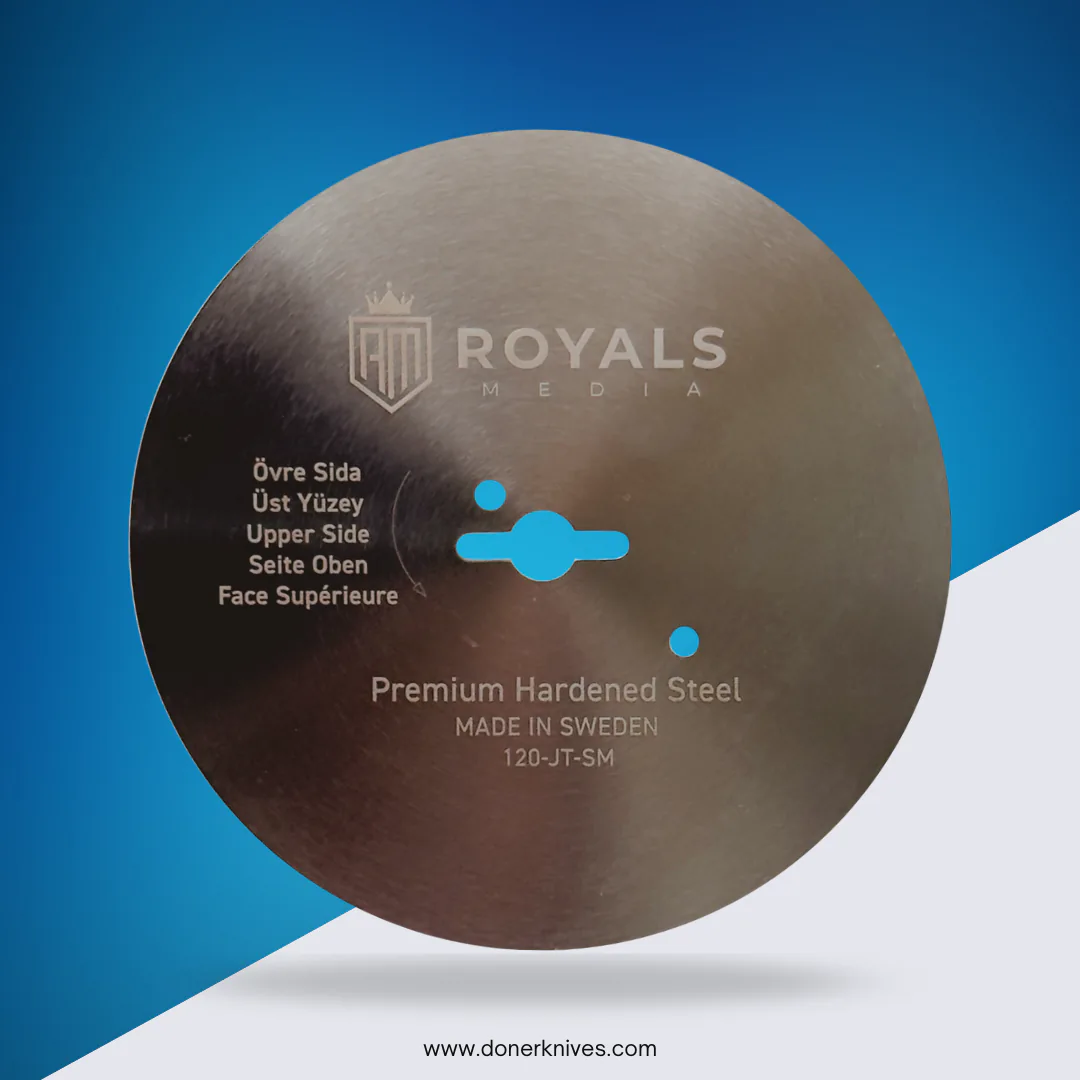
The Jet 120 is one of the most common electric doner cutters in European kebab shops. The 120mm Jet serrated blade is our top pick for classic doner texture on these machines, and the smooth version is the choice for thin shawarma-style slicing. We also have a dedicated Jet 120 replacement blade guide.
Best for Dost machines: 90mm or 120mm Dost blade
Dost machines come in two common blade sizes. The compact Dost 090 takes the 90mm Dost blade, while the larger Dost 120 series uses the 120mm Dost blade. Check your model plate before ordering — fitting a 90mm blade on a 120 machine leaves the cut short.
Best for Tandir machines: 100mm or 120mm Tandir blade
Tandir cutters are workhorses in high-volume shops. The 100mm Tandir blade fits the Tandir 100 series, and the 120mm Tandir blade fits the 120 series. Both come in serrated and smooth versions.
Best universal pick: 80–140mm Universal blades
If your machine is unbranded or you can't identify the model, universal blades are the safe route. The 80mm and 90mm sizes cover most compact machines, and the 140mm series (2-hole, 3-hole, 4-hole) covers large commercial cutters. Before you order, read are universal doner blades really universal? — it explains the few cases where a brand-specific blade is the better buy.
Serrated vs Smooth: Which Edge Style Is Best?
Serrated blades bite into the crispy, caramelised outer layer of the meat cone and produce the slightly rough, classic doner texture most kebab customers expect. They stay effective a little longer between sharpenings because the teeth keep gripping even as the edge wears.
Smooth blades glide through the meat and produce thin, even, clean-cut slices — the standard for shawarma, gyros and presentation-focused dishes. They reward frequent honing with outstanding slice quality.
Many shops keep one of each: serrated for service, smooth as backup or for menu items that need finer slices. For the full breakdown, see our serrated vs smooth comparison.
Blade Care: Make Your Doner Knife Last
A professional blade should last 6–12 months in daily commercial use. Three habits make the difference:
- Clean after every shift. Meat residue and marinade acids corrode even stainless steel over time. Wash, dry and remount.
- Hone regularly, sharpen when needed. A dull blade tears instead of slicing — if your machine suddenly cuts poorly, the blade is the first thing to check. Our guide on what to do when your doner blade stops cutting properly covers diagnosis step by step.
- Replace on schedule. Uneven cuts, visible nicks or discolouration mean it's time. Swapping a blade takes minutes — here's how to change a doner knife blade.
Frequently Asked Questions
What is the best doner knife blade for a restaurant?
For most kebab restaurants, a serrated blade matched to your machine brand (Jet, Dost or Tandir) is the best choice — it delivers the classic doner texture and handles high volume. If you slice shawarma or gyros, choose the smooth version of the same blade. Expect to pay €18–€42 for a professional-quality blade.
How do I know which blade fits my doner machine?
Check the machine's model plate or manual for the blade diameter, then count the mounting holes on your current blade. Brand machines (Jet 120, Dost 090/120, Tandir 100/120) take same-brand blades; for everything else, measure the diameter and use a universal blade with the matching hole count.
How often should a doner knife blade be replaced?
In daily commercial use, every 6 to 12 months. Replace sooner if you see uneven slicing, nicks in the edge, or the meat starts tearing instead of cutting cleanly — a worn blade wastes meat and slows down service.
Are doner knife blades dishwasher safe?
We recommend washing blades by hand with hot water and degreasing detergent, then drying immediately. Dishwasher salt and long humid cycles attack the edge and can cause discolouration, even on stainless steel.
Do you ship doner knife blades across Europe?
Yes — we ship across Europe; shipping cost is shown at checkout. Orders are dispatched from our warehouse and typically arrive within a few working days.
Conclusion: The Right Blade Pays for Itself
The best doner knife blade in 2026 isn't one single product — it's the blade that matches your machine's size and mount, with the edge style your menu demands. Identify your machine, choose serrated for classic doner or smooth for fine slicing, and replace on schedule. A correctly matched, sharp blade cuts meat waste, speeds up service and pays for itself many times over.
Not sure which blade your machine takes? Start with the compatibility chart or browse all blades.