
June 23, 2026
Best Doner Knife Blade for Dost 90 Machine: Expert Guide
Introduction to Dost 90 Machines and Blade Requirements
The best doner knife blade for Dost 90 machine is essential for achieving precise, consistent cuts and maximizing the efficiency of your vertical kebab grill. Dost 90 machines are widely used in commercial kitchens for their reliability, but their performance heavily depends on the right blade choice. Unlike universal doner knives, Dost-specific blades are engineered to fit seamlessly, ensuring optimal cutting angles and reducing wear on the machine.
Dost 90 machines require 90mm blades, designed to match the machine’s rotation speed and torque. Using incompatible blades can lead to uneven slicing, increased friction, and even motor strain. For a detailed guide on selecting the perfect blade, check out this complete Dost 90 blade guide.
Key requirements for Dost 90 blades include:
- Precision fit: Avoids wobbling and ensures smooth operation.
- Material durability: Hardened stainless steel resists corrosion and holds its edge through a full shift.
- Blade profile: Smooth or serrated edges impact slicing style—smooth for thin shavings, serrated for thicker cuts.
Choosing the right blade enhances both food quality and machine longevity. Whether you prioritize speed, durability, or cut consistency, understanding these fundamentals ensures you invest in the best doner knife blade for Dost 90 machine.
Blade Compatibility: Dost 90 vs. Universal Blades
Blade Compatibility: Dost 90 vs. Universal Blades
When selecting the best doner knife blade for Dost 90 machine, compatibility is critical. Dost 90 machines require blades with specific mounting systems, typically featuring a 3-hole design and precise dimensions (e.g., 140mm diameter). Universal blades, while cheaper, often lack the exact fit, leading to wobbling, uneven cuts, or even damage to the machine.
Key Differences:
- Mounting System: Dost 90 blades use a 3-hole pattern (e.g., 120° spacing), whereas universal blades may have 2 or 4 holes, risking misalignment.
- Blade diameter: the Dost 90 takes 90 mm — the model designation is the diameter. A larger blade strikes the guard; a smaller one will not reach properly.
- Material quality: our Dost-specific and universal blades are the same hardened stainless steel — the difference is the mount, not the steel.
For example, the 140mm Universal Doner Blade is a rare exception—designed with a 3-hole system, it fits Dost 90 machines while offering versatility. However, always verify thickness (ideally 2.5mm–3mm) to ensure smooth operation.
Why Choose Dost-Specific Blades?
- Precision Fit: Eliminates vibration, ensuring consistent slices.
- Longevity: Hardened steel resists wear, reducing replacement frequency.
- Safety: Secure attachment minimizes blade slippage risks.
Universal blades may seem cost-effective, but for peak performance, investing in a Dost 90-compatible blade pays off in precision and durability. Always cross-check specifications before purchasing.
Smooth vs. Serrated Blades: Pros and Cons
When selecting the best doner knife blade for Dost 90 machine, one of the most critical decisions is choosing between smooth and serrated blades. Each type offers distinct advantages depending on your cutting needs, meat texture, and preferred slicing technique. Here’s a detailed comparison to help you decide.
Smooth Blades: Precision and Clean Cuts
Smooth blades, like the 90mm Dost – Smooth (209kr), excel in delivering clean, razor-sharp cuts with minimal tearing. They are ideal for:
- Thin, uniform slices—perfect for doner kebabs or shawarma.
- Soft or tender meats, where precision matters more than grip.
- Easier sharpening—maintaining a smooth edge is simpler compared to serrated blades.
However, smooth blades may struggle with:
- Tougher meats or frozen layers, requiring more force.
- Less grip, which can lead to slipping if not handled carefully.
Serrated Blades: Grip and Versatility
Serrated blades, such as the 90mm Dost – Serrated (209kr), feature teeth that grip and cut through resistant textures effortlessly. They are better suited for:
- Harder meats or partially frozen doner, where the serrations prevent slippage.
- Thicker cuts, as the teeth help saw through fibrous tissue.
- Longer edge retention—serrated blades often stay sharp longer under heavy use.
Drawbacks include:
- Rougher cuts, which may not suit presentation-focused dishes.
- Harder to sharpen—specialized tools are needed for maintenance.
Which One Should You Choose?
If you prioritize clean, delicate slices and frequently work with fresh, soft meats, a smooth blade is the best doner knife blade for Dost 90 machine. For versatility and tougher cuts, a serrated blade is more practical.
For universal options, consider the 90mm Universal – Smooth (209kr) or 90mm Universal – Serrated (209kr) if compatibility with other machines is needed.
Material and Durability
A doner blade sits against hot, greasy meat all day and gets rinsed several times per shift. That makes the material choice simpler than articles about chef's knives make it sound: hardened stainless steel is the right material here, not a compromise.
Why hardened stainless steel
- Corrosion resistant. Fat and meat acids attack steel. Stainless copes with that environment; carbon steel does not.
- Food-safe without coating. No surface treatment that can flake into the food.
- Enough edge retention. Hardening gives an edge that lasts a full shift and can be touched up with a round diamond file.
Why not carbon steel or carbide
- Carbon steel holds an edge marginally longer, but rusts as soon as it is left damp — and a doner blade is always damp. The difference in sharpness does not outweigh the rust risk in a food kitchen.
- Tungsten carbide is harder but brittle: a tooth that strikes the spit's metal snaps off instead of bending. It also cannot be touched up on site.
- Ceramic is rust-proof but too brittle for this use.
For a Dost 90 that means the 90mm Dost – Smooth or the 90mm Dost – Serrated, both hardened stainless steel. The 90mm Universal – Smooth is the same steel with a keyhole mount instead of a round one.
What decides lifespan is not the grade of steel but the care: clean after every shift, dry immediately and store dry.
Blade Thickness & Performance Impact
Blade thickness is a critical factor affecting the performance of your best doner knife blade for Dost 90 machine. A well-chosen thickness ensures efficient slicing, minimizes meat tearing, and extends blade longevity.
Thickness Ranges & Their Effects
- 1.5–2.0mm: Ideal for precision slicing, especially for thinly cut doner kebabs. Thinner blades reduce resistance, allowing smoother cuts but may require frequent sharpening.
- 2.0–2.5mm: A balanced choice for durability and performance. Suitable for high-volume use while maintaining clean cuts.
- 2.5mm+: Best for heavy-duty operations but may increase drag, requiring more power from the Dost 90 machine.
Performance Considerations
Thinner blades excel in speed and precision but wear faster, while thicker options endure prolonged use but demand more maintenance. For the best doner knife blade for Dost 90 machine, a 2.0mm thickness often strikes the right balance, offering durability without compromising slicing quality.
Always verify compatibility with your Dost 90’s motor capacity—excessively thick blades can strain the machine. Blades for the Dost 90 come in smooth and serrated versions, both in hardened stainless steel.
Choosing the right thickness ensures optimal efficiency, reducing waste and enhancing your kebab preparation workflow.
Maintenance & Care for Long-Lasting Blades
Maintenance & Care for Long-Lasting Blades
To ensure your best doner knife blade for Dost 90 machine delivers peak performance and longevity, proper maintenance is essential. Follow these steps to keep your blade sharp, rust-free, and efficient.
Cleaning After Use
- Always clean the blade immediately after use to prevent meat residue buildup, which can dull the edge and promote corrosion.
- Use warm water, mild dish soap, and a soft sponge—avoid abrasive scrubbers that scratch the surface.
- Dry thoroughly with a lint-free cloth to prevent water spots or rust.
Sharpening & Honing
- Hone the blade weekly using a honing rod to maintain alignment. For deeper sharpening, use a whetstone (1000-3000 grit) every 3-6 months, depending on usage.
- Follow the manufacturer’s angle guide (typically 15°-20° for Dost 90 blades) for consistent results.
Storage Tips
- Store the blade in a dry, ventilated area. If using a sheath, ensure it’s moisture-resistant.
- Avoid stacking blades or placing them loosely in drawers, as this can cause nicks.
Rust Prevention
- Apply a thin layer of food-grade mineral oil if the blade won’t be used for extended periods.
- For stainless steel blades, periodic polishing with a rust inhibitor can extend lifespan.
For step-by-step blade replacement guidance, refer to this detailed tutorial.
By adhering to these practices, your best doner knife blade for Dost 90 machine will remain sharp, hygienic, and durable, maximizing your investment.
Price vs. Value: Dost-Specific vs. Universal Blades
Price vs. Value: Dost-Specific vs. Universal Blades
When selecting the best doner knife blade for Dost 90 machine, balancing price and performance is crucial. Dost-specific blades, like the 90mm Dost – Smooth (209kr) or 90mm Dost – Serrated (209kr), are engineered for precise compatibility, ensuring optimal cutting efficiency and longevity. Universal blades, such as the 90mm Universal – Smooth (209kr) or 90mm Universal – Serrated (209kr), offer versatility but may require adjustments for perfect fit.
Key Considerations:
- Dost-Specific Blades: Designed for seamless integration with Dost 90 machines, reducing wear and tear. Ideal for high-volume use, where precision matters.
- Universal Blades: Cost-effective for multi-machine setups but may compromise on fit and durability over time.
Price Comparison:
Both Dost-specific and universal blades are priced at 209kr, making the decision hinge on value rather than cost. Dost blades deliver superior performance due to exact engineering, while universal blades suit businesses with mixed equipment.
Long-Term Value:
- Dost blades minimize maintenance and replacement frequency, saving money over time.
- Universal blades offer flexibility but may incur higher long-term costs due to faster wear.
For the best doner knife blade for Dost 90 machine, prioritize Dost-specific options if consistency and durability are priorities. Universal blades remain a viable backup or budget-friendly alternative.
Top Recommendations for Dost 90 Blades
When selecting the best doner knife blade for Dost 90 machine, precision, durability, and compatibility are key. Below are our top recommendations, tailored for optimal performance with the Dost 90 model.
1. 90mm Dost – Smooth (209kr)
90mm Dost – Smooth
Ideal for clean, even slices, this blade is crafted specifically for Dost 90 machines. Made from hardened stainless steel, it holds its edge and resists the damp, greasy environment at the spit. Its smooth edge is perfect for thinly shaved meats, enhancing presentation and texture.
2. 90mm Dost – Serrated (209kr)
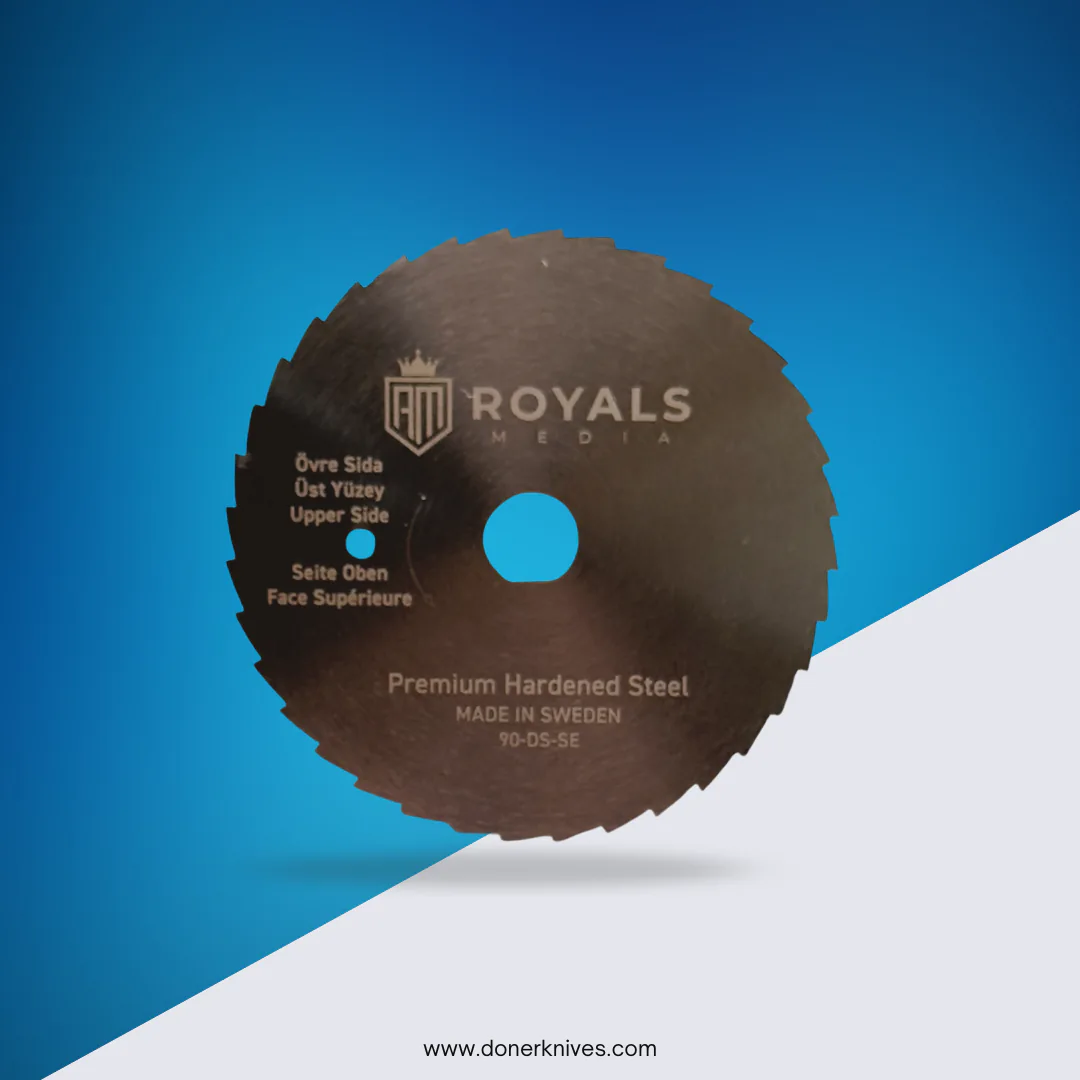
90mm Dost – Serrated
For tougher cuts or frozen meat, the serrated variant provides superior grip and cutting efficiency. The tooth design minimizes tearing, making it a reliable choice for high-volume operations. Like its smooth counterpart, it’s built for Dost 90 compatibility, ensuring seamless integration.
3. 90mm Universal – Smooth (209kr)
While not Dost-specific, the 90mm Universal – Smooth offers a cost-effective alternative with broad compatibility. It’s suitable for those seeking versatility across multiple machines, though it may require occasional adjustments for the Dost 90.
4. 120mm Dost – Serrated (299kr)
For larger operations, the 120mm Dost – Serrated provides extended reach and durability. Its serrated edge handles dense or layered meats effortlessly, though it’s best suited for machines accommodating larger blades.
Key Considerations
- Dost-Specific vs. Universal: Dost-branded blades (Smooth, Serrated) offer precise fit and performance, while universal blades may save costs but lack tailored efficiency.
- Material: all recommended blades are hardened stainless steel.
- Budget: Dost-specific blades are priced competitively (209kr–299kr), balancing quality and value.
For consistent results, prioritize Dost 90-compatible blades. Whether smooth or serrated, investing in the best doner knife blade for Dost 90 machine ensures efficiency and longevity in your kebab preparation.
FAQ: Best Doner Knife Blade for Dost 90 Machine
What is the best doner knife blade for Dost 90 machine?
The best doner knife blade for a Dost 90 machine depends on your meat and pace, but a hardened stainless steel blade of 1.5–2 mm gives the right balance of durability and precision. Dost 90 machines require blades with a specific mounting system, so universal blades may not fit securely. Look for blades made for the Dost 90's round 90 mm mount — the 90mm Dost – Smooth and the 90mm Dost – Serrated in hardened stainless steel.
Can I use universal doner blades on a Dost 90 machine?
While some universal blades may physically fit, they often lack the precise mounting mechanism required for Dost 90 machines. This can lead to wobbling, uneven cuts, or even damage to the machine. For optimal performance and safety, always choose blades specifically labeled as compatible with Dost 90.
How often should I replace my Dost 90 blade?
With proper care, a high-quality blade lasts 6–12 months, depending on usage. Signs you need a replacement include:
- Dullness requiring frequent sharpening
- Rust or pitting that can’t be removed
- Chipped edges affecting cut quality
Regular honing and cleaning after each use extend blade life.
Are serrated blades better for Dost 90 machines?
Serrated blades excel at cutting frozen or tough meats but may tear softer doner meat. Smooth blades provide cleaner slices for traditional doner. For versatility, consider a hybrid blade (partially serrated) like the Dost Multi-Cut Blade.
Where can I buy blades for a Dost 90?
Directly here: the 90mm Dost – Smooth and the 90mm Dost – Serrated, both in stock. We state diameter, mount and steel quality for every item, so you can see the blade fits before you buy.
How do I maintain my Dost 90 blade?
- Clean immediately after use with warm water and mild detergent.
- Dry thoroughly to prevent rust.
- Hone weekly with a sharpening steel.
- Store in a dry place or blade sheath.
For the best doner knife blade for Dost 90 machine, prioritize compatibility, material quality, and proper care to ensure consistent performance.
Conclusion: Choosing the Best Blade for Your Dost 90
Selecting the best doner knife blade for Dost 90 machine depends on balancing compatibility, performance, and durability. Dost-specific blades, like the 90mm Dost – Serrated (209kr) or 90mm Dost – Smooth (209kr), are engineered for precise fit and optimal cutting efficiency, reducing wear on your machine. For high-volume operations, serrated blades excel at handling frozen or tough meats, while smooth blades deliver cleaner slices for tender cuts.
Material matters — hardened stainless steel gives edge retention without the rust risk that comes with carbon steel. Universal blades, such as the 90mm Universal – Smooth (209kr), provide cost-effective alternatives but may lack the exact fit of Dost-specific options. Thicker blades (e.g., 120mm or 140mm) enhance stability for heavy-duty use but may not suit all Dost 90 models.
For longevity, prioritize proper care: clean blades promptly, sharpen regularly, and store them dry. While Dost-specific blades command a slight premium, their tailored design often justifies the investment.
Ultimately, your choice hinges on workload, meat type, and budget. For most users, the 90mm Dost – Serrated strikes the best balance of performance and value. Explore our recommended options to find the ideal match for your Dost 90 machine.