March 9, 2026
Which Doner Knife Blade Fits My Machine? Ultimate Guide 2026
Which Doner Knife Blade Fits My Machine? The Ultimate Compatibility Guide
Choosing the right doner knife blade is not a question of quality — all our blades are made from the same high-quality stainless steel. Instead, it's all about machine compatibility. A wrong choice will simply not fit, leading to unnecessary costs and machine downtime. In this guide, written from our daily experience in the doner industry, we cover the four key factors: machine brand, blade size, edge type, and mounting holes. We help you match your specific machine model with the perfect blade for efficient and safe operation.
The 4 Key Factors for Finding the Right Blade
Before ordering a new doner knife blade, you must check four key parameters on your current machine or old blade. Missing just one can mean the blade can't be mounted or won't function optimally.
1. Machine Brand and Model: The Most Important Parameter
The first thing you need to know is the type of doner machine you own. Different manufacturers like Jet, Dost, and Tandir often have unique mounting systems and spindle dimensions. A blade designed for a Jet machine will most likely not fit a Dost machine, and vice versa.
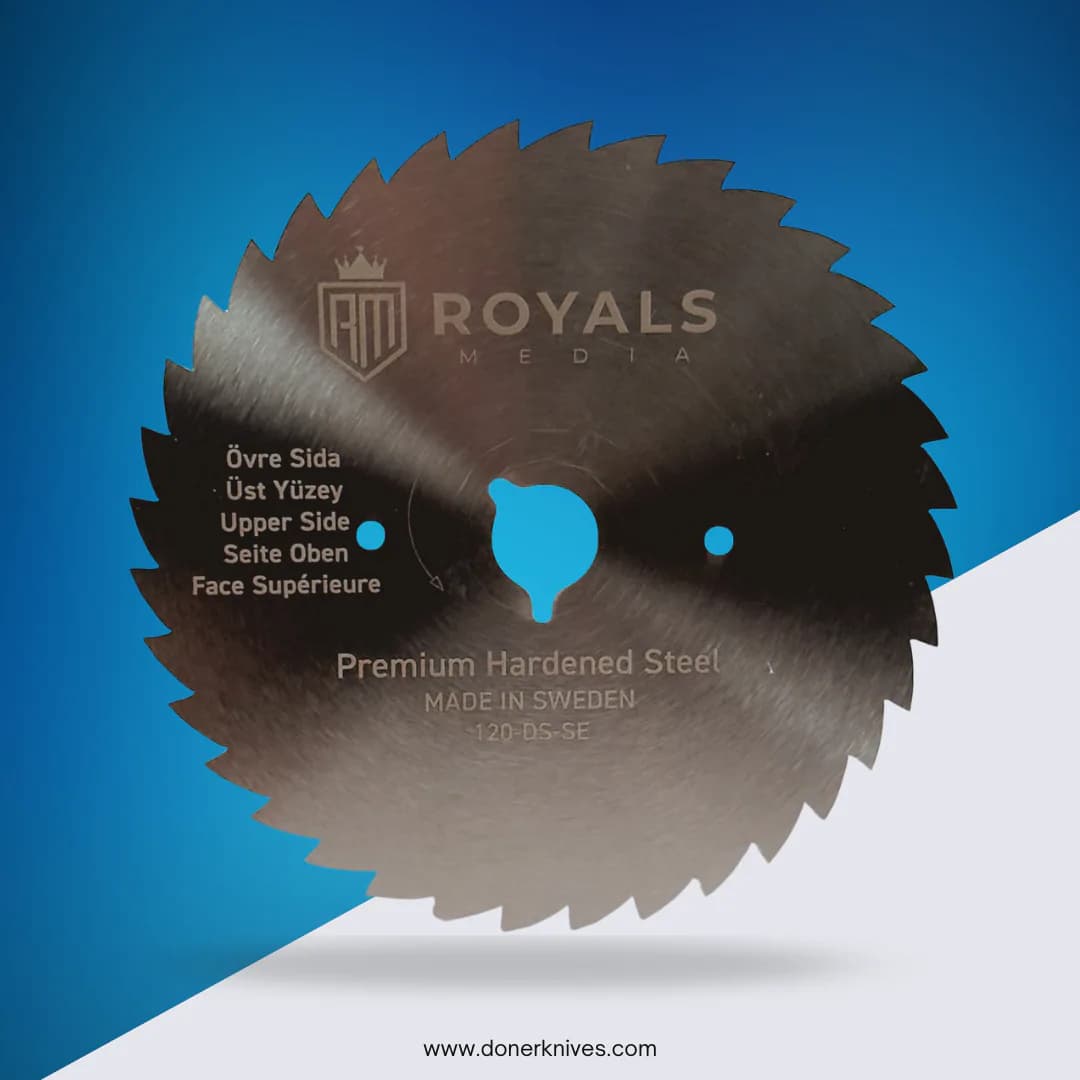
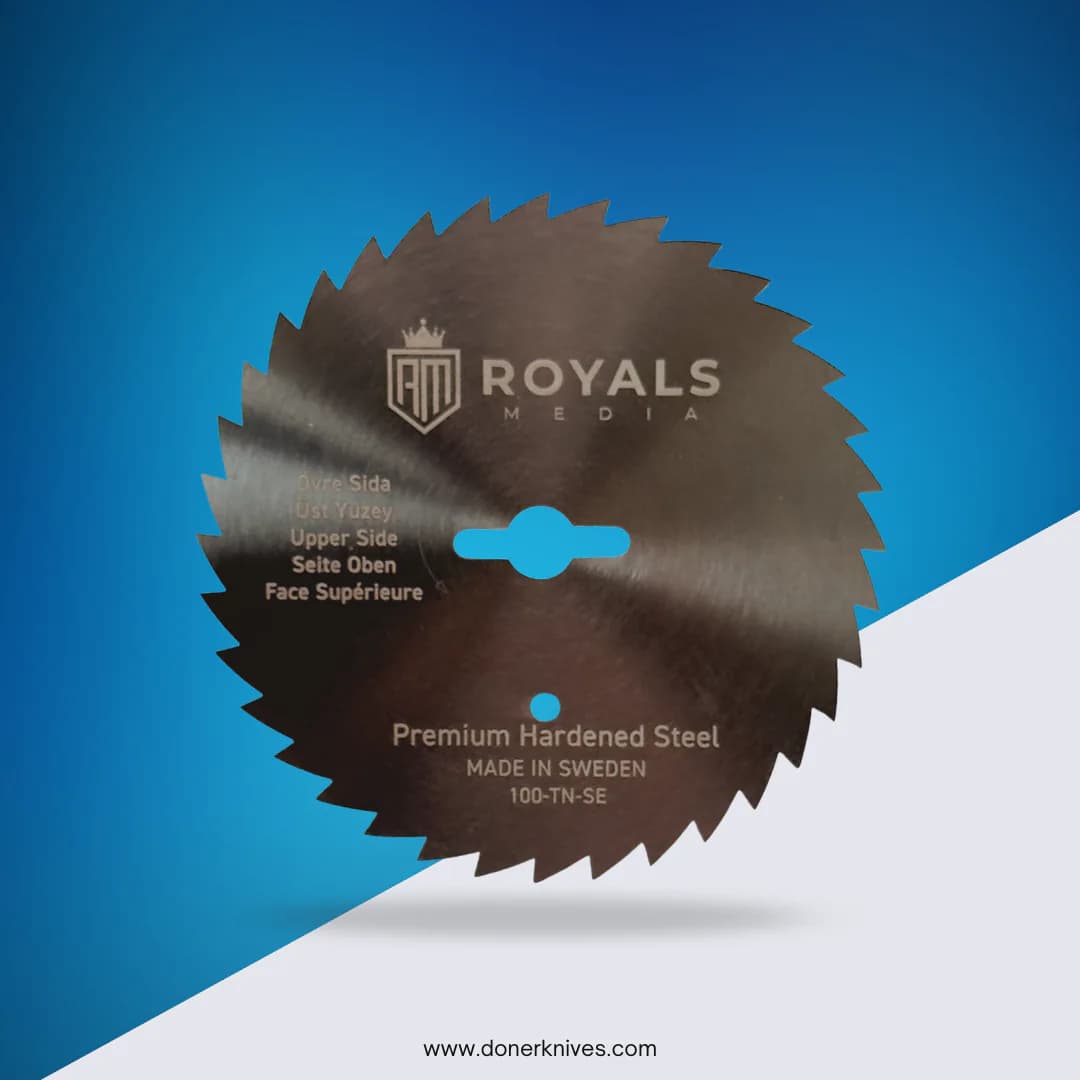
- Universal Blades: These blades are designed to fit most common machine models on the market. They're a safe choice if you're unsure of the brand or have an older, generic machine. They come in sizes from 80mm to 140mm. Example: 140mm Universal – 4 hole.
- Brand-Specific Blades: Blades marked Jet, Dost, or Tandir are optimized for these machines' specific mounting arrangements. Always use a brand-specific blade if you have that type of machine for the best performance and safety.
Tip: Check the machine's nameplate or manual. If it's missing, compare the mounting holes and spindle appearance with images on our product pages.
2. Blade Size (Diameter): Choose the Right One for Your Machine
The blade's diameter, measured in millimeters (e.g., 120mm or 140mm), is crucial for it to move freely and safely in the machine's blade housing. A blade that's too big can get stuck, while one that's too small can cause unnecessary play and be less efficient.
- 120mm & 140mm: The most common sizes for professional restaurant machines. 140mm is often used in larger, high-capacity machines.
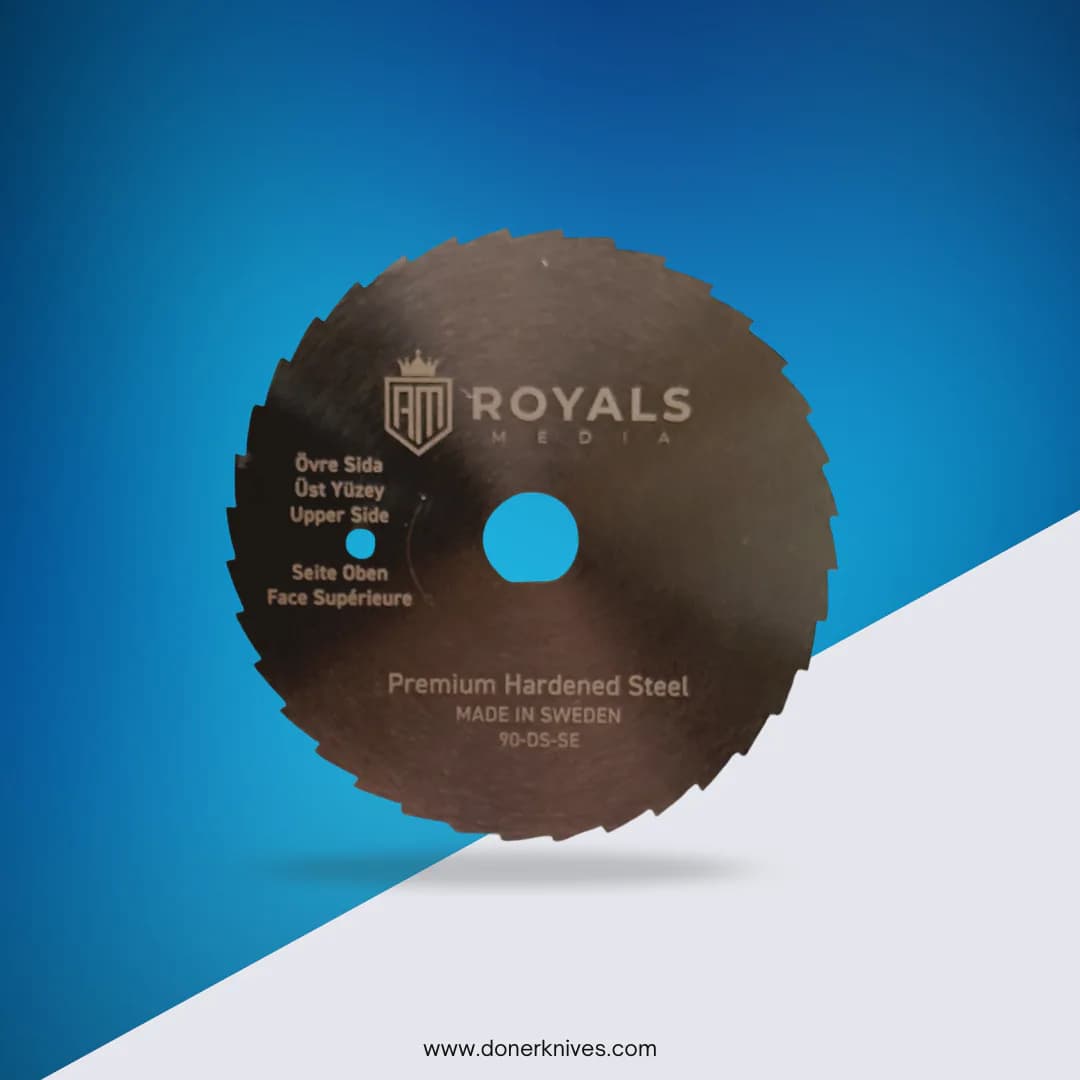
- 100mm, 90mm & 80mm: Common in smaller machines, food trucks, or for home use.
All our blades, regardless of size, have the same exceptional steel quality. The choice is purely based on what your specific machine is designed for. Measure the diameter of your old, worn blade to be sure.
3. Serrated or Smooth Edge: A Taste and Technique Choice
There is no right or wrong here — it's a question of personal preference and the type of meat you're cutting. Both types provide sharp and precise cutting.
| Edge Type | Advantages | Suitable For |
|---|---|---|
| Serrated (Tandad) | Grips meat better, minimizes 'slipping'. Often gives a more traditional, slightly 'striped' cut. | Ideal for looser-structured meat, chicken, or if you prefer the classic doner feel. See our guide to serrated blades. |
| Smooth (Slät) | Provides a cleaner, smoother, and thinner slicing. Easier to maintain and sharpen. | Perfect for firmer cuts like beef or lamb, where you want aesthetically perfect, thin slices. |
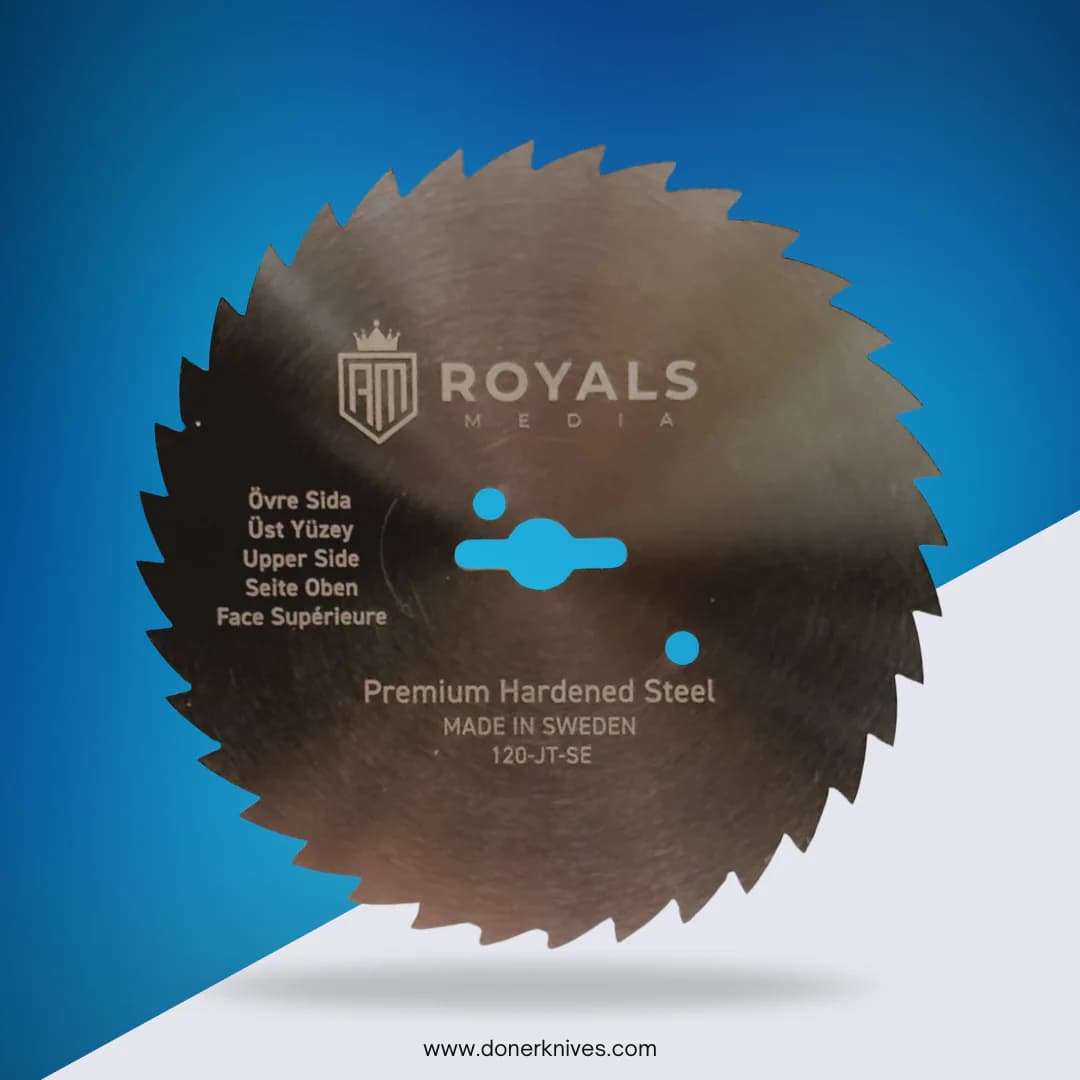
Example: For a Jet machine, you can choose between a 120mm Jet – Serrated or a 120mm Jet – Smooth blade.
4. Number of Mounting Holes: Secure Fastening is Key
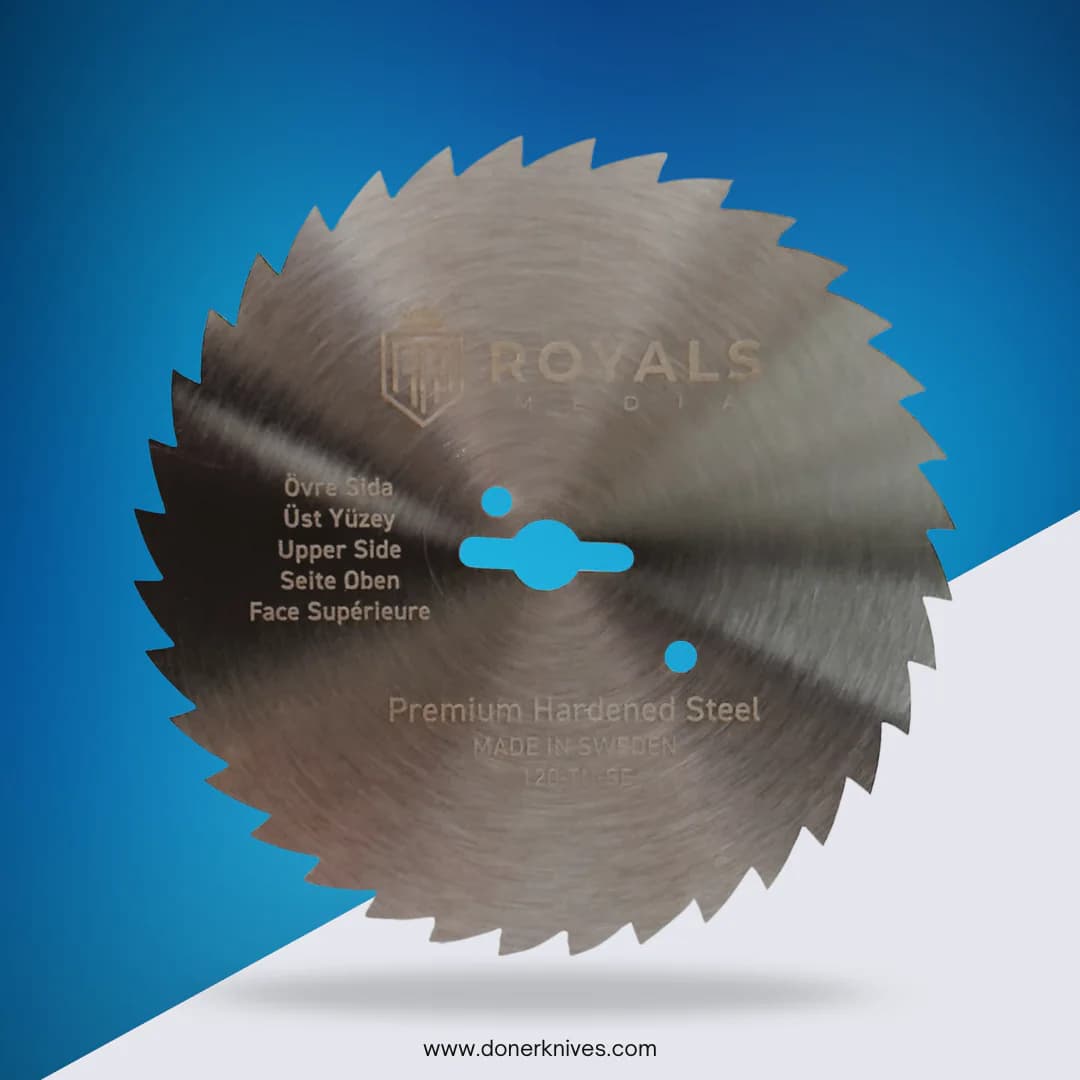
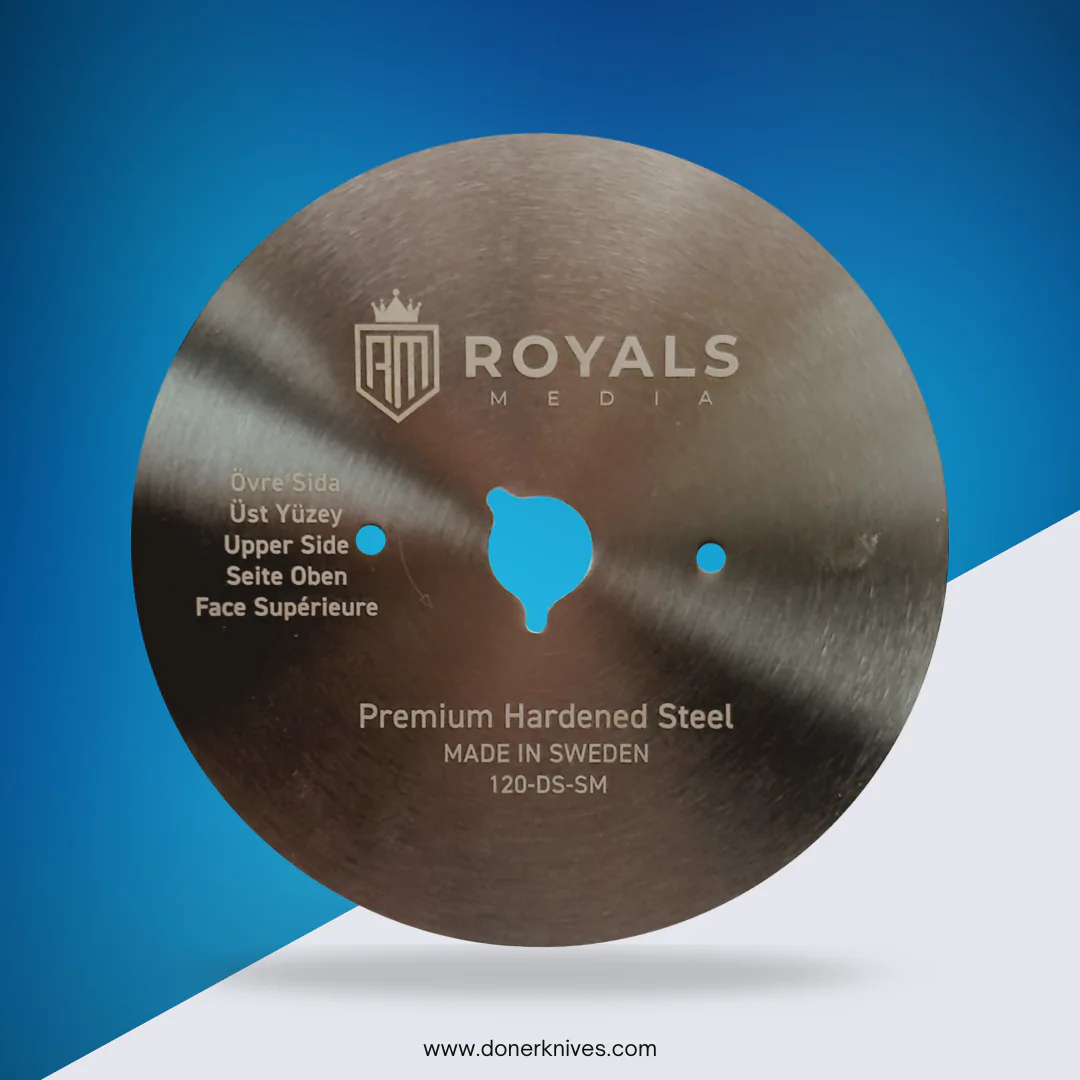
The blade must be securely fastened to the machine's rotating spindle. The number of holes (2, 3 or 4) and their placement must exactly match the mounting flange on your machine. Trying to mount a blade with the wrong number of holes is not only impossible — it is extremely dangerous.
- 4-hole and 3-hole are most common in modern universal and professional machines, providing a very stable fit.
- 2-hole is common in older or simpler models.
Inspect your old blade or the machine's spindle carefully. A secure mounting is a prerequisite for food safety and a long lifespan for both machine and blade. Learn more about maintenance in our guide Dönerklinge richtig reinigen.
Blade Overview by Machine Type
Here we break down which of our blades are compatible with the most common machine types on the market.
Blades for Jet Machines
Jet is a popular brand with a specific mounting system. Our Jet blades are designed for a perfect fit.
- Recommended sizes: 120mm is standard.
- Available options: Both serrated and smooth 120mm blades.
- Product link: 120mm Jet – Smooth.
Blades for Dost Machines
Dost machines also have their own specifications. Always use blades marked for Dost for optimal compatibility.
- Recommended sizes: 90mm and 120mm are common.
- Available options: Both serrated and smooth 120mm blades.
- Product link: 120mm Dost – Smooth.
Blades for Tandir Machines
Tandir machines also require their own blades. We offer several sizes and edge types.
- Recommended sizes: 100mm and 120mm.
- Available options: E.g. 100mm Tandir – Serrated and smooth 120mm blades.
Universal Blades (Fit Most Machines)
If you have an older machine, an unknown brand, or want a broadly compatible blade, universal blades are your safe bet. They come in multiple sizes and with different numbers of holes to cover a wide range.
- Recommended sizes: 140mm for large machines, 120mm for standard.
- Available options: 140mm with 2, 3 or 4 holes. Read more about 140mm blades in our specific guide.
- Product link: 140mm Universal – 2 hole.
Quick Reference Table: Machine and Compatible Blades
| Machine Brand/Type | Compatible Blades (Examples) | Common Sizes | Important Note |
|---|---|---|---|
| Jet | Blades marked "Jet" | 120mm | Choose between serrated or smooth edge. |
| Dost | Blades marked "Dost" | 90mm, 120mm | Make sure the size matches your model. |
| Tandir | Blades marked "Tandir" | 100mm, 120mm | 100mm is a common size for Tandir. |
| Universal / Other Brands | Blades marked "Universal" | 80mm, 90mm, 100mm, 120mm, 140mm | Check the number of mounting holes (2, 3, 4) carefully. |
Common Questions and Answers (FAQ)
How can I be sure which blade my machine needs?
The safest way is to 1) check the machine's manual or model designation, or 2) examine the worn blade you're replacing. Note its diameter (e.g., 120mm), whether it's serrated or smooth, and count the number of mounting holes. Compare with our product descriptions next.
Can I use a universal blade on my Jet or Dost machine?
It may be possible, but it is strongly recommended to use a brand-specific blade (Jet/Dost) if you have that type of machine. Brand blades are guaranteed to be compatible with the mounting system and provide the best possible safety, balance, and performance.
What is the difference between 3-hole and 4-hole universal blades?
The difference lies solely in the mounting arrangement to fit different machine spindles. Both have the same steel quality and cutting ability. You must choose the number of holes that matches the hole pattern on your machine's spindle. A 4-hole blade cannot be mounted on a 3-hole spindle.
How often should I replace my doner knife blade?
It depends on usage, but a dull blade requires more force and gives worse cutting results. With regular sharpening, a blade can last a long time. Replace when it no longer holds an edge despite sharpening, or if it's damaged. For professional use, this might be every 6–12 months.
Will a 140mm blade fit a machine that originally had a 120mm blade?
No, it absolutely will not. You must always use the diameter the machine was designed for. A larger blade can collide with the blade housing or machine body, which is very dangerous and can damage the equipment.
Is it hard to change the blade yourself?
No, the change is usually simple. Make sure the machine is disconnected from the power. Loosen the mounting nut/bolt, remove the old blade, put on the new one (with the correct side forward, often marked), and tighten the nut securely. Always consult the machine's manual for safety procedures.
Which is better: serrated or smooth blade?
There is no "best" that applies to all. It's a matter of preference. Serrated gives a better grip on looser meat, while smooth gives cleaner, thinner slices on firmer meat. Many professionals have both types for different purposes. Read our in-depth look at the advantages of serrated blades.
Summary: How to Choose the Right Blade
Answering the question "Which doner knife blade fits my machine?" requires just a little basic information. Remember that all our blades have the same high quality — the choice is about correct matching.
- Identify your machine: Brand (Jet, Dost, Tandir) or choose Universal.
- Measure the size: Use the diameter of your old blade (e.g., 120mm).
- Choose edge type: Serrated for better grip, Smooth for cleaner slices.
- Count the holes: 2, 3 or 4 mounting holes? It must match exactly.
With this guide, we hope you feel confident in making the right choice. Still have questions? Don't hesitate to contact us — we're happy to help you find the perfect blade for your doner machine, whether it's for a street kitchen, food truck, or restaurant. For professional purchases, also see our complete guide for restaurants.
Related articles
Get the right blade for your machine
Professional doner knife blades. Fast delivery across Europe.