March 17, 2026
What Doner Knife Blade Fits the Jet 120 Machine? Complete Compatibility Guide
What Doner Knife Blade Fits Your Machine? Complete Compatibility Guide
Choosing the right doner knife blade can feel overwhelming with so many sizes and models available. The truth is simple: all our blades are made from the same high-quality stainless steel. The difference lies not in quality, but in which blade is technically compatible with your specific machine and suits your work preferences. This guide takes you step by step through the four decisive factors: machine model, blade diameter, tooth pattern (toothed or smooth), and mounting holes. We'll help you make a safe and correct choice.
Factor 1: What machine model and brand do you have? (Jet, Dost, Tandir, Universal)
This is absolutely the most important step. A blade that fits perfectly on a Jet machine likely won't fit on a Dost due to differences in the mounting system. The brand model determines which blade series you should look at. The most common categories are:
- Jet Machines: Require blades specifically designed for Jet. These have a specific hole pattern and centering.
- Dost Machines: Use their own mounting system. A Dost blade will not fit a Jet machine.
- Tandir Machines: Often have their own standard, especially for smaller models.
- Universal Machines: Designed to accept more standardized blades, often with 2, 3, or 4 holes. Still requires checking the hole pattern.
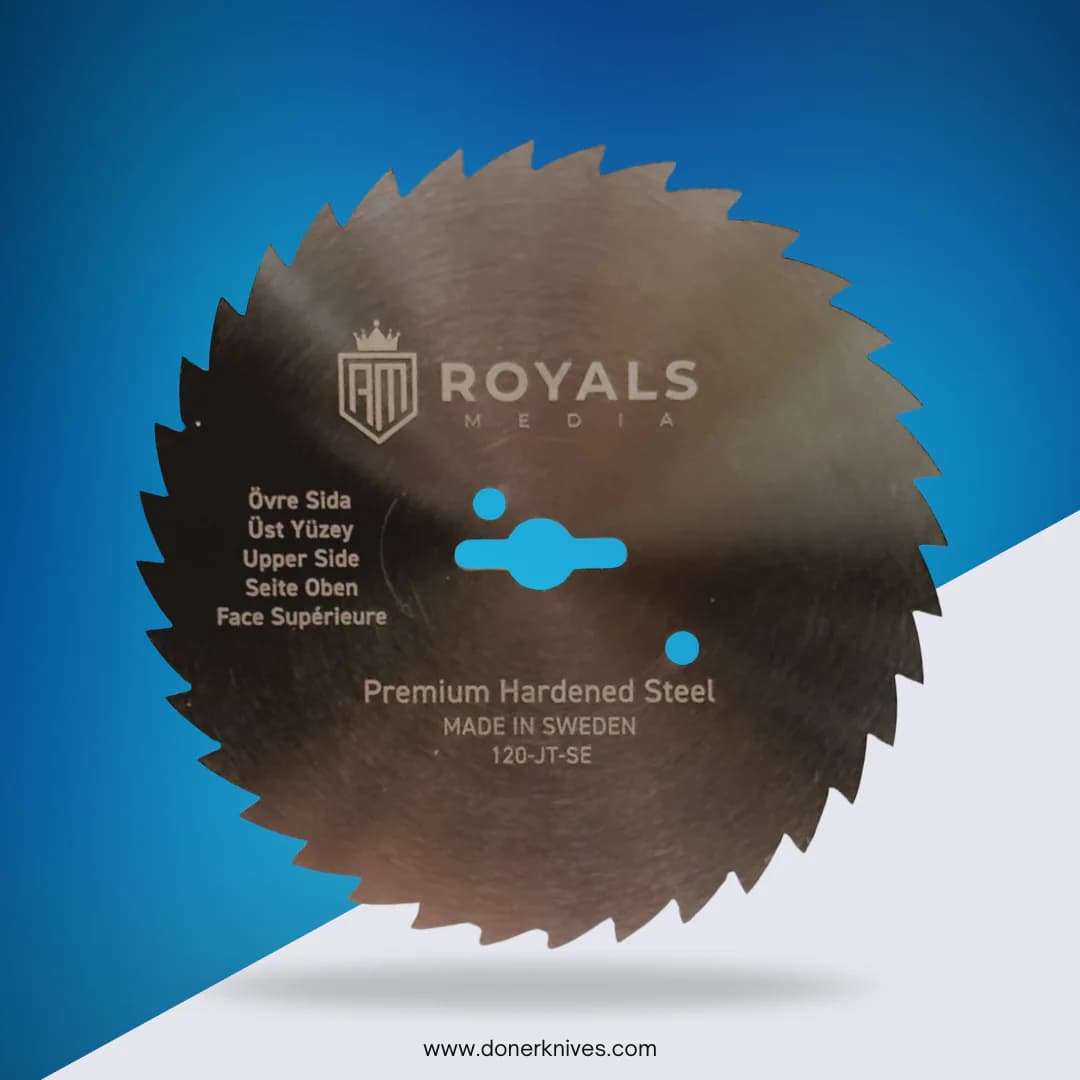
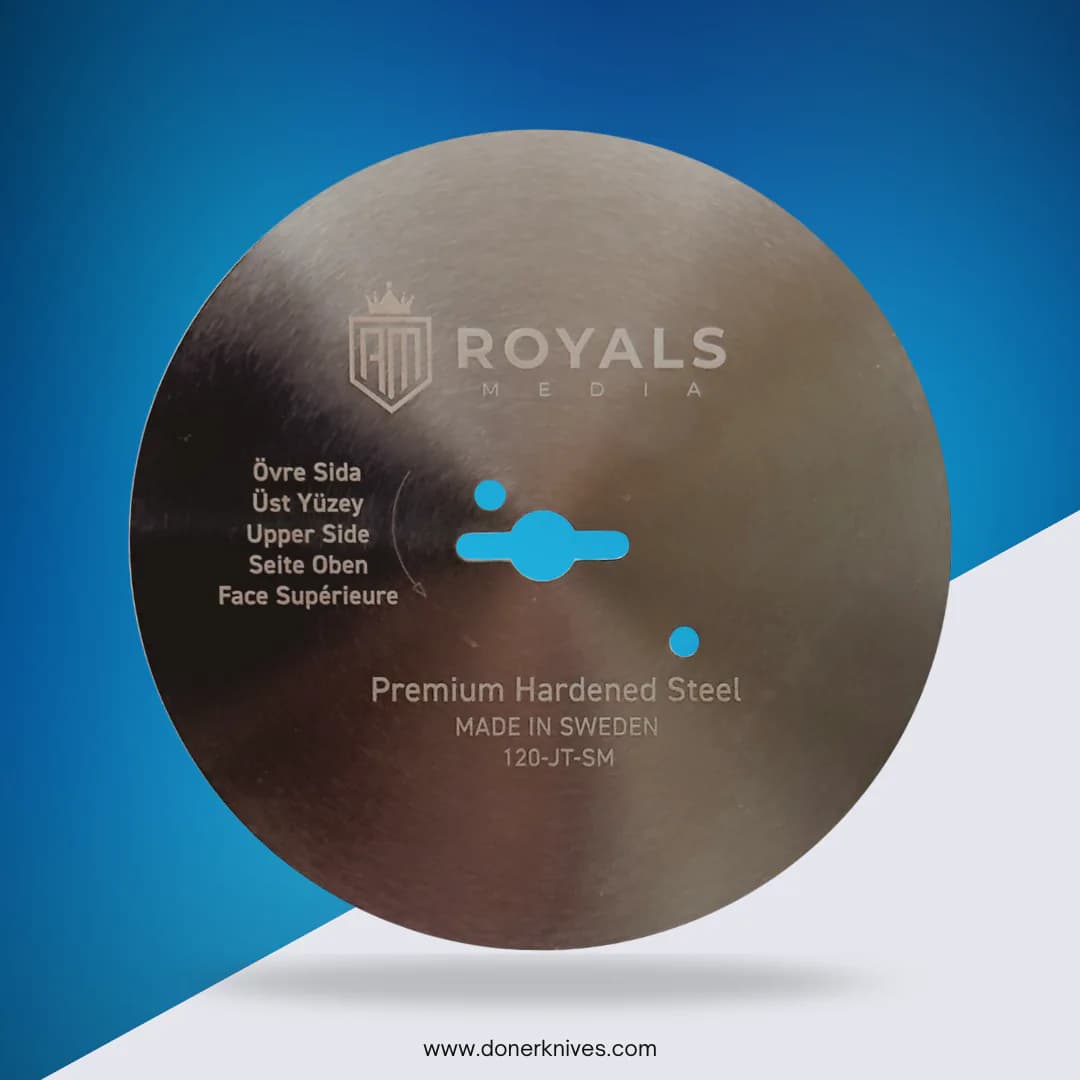
If you have a Jet 120 machine, you need a blade from the Jet series, such as a 120mm Jet – Serrated or a 120mm Jet – Smooth. Always read your machine's manual or measure your old blade to be sure.
Factor 2: What blade diameter is needed? (80mm, 90mm, 100mm, 120mm, 140mm)
The size is critical for both safety and performance. A too-large blade can damage the machine or be impossible to mount. A too-small blade doesn't reach the meat optimally. The diameter is measured across the disk blade itself.
- 120mm & 140mm: The most common sizes for professional standing doner machines in restaurants and street kitchens.
- 100mm, 90mm, 80mm: Often used in smaller countertop machines or for specific models like certain Tandir machines.
For a Jet 120 machine, the name usually indicates the recommended size: 120mm. That is the size the machine is designed for. If you're unsure, measure the diameter of your current blade or check the model designation on the machine.
Factor 3: Toothed (Serrated) or Smooth Edge?
The choice between toothed and smooth edge affects the cutting result and how the blade 'grips' the meat. Both are made from the same high-quality steel and have the same lifespan when properly maintained.
| Feature | Toothed (Serrated) Blade | Smooth Edge Blade |
|---|---|---|
| Cutting Function | 'Bites' through meat; excellent grip. | Cuts cleanly and evenly with a sliding cut. |
| Best For | Colder or harder meat, frozen pieces, when a secure grip is important. | Warm, soft döner stacks for ultra-thin and clean slices. |
| Maintenance | May require more thorough cleaning between teeth. | Easier to sharpen and maintain sharpness at the correct angle. |
Many pros prefer toothed blades for the secure grip, while others swear by smooth blades for the fine cut. It's a matter of personal preference and what kind of meat you most often work with. Read more about the differences in our guide Which Doner Knife Blade Fits My Machine? Ultimate Guide 2026.
Factor 4: Number of Mounting Holes (2, 3 or 4 holes)
This is the technical connection between the blade and the machine's motor shaft. The holes MUST match exactly. Trying to mount a 4-hole blade onto a 2-hole shaft won't work and is dangerous.
- 2-hole blades: Common in larger universal or special machines. Often provides stable mounting for heavy blades.
- 3-hole blades: Less common, used in specific machine models.
- 4-hole blades: Very common, especially in universal machines. Provides even distribution of forces.
For Jet-, Dost- and Tandir-specific blades, the hole pattern is predetermined and part of the design. For universal blades, you must know what pattern your machine requires. Look at your old blade or the machine's manual. For a larger universal machine that takes a 140mm blade with 4 holes, 140mm Universal – 4 Hole is a safe choice.
Blade Overview by Machine Type
Here's a quick guide to find the right blade series based on your machine brand.
Blades for Jet Machines (e.g. Jet 120)
Jet machines have their own mounting system. Our Jet blades are constructed for perfect fit and balance in these machines. For a standard Jet 120 machine, 120mm is the correct size.
- Toothed for Jet 120: 120mm Jet – Serrated – Perfect for a secure grip in the meat.
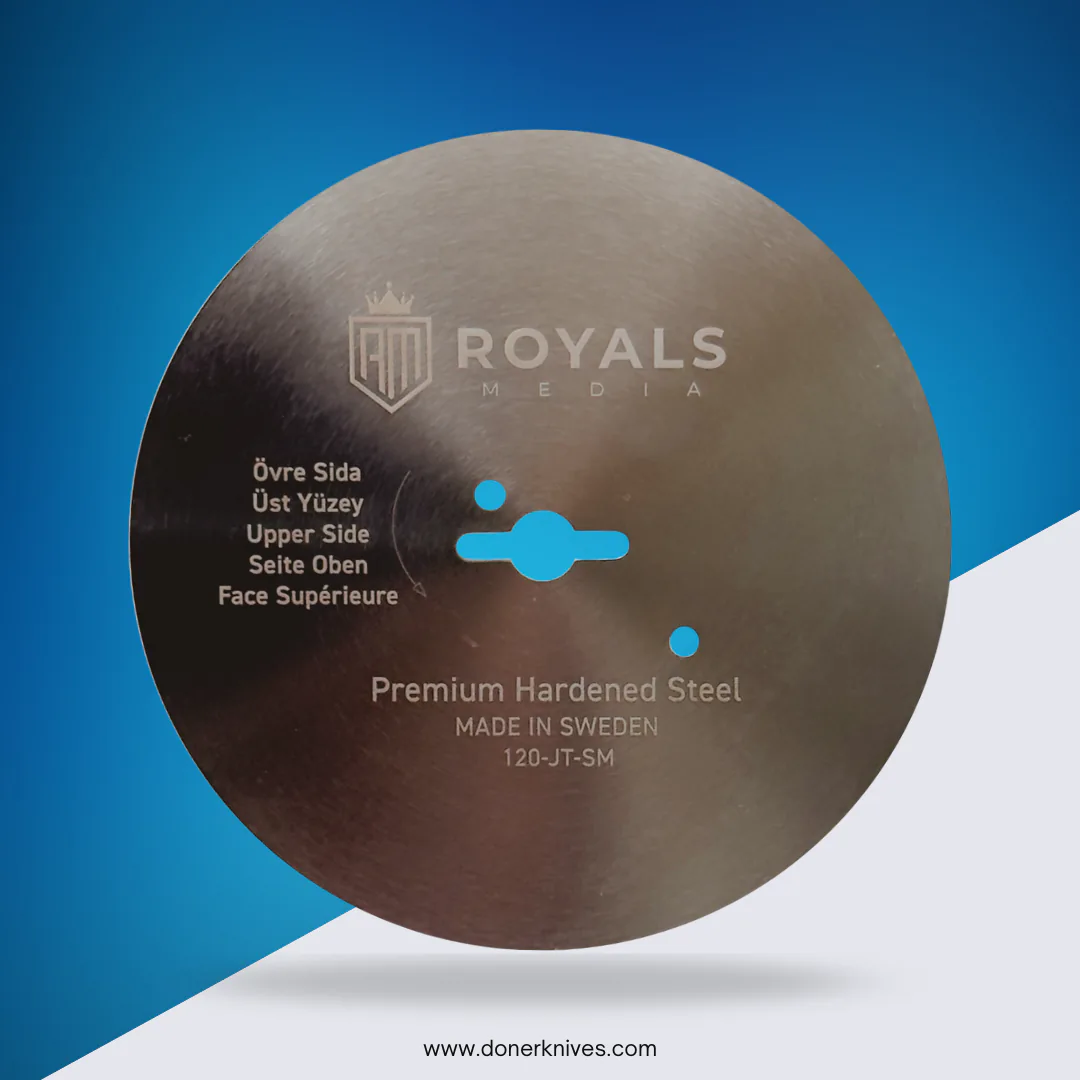
- Smooth for Jet 120: 120mm Jet – Smooth – Gives clean, even slices.
Blades for Dost Machines
Dost is another major brand with its own mounting system. Never use a Jet blade on a Dost machine.
- Toothed for Dost 120mm: 120mm Dost – Serrated
- Smooth for Dost 120mm: 120mm Dost – Smooth
Blades for Tandir Machines
Tandir machines come in various sizes. Smaller models may use 100mm blades, while larger ones typically use 120mm.
- For larger Tandir machines (120mm): 120mm Tandir – Serrated or 120mm Tandir – Smooth
- For smaller Tandir machines (100mm): 100mm Tandir – Serrated
Universal Blades for Many Different Machines
Universal blades are designed to fit many different brands, but require you to check the size (often 140mm) and number of holes (2, 3 or 4). They're a flexible solution if your machine has a standardized mounting method.
- 140mm Universal – 4 holes: 140mm Universal – 4 Hole – Most common.
- 140mm Universal – 3 holes: 140mm Universal – 3 Hole – For specific machines.
- 140mm Universal – 2 holes: 140mm Universal – 2 holes – Used in some larger machines.
Read our deep dive on universal blades here: Are Universal Doner Blades Truly Universal? Expert Explanation 2026.
Rapid Reference Table: Machine and Compatible Blades
| Machine Type / Brand | Recommended Size | Compatible Blades (Examples) | Important Check |
|---|---|---|---|
| Jet (e.g. Jet 120) | 120mm | Jet-specific blades (Toothed/Smooth) | Use only Jet-specific blades. |
| Dost | 120mm (common) | Dost-specific blades (Toothed/Smooth) | Use only Dost-specific blades. |
| Tandir (Large) | 120mm | Tandir 120mm (Toothed/Smooth) | Check the model's specifications. |
| Tandir (Small) | 100mm | Tandir 100mm (Toothed) | Measure the old blade. |
| Universal Machine | Often 140mm | Universal 140mm (2, 3, or 4 holes) | Check the number of mounting holes. |
Common Questions and Answers (FAQ)
How can I be sure which doner blade fits my Jet 120 machine?
Short answer: If you have a Jet 120 machine, you need a Jet-specific blade with a 120mm diameter. The choice between toothed (120mm Jet – Serrated) or smooth (120mm Jet – Smooth) edge is based on your slicing preference.
Detailed: The model number “120” in Jet refers to the recommended blade diameter of 120mm. The safest option is to check the user manual or take a photo of/measure your current blade (if you still have it) and compare it with our product specifications. The mounting holes are predetermined for Jet blades, so it's just a matter of choosing the right diameter and edge type.
Can I use a universal blade on my Jet or Dost machine?
Short answer: No, we strongly recommend against it.
Detailed: Jet, Dost and Tandir have specially designed mounting systems to ensure optimal balance, safety and performance. A universal blade likely won't fit mechanically, and if it does, it could be dangerous due to imbalance or poor attachment. Always use the brand-specific blade for your machine.
What’s the difference between 2-hole, 3-hole, and 4-hole universal blades?
Short answer: The number of holes must match the number of pins on your machine's motor shaft. They are not interchangeable.
Detailed: The holes ensure the blade is securely fastened and rotates without wobbling. A 4-hole blade on a 2-hole shaft cannot be mounted correctly. Before buying a universal blade, you must know what mounting system your machine has. Look at the machine's shaft or your old blade. Our guide on 140mm Universal Doner Blade with 4 Holes: Technical Specs & Buyer's Guide 2026 explains the 4-hole version in detail.
How often should I replace or sharpen my doner blade?
Short answer: Replacement or sharpening is needed when the blade no longer cuts cleanly and easily, despite proper maintenance. In professional use, this can happen every week or month.
Detailed: The frequency depends on usage (volume), what meat you're cutting (frozen vs. thawed), and whether you're using toothed or smooth edge. A dull blade requires more force and can give uneven slices. Regular sharpening with the right tools significantly extends the blade's life. See our guide on How to Clean a Doner Knife: Safe Step-by-Step Guide 2026 for maintenance tips.
Why isn't my new blade cutting properly?
Short answer: The most common issue is incorrect mounting or the blade not being sharp enough out of the box (may need sharpening/finishing).
Detailed: First, check that the blade is mounted correctly (cutting edge towards the meat) and seated fully. New blades are often "factory-sharp" but may need a fine adjustment for optimal sharpness. If the problem persists, it could be because the blade isn't compatible with the machine (wrong hole pattern) or the meat stack is too cold/hard. Our troubleshooting guide Doner Knife Blade Not Cutting Properly? 7 Pro Fixes covers all common causes.
Summary: How to Choose the Right Doner Knife Blade
Choosing the right doner knife blade is not about finding the "best" or most expensive one, but the one that fits your equipment and needs. Follow this checklist:
- Identify your machine: Brand (Jet, Dost, Tandir) and model (e.g. Jet 120). This locks in which blade series you should look at.
- Determine the size: Measure your old blade or check the manual. 120mm is standard for many larger machines like the Jet 120.
- Choose the edge type: Toothed for better grip on colder meat, smooth for clean slices on warm meat. It's a matter of taste.
- Check the mounting: For universal blades, count the holes on your old blade (2, 3, or 4). For branded blades, this is predetermined.
By following these steps, you avoid compatibility problems and ensure safe, efficient, and professional döner slicing. All our blades share the same high quality in stainless steel – your choice is about perfect fit. Still have questions? Feel free to contact us or read our comprehensive guide for professionals: Doner Knife Blades for Restaurants: Full Guide.
Related articles
Get the right blade for your machine
Professional doner knife blades. Fast delivery across Europe.