January 28, 2026
Sharpen Doner Knife Blades: Pro Guide for Results
A sharp doner knife is the heart of a successful doner business. A perfectly sharpened blade cuts through meat cleanly and evenly, resulting in better portioning, less waste, and an impressive presentation for your customers. Knowing how to sharpen doner knife blades correctly is a crucial skill for any doner entrepreneur or passionate home cook. This guide will take you through the entire process, from the tools you need to the professionals' secrets for achieving a durable, sharp edge that lasts.
What You Need to Sharpen Doner Knife Blades
Before you start, it's important to gather the right tools. Using the wrong tools can damage the blade instead of improving it. Here's your checklist:
- Whetstone or Sharpening Stone: For smooth blades, a fine-grit whetstone (often 1000 grit or higher) is ideal. For serrated blades, specialized tools are required.
- Ceramic Honing Rod or Round Diamond File (for serrated blades): This thin, rounded rod is designed to reach into each tooth of a serrated blade.
- Light source and magnifying glass (optional but recommended): To carefully inspect the edge for damage and to see when it's perfect.
- Protective gear: Sharpening gloves and safety goggles are important for safety.
- Cleaning agents and cloth: To clean the blade before and after sharpening. Use food-safe agents.
- Oil for doner knife blades (e.g., cooking oil or special knife oil): To protect the blade after maintenance.
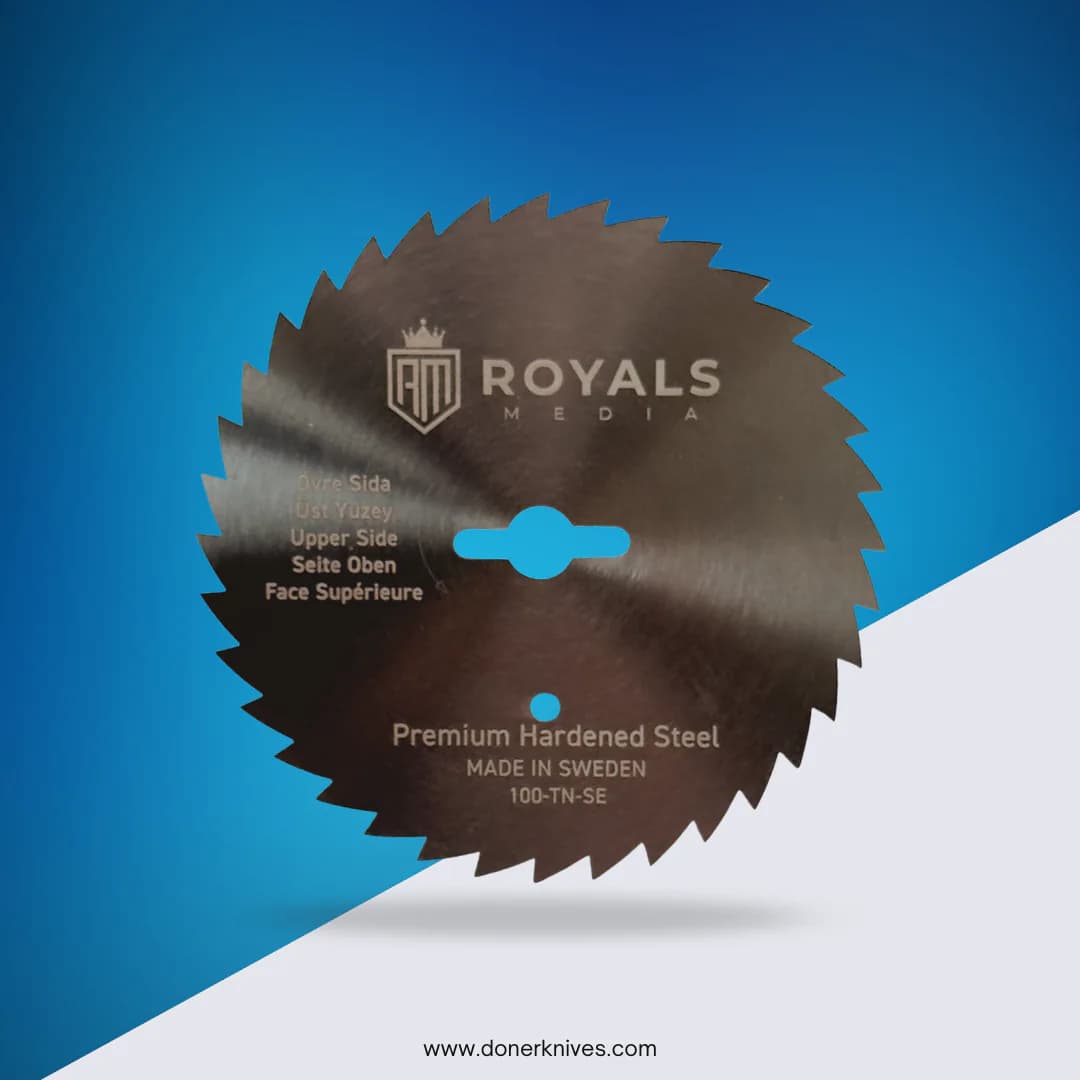
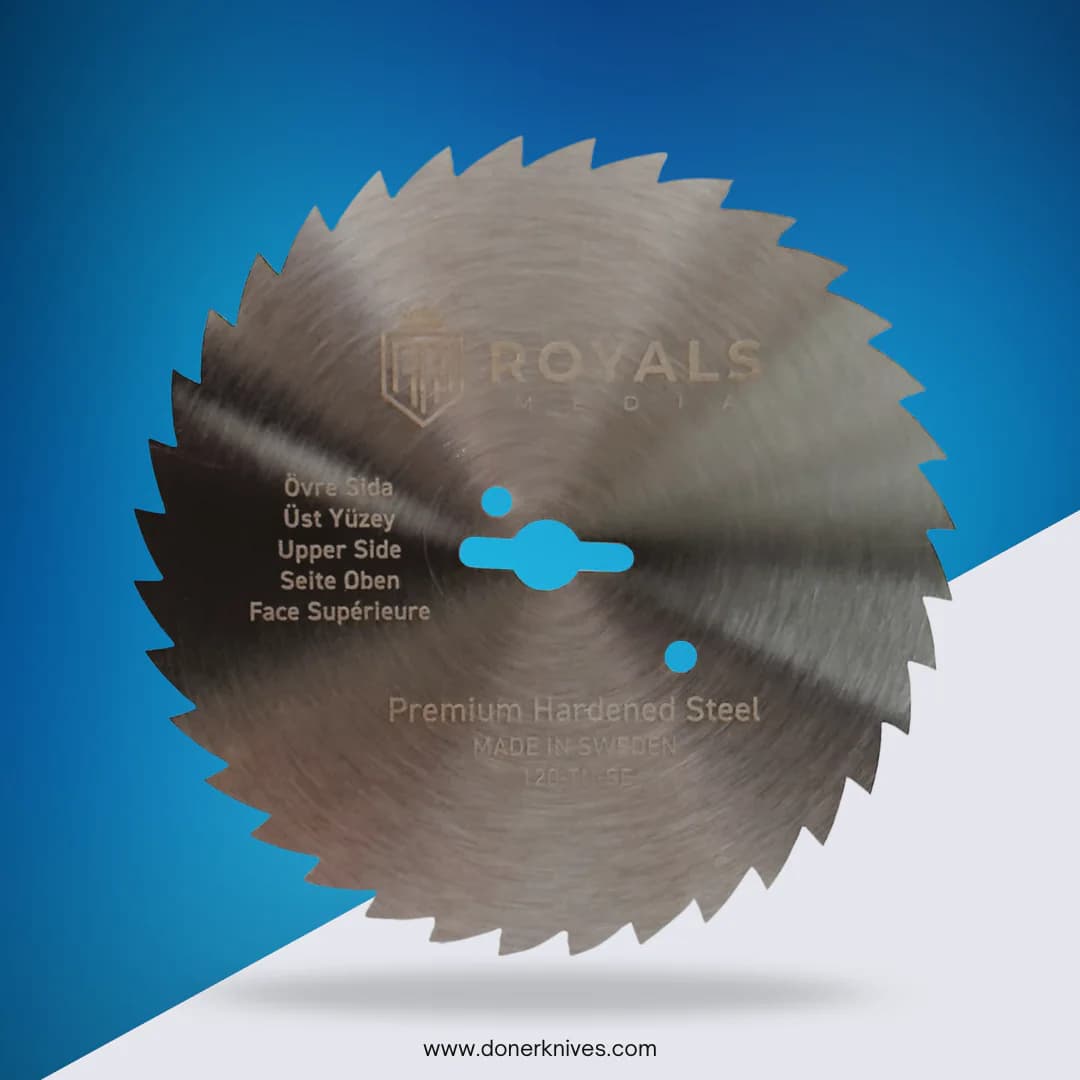
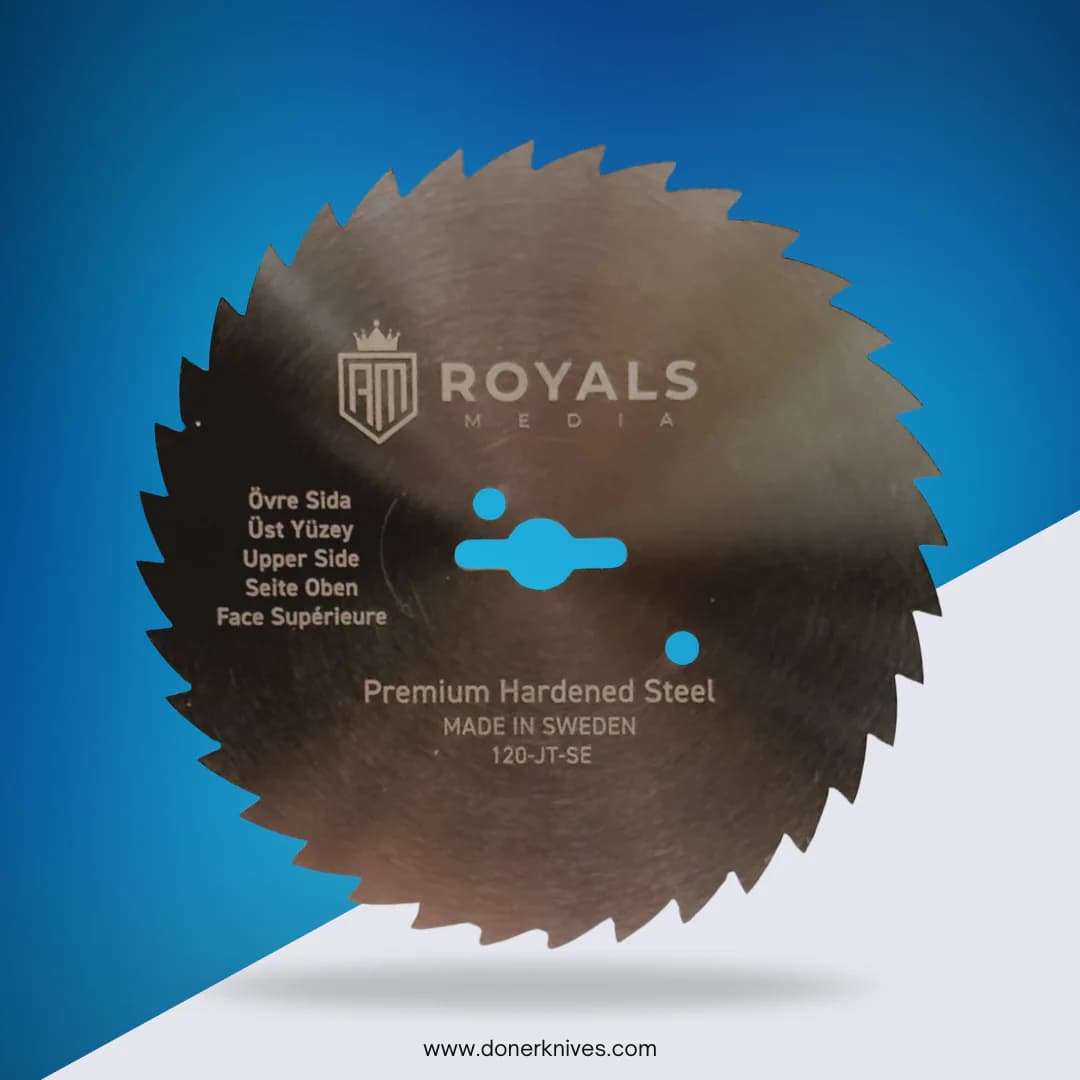
Remember: Whether you have a 120mm Jet – Smooth or a 140mm Universal – 4 Hole, the sharpening process is the same for the same edge type. The difference lies in the size you're working with.
Step-by-Step: How to Sharpen Doner Knife Blades Correctly
Follow these steps carefully to ensure a safe and effective result. The process differs between smooth and serrated blades.
Step 1: Preparation and Safety
Start by disassembling the blade from the doner machine if possible. It's much safer and easier to work with the blade free. Thoroughly clean the blade with warm water and mild dish soap to remove any meat residue and fat. Then dry it carefully. Place the blade on a stable, flat work surface with a wood base or mat to protect the edge. Put on your protective gear.
Step 2: Inspecting the Blade
Hold the blade up to the light and inspect the edge carefully. Look for shiny, reflective stripes or irregularities. These are signs of a dull or damaged edge. For smooth blades, look for an even line. For serrated blades, check that each tooth is intact and hasn't bent or broken. This inspection determines how much work is needed.
Step 3: Sharpening a Smooth Doner Knife (Smooth Edge)
- Angle: Hold the blade against the whetstone or sharpening stone at a stable angle. The optimal angle for most doner knife blades is between 15 and 20 degrees. Try to keep this angle consistent throughout the process.
- Draw: With a firm but gentle pressure, draw the full length of the blade over the whetstone from the base to the tip. Do this alternately on both sides of the blade.
- Number of draws: Start with 5-10 light strokes on each side. Then test the sharpness by carefully cutting through a soft tomato or a piece of paper. Repeat until you're satisfied.
- Finishing: After sharpening, draw the blade a few times very gently over the whetstone to "polish" the edge and remove any burrs.
Step 4: Sharpening a Serrated Doner Knife (Serrated Edge)
Sharpening serrated blades is more precise and requires patience. You work with each tooth individually.
- Tools: Use a ceramic honing rod or a rounded diamond file that matches the tooth size.
- Technique: Place the rod in the "groove" between two teeth. With a very light pressure, move the rod along the groove, following the tooth's shape. You're sharpening only on the smooth side of the blade (usually the back side), within each tooth.
- Method: Work systematically from one end of the blade to the other, and treat each tooth with 3-5 similar strokes.
- Test: Test sharpness by cutting into a soft material lightly. Serrated blades should "grip" the meat effectively.
For more details on the differences between edge types, see our in-depth guide: Serrated vs Smooth Doner Blade: Which to Choose?.
Step 5: Cleaning and Care After Sharpening
After sharpening, there will be fine metal particles on the blade. Clean it again thoroughly with warm water and dish soap. Dry it immediately and completely to prevent rust. Apply a very thin film of cooking oil (e.g., canola oil) or special knife oil to the entire blade's surface to protect it from moisture. If the blade is removable, reattach it to your doner machine, or store it securely.
3 Expert Tips for a Perfect Sharpening
- Use the Light: A sharp blade will not reflect light on the edge. If you see a thin, white line along the edge, it's still dull. Keep sharpening until this line disappears.
- Consistent Angle is the Key: Invest in an angle guide if you're a beginner. An inconsistent angle results in an uneven edge that wears out quickly.
- Less is More: It's better to sharpen often with minimal effort than to wait until the blade is completely dull and requires major work. Regular, light sharpening significantly extends the blade's total lifespan.
Common Mistakes to Avoid When Sharpening
- Incorrect Angle: Too high an angle (e.g., 30 degrees) results in a strong but less sharp edge. Too low an angle can make the edge too thin and brittle. Stick to 15-20 degrees.
- Too Much Pressure: Pressing too hard against the sharpening stone creates unnecessary wear and can overheat the steel, weakening the edge. Let the sharpening medium do the work.
- Forgetting Both Sides (for smooth blades): Sharpening only one side creates an uneven edge that will cut crookedly and wear unevenly.
- Using the Wrong Tools on Serrated Blades: Trying to sharpen a serrated blade with a flat whetstone destroys the tooth shape and makes the blade unusable. Always use the correct specialized tools.
- Inadequate Cleaning Afterwards: Metal particles can contaminate your food and are a serious hygiene issue. Always clean thoroughly.
For more information on how to care for your blade, read our complete maintenance guide: Doner Knife Blade Maintenance: Step-by-Step Guide.
Frequently Asked Questions About Sharpening Doner Knife Blades
How often should I sharpen my doner knife blade?
It depends on the frequency of use. For a professional doner restaurant using the machine several hours a day, a light "fine-tuning" with a whetstone every day or every other day may be necessary. A more thorough sharpening with a sharpening stone may be needed every 4-6 weeks. For home users, a couple of times a year is often sufficient. Listen to the blade – if it starts "dragging" instead of cutting cleanly, it's time.
Can I sharpen a serrated doner knife blade with a regular whetstone?
No, it's strongly discouraged. A flat whetstone will not match the shape of the teeth and risks flattening them or creating uneven surfaces, which destroys the blade's ability to grip the meat. Always use a specialized tool like a ceramic honing rod designed for serrated blades.
Why does my blade become dull quickly even after sharpening?
There are several possible reasons: 1) Incorrect sharpening angle creating an unstable edge, 2) Using too coarse a sharpening medium that "strips" instead of polishing finely, 3) Cutting against hard surfaces like bones, frozen meat, or cutting boards (always use wood or plastic cutting boards), or 4) Inadequate cleaning where acidic or salty residues corrode the steel.
Is it harder to sharpen larger blades, such as 140mm?
The principle is exactly the same. The challenge with larger blades, like a 140mm Universal – 3 Hole, lies mainly in their physical size. They require a larger, more stable work surface and a bit more time since the edge is longer. Safety is also extra important due to the increased weight and cutting length. Use steady hands and consider having someone assist in stabilizing the blade if it feels unwieldy.
When is it time to replace the blade instead of sharpening it?
If the blade has serious damage such as deep nicks, bent teeth (on serrated blades), or if, after repeated sharpening, it has become so thin that it no longer fits securely in the machine's mounting, it's safest to replace it. Continuing to use a damaged blade is a safety risk and can result in poor cutting performance. All our blades at Doner Knives are made from the same high-quality stainless steel for optimal durability. See our guide for choosing the right replacement blade: Doner Knife Blade Guide: Choose the Right One.
How do I know if my sharpening was successful?
The best test is practical. A properly sharpened smooth blade should cut through a paper towel cleanly without tearing or catching. A serrated blade should easily and cleanly slice through a soft tomato slice or a piece of chicken breast without crushing it. You should also feel a slight friction-free "gripping" sensation when gently running your thumb across the edge at an angle (BE CAREFUL!).
Final Words: Invest in the Right Maintenance
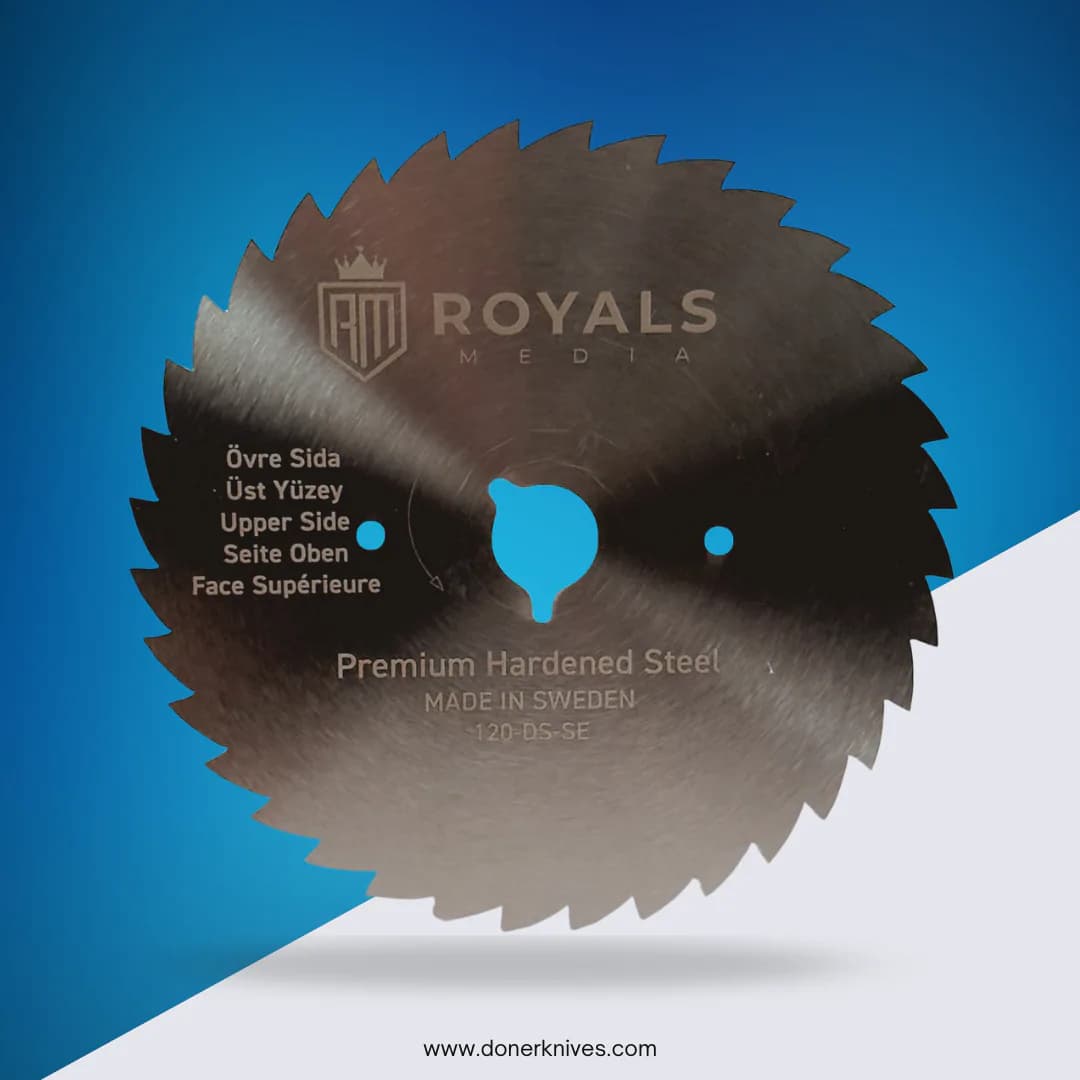
Learning to sharpen your doner knife blade correctly is one of the most valuable investments you can make for your doner business or kitchen. It ensures consistent quality, food safety, and efficiency. Whether you're using a 120mm Dost – Serrated or a 100mm Tandir – Serrated, the principles remain the same: the right tools, the right technique, and regular maintenance. A sharp blade is a safer and more productive blade. Take your time to master this skill – your customers (and your knives) will thank you.
Related articles
Get the right blade for your machine
Professional doner knife blades. Fast delivery across Europe.