June 12, 2026
120mm Serrated Doner Knife Blade: Ultimate Guide
Introduction to 120mm Serrated Doner Knife Blades
Introduction to 120mm Serrated Doner Knife Blades
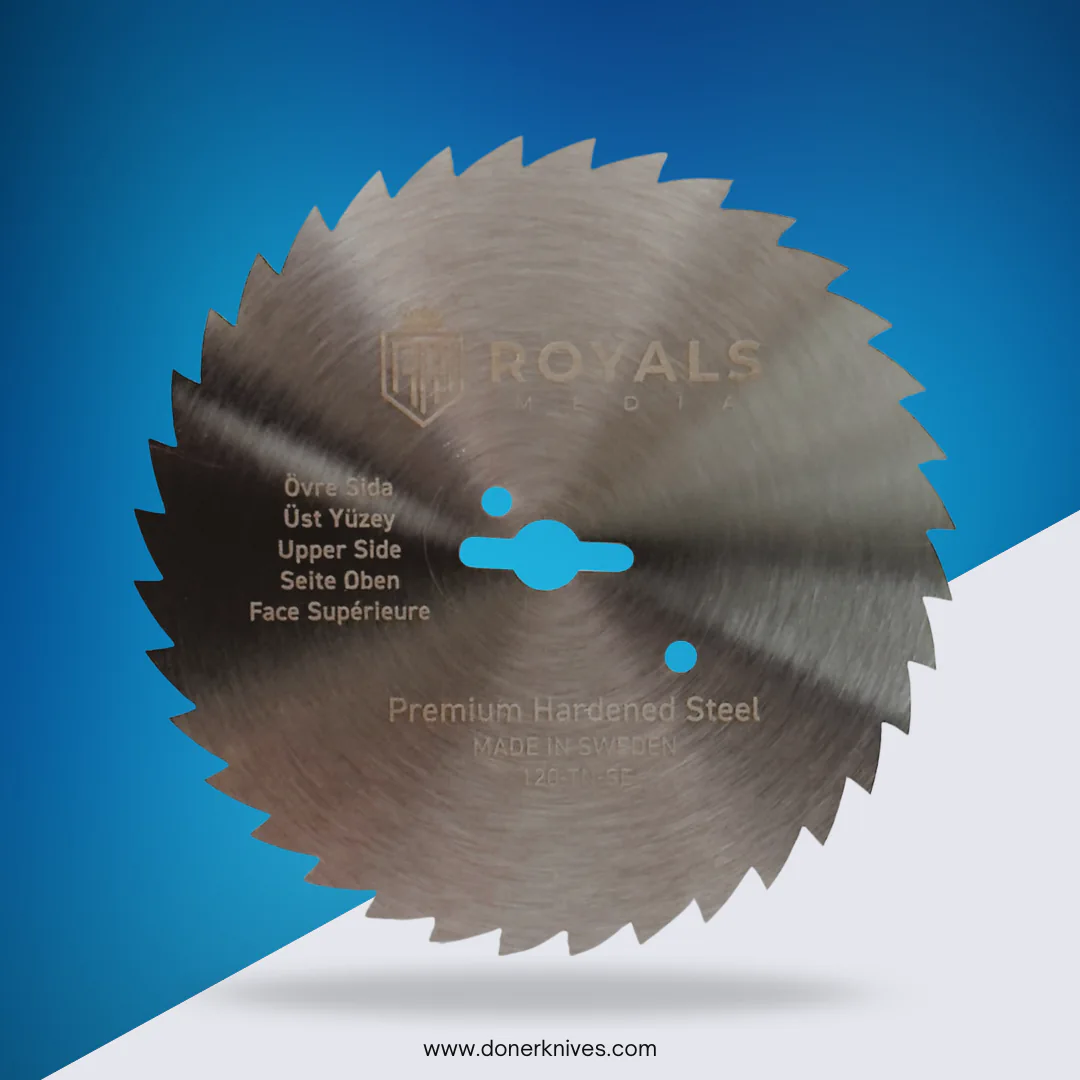
A doner knife blade 120mm serrated is a specialized cutting tool designed for slicing through stacked meat layers with precision and ease. These blades are essential for commercial kitchens and food trucks, offering superior performance compared to smooth-edged alternatives. The serrated edge ensures clean, consistent cuts, reducing tearing and preserving the texture of doner meat.
Serrated blades excel in handling tough, fibrous meats, making them ideal for vertical rotisserie setups. The 120mm size strikes a balance between maneuverability and cutting capacity, fitting most standard doner machines. For a deeper dive into blade options, explore our guide on the best doner knife blades of 2026.
Choosing the right blade involves understanding compatibility, material durability, and maintenance needs. All our blades are hardened stainless steel, which resists the corrosion that fat and meat acids cause. To ensure your blade fits your machine, refer to our doner blade compatibility chart.
Whether you're a seasoned chef or a business owner, investing in a quality 120mm serrated doner knife blade can enhance efficiency and food presentation. This guide covers everything from selection to care, helping you make an informed decision.
What is a 120mm Serrated Doner Knife Blade?
A 120mm serrated doner knife blade is a specialized cutting tool designed for vertical rotisserie machines, commonly used in commercial kitchens to slice doner kebab meat. Measuring 120mm (approximately 4.7 inches) in diameter, this blade features a serrated edge—small, jagged teeth that enhance cutting efficiency, particularly for meats with varying textures or slight freezing.
Key Features
- Serrated Edge: The teeth grip and cleanly slice through layered or tougher meats, reducing tearing and ensuring uniform cuts.
- Compact Size: The 120mm diameter suits smaller to mid-sized doner machines, offering precision for high-volume slicing.
- Durability: Made from hardened stainless steel, these blades resist wear and hold their teeth well under daily use.
Common Applications
This blade is ideal for:
- Doner kebab preparation, especially when dealing with partially frozen or tightly packed meat stacks.
- Other vertical rotisserie meats, like shawarma or gyros, where a serrated edge prevents shredding.
For example, the 120mm Tandir Serrated Blade is engineered for heavy-duty use, while the 120mm Dost Serrated Blade offers a balance of affordability and performance.
Why Choose Serrated?
Unlike smooth blades, a doner knife blade 120mm serrated excels at handling fibrous or uneven textures without requiring constant sharpening. Its design minimizes slippage, enhancing safety and consistency in busy kitchens.
When selecting a blade, consider compatibility with your machine model and the meat type you primarily serve. Serrated blades are particularly favored for their versatility and reduced maintenance needs.
Serrated vs. Smooth Blades: When to Choose Serrated
Serrated vs. Smooth Blades: When to Choose Serrated
When selecting a doner knife blade 120mm serrated, understanding the difference between serrated and smooth blades is crucial for optimal performance. Each type excels in specific applications, and choosing the right one depends on your cutting needs.
Serrated Blades: The Precision Cutters
Serrated blades feature small, jagged teeth along the edge, making them ideal for:
- Tough or fibrous meats – The teeth grip and slice through dense textures effortlessly.
- Crusty or layered foods – Perfect for doner kebabs with crispy exteriors.
- Longer edge retention – Serrations stay sharp longer, reducing frequent sharpening.
A 120mm serrated doner knife blade (like the 120mm Tandir – Serrated) is a popular choice for commercial kitchens where consistency and durability matter.
Smooth Blades: The Clean Slicers
Smooth blades have a straight, sharp edge, best for:
- Soft, uniform meats – Delivers clean, even slices without tearing.
- Precision carving – Ideal for thinly shaved cuts.
- Easier sharpening – Requires less specialized maintenance.
For example, the 120mm Jet – Smooth offers effortless slicing for tender meats.
When to Choose Serrated
Opt for a serrated blade if:
- You frequently cut dense or uneven textures (e.g., layered doner meat with fat marbling).
- You prioritize durability over razor-thin precision.
- Your machine is compatible (check our Compatibility Guide).
For a balanced approach, some kitchens keep both types—like pairing a 120mm Dost – Serrated for tough cuts and a smooth blade for finer work.
Ultimately, the choice hinges on your menu and cutting style. Serrated blades excel in heavy-duty applications, while smooth blades offer finesse.
Compatibility Guide: Which Doner Machines Fit 120mm Blades
A 120mm serrated doner knife blade is designed for precision slicing in commercial doner kebab machines, but compatibility varies by machine model. Ensuring the correct fit is critical for performance and safety. Below, we outline key factors to verify before purchasing a replacement blade.
Machine Brands & Models Compatible with 120mm Blades
Most 120mm blades are standardized for mid- to large-sized doner machines, including:
- Jet Doner Machines: Compatible with 120mm Jet – Serrated blades, commonly used in high-volume kitchens.
- Tandir Doner Machines: Optimized for 120mm Tandir – Serrated blades, known for heavy-duty use.
- Dost Doner Machines: Fits 120mm Dost – Serrated blades, ideal for vertical rotisseries.
For a detailed compatibility chart, refer to our Doner Blade Compatibility Guide.
Key Compatibility Checks
- Blade Hole Configuration: Verify the number and spacing of mounting holes (e.g., 2-hole vs. 4-hole designs).
- Shaft Diameter: Ensure the blade’s center hole matches your machine’s shaft size (typically 25–30mm).
- Serration Pattern: Some machines require specific tooth spacing for optimal slicing.
Universal vs. Brand-Specific Blades
While universal blades (e.g., 90mm Universal – Serrated) fit multiple machines, 120mm blades are often brand-specific. Always cross-reference your machine’s manual or our replacement guide before purchasing.
Pro Tip: If upgrading from a smaller blade (e.g., 100mm), confirm your machine’s arm clearance accommodates the larger 120mm size. Incorrect sizing can cause uneven cuts or motor strain.
For specialized needs, explore our full range of 120mm serrated doner blades, priced at 299kr, ensuring durability and precise cuts for professional kitchens.
Blade Material and Durability
A doner blade sits against hot, greasy meat all day and gets rinsed several times per shift. That makes the material choice simpler than articles about chef's knives make it sound: hardened stainless steel is the right material here, not a compromise.
Why hardened stainless steel
- Corrosion resistant. Fat and meat acids attack steel. Stainless copes with that environment; carbon steel does not.
- Food-safe without coating. No surface treatment that can flake into the food.
- Enough edge retention. Hardening gives an edge that lasts a full shift and can be touched up with a round diamond file.
Why not carbon steel or carbide
- Carbon steel holds an edge marginally longer, but rusts as soon as it is left damp — and a doner blade is always damp. The difference in sharpness does not outweigh the rust risk in a food kitchen.
- Tungsten carbide is harder but brittle: a tooth that strikes the spit's metal snaps off instead of bending. It also cannot be touched up on site.
- Ceramic is rust-proof but too brittle for this use.
Our 120 mm blades are all the same hardened stainless steel — the 120mm Tandir – Serrated and the 120mm Dost – Serrated differ in mount, not in material.
What decides lifespan is not the grade of steel but the care: clean after every shift, dry immediately and store dry.
How to Replace a 120mm Serrated Doner Blade
How to Replace a 120mm Serrated Doner Blade
Replacing a 120mm serrated doner knife blade is a straightforward process, but precision is key to ensure safety and optimal performance. Follow these steps to install your new blade correctly:
Step 1: Safety First
- Unplug the doner machine to prevent accidental activation.
- Wear cut-resistant gloves to protect your hands from the sharp serrations.
- Lay out all tools (e.g., wrench, screwdriver) beforehand.
Step 2: Remove the Old Blade
- Locate the blade retention nut or bolt at the center of the rotating assembly.
- Use the appropriate tool (usually a wrench) to loosen and remove the fastener.
- Carefully slide the old blade off the spindle, noting its orientation for the replacement.
Step 3: Inspect the Spindle & Housing
- Clean any grease or debris from the spindle to ensure smooth rotation.
- Check for wear or damage on the spindle threads or blade housing.
Step 4: Install the New 120mm Serrated Blade
- Align the new blade’s center hole with the spindle, matching the original orientation.
- Secure the blade by tightening the retention nut firmly—but avoid over-tightening, which can warp the blade.
Step 5: Test & Adjust
- Reconnect the power and run the machine briefly at low speed to check for wobbling or unusual noise.
- If the blade vibrates, stop immediately and recheck alignment.
For troubleshooting, refer to our guide on fixing a doner knife blade that isn’t cutting properly. If you need a high-quality replacement, consider this 120mm serrated blade, designed for durability and precision.
Pro Tip: Always keep spare blades on hand to minimize downtime during busy service hours. Regular replacement (every 6–12 months, depending on usage) ensures consistent slicing performance.
Sharpening & Maintenance Tips for Serrated Blades
Maintaining the sharpness and longevity of your doner knife blade 120mm serrated requires proper care and technique. Unlike smooth blades, serrated edges demand specialized sharpening methods due to their scalloped design. Here’s how to keep your blade performing optimally:
Sharpening Serrated Blades
- Use a tapered sharpening rod – A rod matching the blade’s curvature is ideal. Gently glide the rod along each serration at a consistent angle (typically 15–20°).
- Ceramic or diamond-coated tools – These provide precision for serrations. Avoid coarse sharpeners, which can damage the teeth.
- Professional sharpening – For heavily worn blades, consider professional services to restore edge integrity.
Routine Maintenance
- Clean after each use – Residue buildup dulls the blade. Hand-wash with mild detergent and dry immediately to prevent corrosion.
- Lubricate the pivot point – Apply food-grade oil to the blade’s center hole to ensure smooth rotation.
- Inspect for damage – Check for bent teeth or cracks, which compromise performance. Replace if necessary (120mm Tandir – Serrated).
Storage Tips
- Use blade guards – Protect serrations from nicks during storage.
- Avoid stacking blades – Store vertically or separately to prevent edge contact.
For deeper insights, explore our guide on best doner knife blades. Pair these practices with high-quality blades like the 120mm Dost – Serrated (299kr) for consistent results.
Proactive care ensures your 120mm serrated doner knife blade remains efficient, reducing wear and extending its lifespan significantly.
Safety Precautions for Handling Doner Blades
Handling a doner knife blade 120mm serrated requires strict safety measures due to its sharp, serrated edges designed for slicing meat efficiently. Whether replacing, cleaning, or operating the blade, these precautions minimize injury risks:
1. Proper Handling & Storage
- Always wear cut-resistant gloves when touching the blade, even during installation or removal.
- Store the blade in a protective sheath or dedicated slot to prevent accidental contact.
- Never leave the blade loose on surfaces where it could fall or be grabbed carelessly.
2. Installation & Operation
- Ensure the doner machine is powered off and unplugged before blade replacement.
- Use the manufacturer’s recommended tools (e.g., wrenches) to secure the blade, avoiding makeshift solutions.
- Confirm the blade is aligned and tightened correctly to prevent wobbling during use.
3. Cleaning & Maintenance
- Clean the 120mm serrated doner knife blade with a non-abrasive brush and mild detergent—never bare hands.
- Dry thoroughly to prevent rust and bacterial growth.
- Inspect regularly for chips or dullness, as damaged blades increase slippage risks.
4. Training & Awareness
- Train staff on safe handling protocols, emphasizing the blade’s sharpness.
- Post warning signs near machines as reminders.
By following these steps, you ensure both longevity of the blade and safety in high-volume kitchens.
Top Brands & Where to Buy 120mm Serrated Doner Blades
Top Brands & Where to Buy 120mm Serrated Doner Blades
When searching for a high-quality doner knife blade 120mm serrated, choosing a reputable brand ensures durability, performance, and food safety. Here are the top manufacturers and trusted suppliers:
Leading Brands
- Tandir: Known for precision-engineered blades, Tandir’s 120mm serrated doner blade offers exceptional sharpness and corrosion resistance, ideal for heavy-duty use.
- Dost: A favorite among professionals, Dost’s 120mm serrated blade features ergonomic design and long-lasting edge retention, perfect for slicing doner meat smoothly.
- Kizilay: Combines affordability with reliability, offering serrated blades that fit most standard doner machines.
Where to Buy
- Specialized Retailers: Websites like donerknives.com stock authentic blades with detailed specifications. Always verify compatibility before purchasing.
- Restaurant Supply Stores: Physical or online stores catering to commercial kitchens often carry 120mm serrated doner blades.
Key Considerations
- Material: Hardened stainless steel, uncoated, for longevity and food safety.
- Compatibility: Confirm the blade fits your doner machine model.
- Warranty: Reputable brands often provide guarantees against defects.
For consistent performance, invest in a doner knife blade 120mm serrated from trusted sources like Tandir or Dost. Proper maintenance (see Sharpening & Maintenance Tips) will further extend its lifespan.
FAQ: 120mm Serrated Doner Knife Blades
How often should I replace a 120mm serrated doner knife blade?
Replacement frequency depends on usage and maintenance. For commercial kitchens using the blade daily, inspect it monthly and replace it every 6–12 months if signs of wear (e.g., dullness, chipping) appear. Proper sharpening can extend its lifespan. Refer to our doner blade compatibility chart to ensure your replacement fits your machine.
Can I sharpen a serrated doner knife blade at home?
Yes, but it requires specialized tools like a tapered sharpening rod or a serrated knife sharpener. Focus on each serration individually, maintaining the original angle. Avoid aggressive grinding, as it can damage the teeth. For heavily worn blades, professional sharpening is recommended.
Are 120mm serrated blades compatible with all doner machines?
No. While 120mm is a common size, compatibility depends on the machine’s mounting system (e.g., 3-hole universal or proprietary designs). Check your machine’s specifications or consult our compatibility guide. For larger options, explore our guide to 140mm universal blades.
What foods are best cut with a serrated doner knife blade?
Serrated blades excel at slicing fibrous or uneven textures, such as stacked doner meat, roasted vegetables, or crusty bread. The teeth grip and cut cleanly without tearing, making them ideal for precision shaving.
How do I store a 120mm serrated doner blade safely?
Store it in a dry, protective sheath or blade cover to prevent accidental contact and corrosion. Avoid stacking unprotected blades, as serrations can chip. For long-term storage, apply food-grade oil to prevent rust.
Can I use a 120mm serrated blade for frozen meat?
Not recommended. Frozen meat can strain the blade’s teeth, increasing the risk of damage. Thaw meat partially before slicing, or use a smooth blade designed for frozen cuts.
For further questions, consult our detailed guides or contact our support team. A high-quality doner knife blade 120mm serrated ensures consistent cuts and operational efficiency when properly maintained.
Conclusion
A 120mm serrated doner knife blade is an essential tool for professional kitchens, offering precision and efficiency in slicing meats for doner kebabs. Throughout this guide, we’ve explored its advantages, compatibility, materials, and maintenance to help you make an informed decision. Whether you prioritize durability, ease of use, or compatibility with specific machines, a serrated blade ensures clean cuts with minimal effort, especially for tougher meats.
For those seeking high-quality options, the 120mm Tandir – Serrated (299kr) and 120mm Dost – Serrated (299kr) are excellent choices, combining sharpness and longevity. If you need alternatives, consider the 100mm Tandir – Serrated (219kr) for smaller machines or the 140mm Universal – 4 Hole (449kr) for larger setups.
Proper maintenance—such as regular sharpening and careful handling—will extend the lifespan of your blade. Always follow safety protocols to avoid accidents. Investing in a reliable doner knife blade 120mm serrated ensures consistent performance, reducing downtime and enhancing productivity in your kitchen.
For more options, explore our full range of doner blades, tailored to meet diverse culinary needs. Choose wisely, and elevate your doner preparation with the right tools.