April 26, 2026
Which Doner Blade Fits My Machine? Complete Compatibility Guide
Choosing the right doner blade for your kebab machine is essential for achieving perfect, consistent cuts every time. A mismatched blade can lead to uneven slicing, excessive wear, or even damage to your equipment. Whether you own a Dost, Tandir, Jet, or Alkadur machine, selecting the correct blade size and type ensures efficiency, longevity, and top-notch results. In this comprehensive guide, we'll walk you through how to identify the best doner blade for your machine, discuss compatibility across popular brands, compare serrated and smooth blades, and help you determine when it's time for a replacement. By the end, you'll have all the knowledge needed to make an informed decision.
How to Identify the Right Doner Blade for Your Machine
The first step in finding the perfect doner blade is knowing your machine's specifications. Here’s what to check:
- Machine Brand & Model: Most manufacturers specify compatible blade sizes. Check your user manual or the machine’s label.
- Blade Diameter: Common sizes include 90mm, 100mm, 120mm, and 140mm. Measure the existing blade or the mounting area if unsure.
- Shaft Size: The inner hole of the blade must fit snugly onto the machine’s shaft (typically 20mm or 25mm).
- Mounting System: Some machines use screws, while others rely on locking mechanisms—ensure the blade matches.
If you're replacing an old blade, take note of its dimensions and any markings. If purchasing a new machine, consult the manufacturer’s recommendations.
Common Doner Machine Compatibility
It is the brand of the slicer that decides which blade you need — not the grill. The grill turns the cone; it does not cut.
Dost Machines
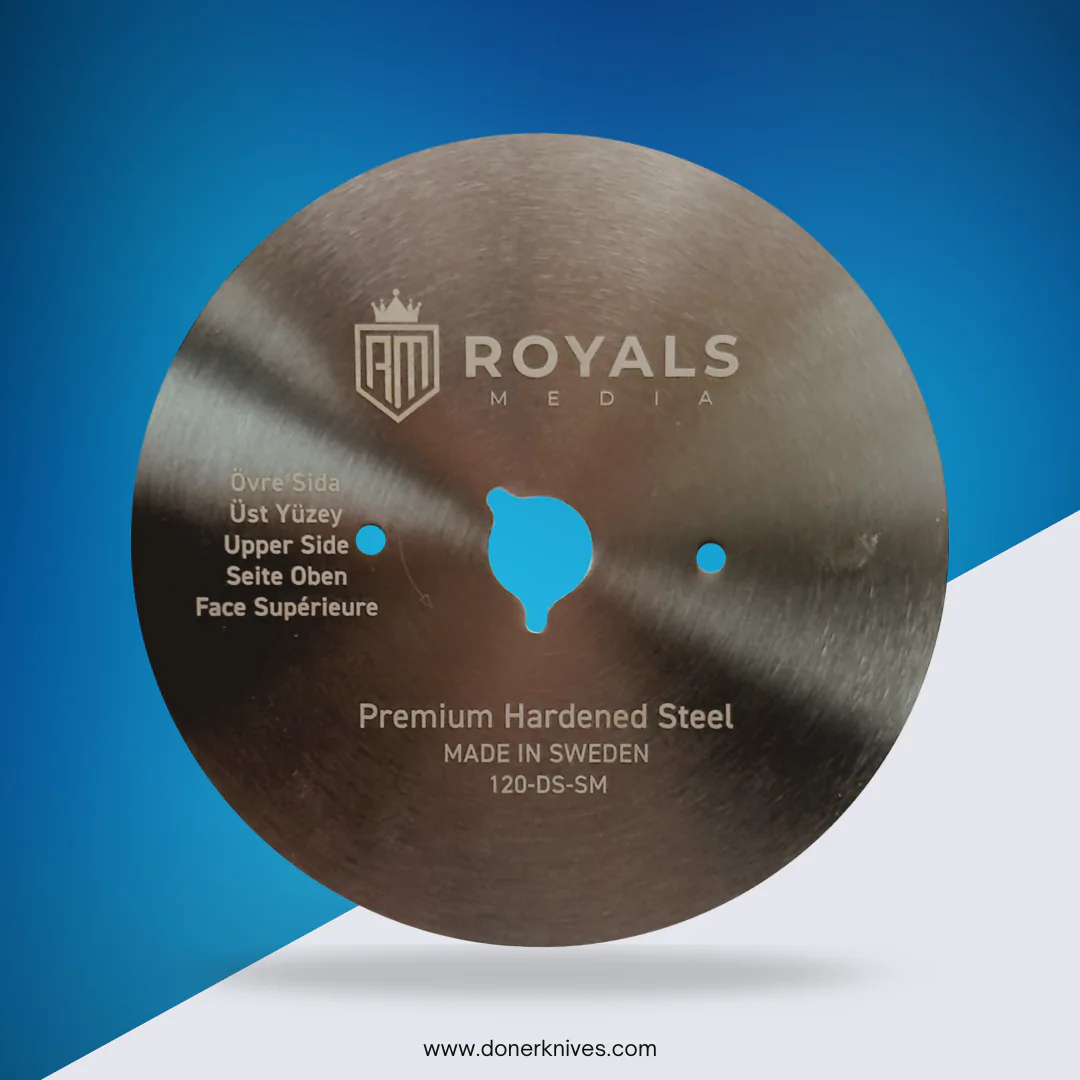
Dost is recognised by its round centre hole. Depending on the model they take the 90 mm Dost or the 120 mm Dost. Dost slicers with a keyhole mount take 80 or 90 mm Universal instead.
Tandir Machines
Tandir uses the 100 mm Tandir or the 120 mm Tandir with a brand-specific mount.
Jet Machines
Jet takes the 120 mm Jet, smooth or serrated.
Alkadur Machines
Alkadur — like IDM and Korkmaz — uses the 140 mm Universal with 3 holes, which bolts on. Atalay uses the 4-hole variant.
Not sure? Measure the old blade — diameter, centre hole and hole pattern — or send a photo of the mount and we will tell you which blade fits. Model numbers vary between years and markets; the mount does not.
Serrated vs Smooth Doner Blades: Which Should You Choose?
The type of blade you select impacts the texture and presentation of your kebab meat:
- Serrated Blades: Ideal for softer meats, creating thin, uniform slices with a slightly textured edge. Great for chicken, lamb, or mixed doner.
- Smooth Blades: Best for firmer meats like beef, producing clean, smooth cuts without tearing.
If you serve a variety of meats, consider keeping both types on hand. For high-volume shops, serrated blades often last longer due to reduced friction.
Blade Durability & Material Quality
A high-quality doner blade should be made from hardened stainless steel to resist corrosion and maintain sharpness. Look for:
- High-carbon stainless steel: Offers longevity and retains sharp edges longer.
- Precision grinding: Ensures even cutting performance without wobbling.
- Anti-corrosion coating: Essential for kitchens with high humidity.
Cheaper blades may dull quickly or warp under pressure, leading to inconsistent cuts and frequent replacements.
When Should You Replace Your Doner Blade?
Even the best blades wear out over time. Watch for these signs:
- Uneven or ragged cuts: Indicates dullness or misalignment.
- Excessive meat tearing: Suggests the blade has lost its sharp edge.
- Visible rust or pitting: Compromises hygiene and performance.
- Strange noises or vibrations: May signal blade warping or loose fittings.
For busy restaurants, replacing blades every 6–12 months ensures consistent quality.
Frequently Asked Questions (FAQ)
Can I use a 100mm blade on a 120mm machine?
No. Using an undersized blade can cause imbalance, excessive vibration, and potential machine damage. Always match the blade size to your machine’s specifications.
Are universal doner blades reliable?
While some universal blades claim to fit multiple machines, they often lack precision. Stick to manufacturer-recommended sizes for optimal performance.
How do I maintain my doner blade?
Clean the blade after each use, dry thoroughly, and store in a dry place. Regular sharpening by a professional can extend its lifespan.
What’s the difference between 120mm and 140mm blades?
140mm blades are larger and typically used in high-capacity machines for thicker cuts. 120mm is more common for standard doner slicing.
Can I sharpen a serrated doner blade?
Yes, but it requires specialized tools. For best results, have it professionally sharpened or replaced.
Final Thoughts
Selecting the right doner blade for your machine is a small detail that makes a big difference in your kebab preparation. By considering your machine’s brand, blade size, type (serrated or smooth), and material quality, you’ll ensure efficient operation and top-tier results. Whether you run a busy kebab shop or a small restaurant, investing in the correct blade will save you time, money, and hassle in the long run. Take the time to verify compatibility, monitor blade condition, and replace when necessary—your customers will taste the difference.