August 14, 2026
Sharpening a Doner Blade: Keeping the Circular Edge Keen Without Damaging It
Two levels of sharpening
A doner blade in daily service lives on two different rituals: the daily touch-up, which realigns the existing edge, and the proper regrind, which cuts fresh material. Confuse the two and you either sharpen too rarely — or grind the blade small unnecessarily fast.
The daily touch-up
Cutting folds the fine edge over microscopically. A short touch-up with a honing rod or the slicer's built-in sharpener stands it back up:
- Before or after every shift, a few strokes per side is enough.
- Light pressure — the edge should realign, not wear away.
- Evenly around the full circumference, not just in one spot.
Many handheld slicers have built-in sharpening rollers: engage briefly, let it run a few seconds, done. This does not replace regrinding — it just stretches the interval between regrinds.
The proper regrind
When touch-ups stop holding — the blade tears again within hours — the edge needs a fresh bevel:
- Remove the blade (machine unplugged) and clean off fat and residue.
- Keep the existing edge angle. The factory angle is the compromise between sharpness and durability — steeper cuts duller, shallower turns fragile.
- Grind evenly around the circumference, in small sections, with minimal heat. If the edge turns blue, the hardening at that spot is ruined.
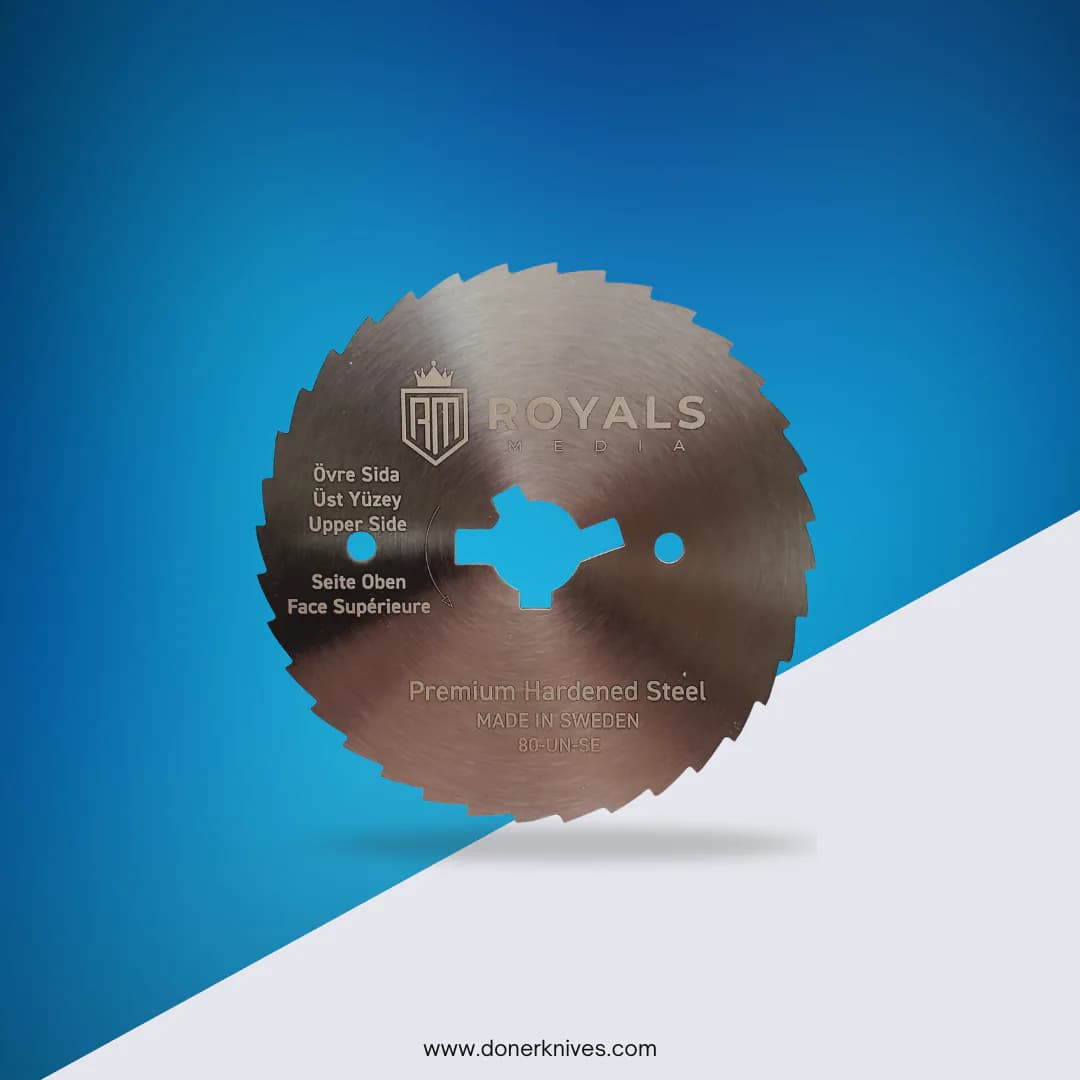
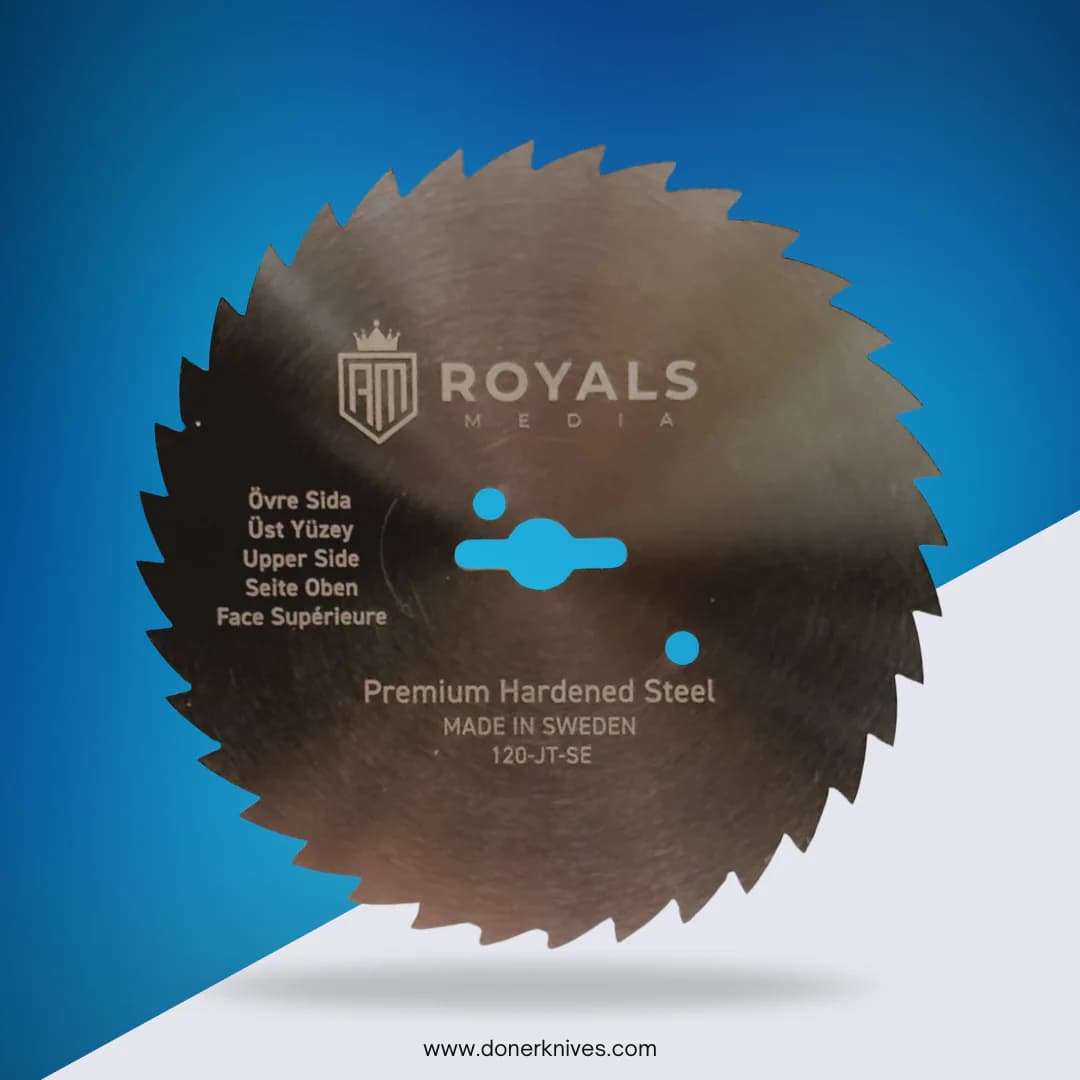
- On serrated blades, grind only the bevel, never across the tooth tips — grind the teeth away and you own a bad smooth blade.
- Deburr and wipe the blade before remounting.
If in doubt, a grinding service sharpens circular blades for little money — the alternative, a ruined hardened zone, costs the whole blade.
The three mistakes that ruin blades
- Grinding too hot: blue discolouration = annealed edge that dulls again immediately.
- Changing the angle: every sharpening at a new angle wastes material until the geometry collapses.
- The dishwasher: not a sharpening mistake, but the most common reason blades need sharpening so often in the first place. Hand-wash, dry, done.
When sharpening stops paying off
Sharpening is maintenance, not eternal life. If the diameter has visibly shrunk, or a freshly ground edge holds only hours, the hardened rim zone is spent — then it is time to replace. Replacement blades start from €18 excl. VAT with 2–5 day delivery.
FAQ
How often should I touch up a doner blade?
In daily service: every shift, a few light strokes. It keeps the edge standing and pushes the proper regrind further out.
Can I sharpen a serrated blade myself?
Yes — but only on the bevel, never across the tooth tips. When unsure, use a grinding service; teeth ground away do not come back.
How do I recognise heat damage while grinding?
Blue or straw-yellow discolouration of the edge. That spot is annealed and will not hold sharpness — grind with less pressure and more pauses in future.
Is a grinding service worth it for an €18 blade?
Simple maths: if the service costs less than half the blade and the blade is not already ground small, yes. Otherwise the new blade is the better investment.
Related articles
Get the right blade for your machine
Professional doner knife blades. Delivery across Europe.