June 18, 2026
Doner Knife Blades According to Halal Standards: A Comprehensive Guide for Selection and Maintenance
Introduction: The Importance of Halal Doner Knife Blades
In the world of doner production, halal-certified doner knife blades are fundamental and cannot be overlooked. They play a crucial role in ensuring meat quality and safety in accordance with Islamic law. These blades are not just ordinary cutting tools—they are a guarantee of compliance with halal principles, including hygiene, contamination prevention, and lawful slaughter methods.
When selecting the right blade, it must meet halal requirements, such as not being used to cut non-halal meats, and should be made of high-quality, rust-resistant materials to avoid contamination. Additionally, the blade's shape and sharpness affect the ease of slicing meat evenly, preserving its flavor and quality.
For more details on types of doner blades and their uses, check out this Comprehensive Guide. Understanding blade compatibility with different knives also helps in making the best choice, as explained in the Compatibility Guide.
Ultimately, choosing the right blade is not just a technical matter—it is a religious and ethical commitment that ensures delicious, halal-compliant doner meals.
Types of Doner Knife Blades: Smooth or Serrated?
Doner knife blades primarily come in two types: smooth and serrated. The right choice depends on factors such as the type of meat used, slicing speed, and slice quality. Halal-certified doner knife blades are essential tools in preparing halal doner meals, so understanding the differences between them is key to ensuring quality and religious compliance.
Smooth Blades
Smooth blades, like the 80mm Universal Smooth Blade, excel at slicing meat into smooth, even cuts, making them ideal for doner made from tender or minced meat. They produce clean results and minimize fiber tearing but require extremely sharp knives and regular maintenance to remain effective.
Serrated Blades
Serrated blades, such as the 80mm Universal Serrated Blade, are often used with tougher or partially frozen meats, as their teeth penetrate fibers forcefully without shredding them. They are a practical choice for high-volume restaurants but may leave less uniform edges compared to smooth blades.
Which Is Better?
- Smooth: Best for high-quality, fresh meats.
- Serrated: Ideal for speed and durability, especially with chilled meats.
The right blade depends on your needs and workflow, ensuring that halal-certified doner knife blades are made from safe, easy-to-clean materials to maintain hygiene and food safety.
Halal Standards for Doner Knife Blades
Halal Standards for Doner Knife Blades
Halal-certified doner knife blades are essential for ensuring meat is sliced according to Islamic law. To achieve this, blades must meet the following specifications:
Halal Materials:
- Blades must be made of stainless steel free from prohibited or contaminated components.
- They must never alternate between halal and non-halal meat. A kitchen that handles both needs separate, clearly marked blades.
- Coatings and lubricants must be food-grade and free from components of animal origin.
Appropriate Design:
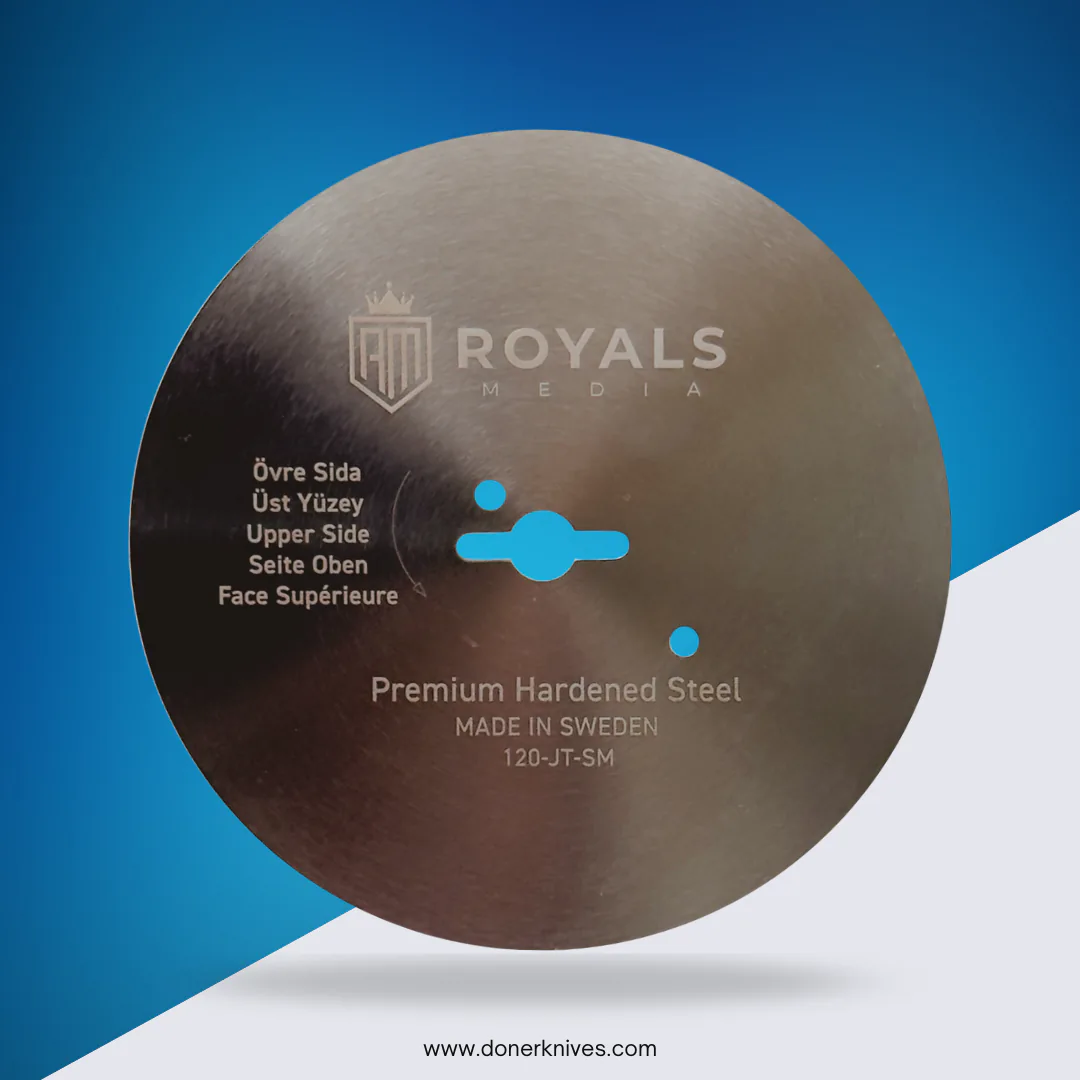
- Serrated blades (e.g., 100mm Tandir – Tandad) are ideal for fast, precise cuts, while smooth blades (e.g., 120mm Tandir – Slät) suit thin slicing.
- Blades 100mm to 120mm long are preferred for efficient meat coverage.
Hygiene and Maintenance:
- Blades must allow deep cleaning to prevent meat or fat residue buildup.
- Opt for high-wear-resistant blades like the 120mm Tandir – Tandad to maintain sharpness with frequent use.
Certification and Reliability:
By adhering to these standards, you guarantee halal-certified doner blades that meet the highest quality and religious compliance benchmarks.
How to Choose the Right Blade for Halal Doner
Selecting the right blade for halal doner requires considering several factors to ensure quality and religious compliance. Here are the key points to focus on:
1. Blade Type: Smooth or Serrated?
- Smooth Blades: Ideal for clean cuts and traditional doner. Halal-certified doner knife blades must be non-oxidizing to prevent meat contamination.
- Serrated Blades: Suitable for quick slicing, especially with frozen meats. Refer to the 120mm Serrated Blade Guide for details.
2. Materials Used
- Ensure the blade is made of high-quality stainless steel (e.g., AISI 304 or 420) to prevent rust and contamination, a halal standard requirement.
3. Size and Thickness
- Choose the right size for your machine (e.g., 120mm or 150mm) with a thickness of 1.5-2mm for durability without adding weight.
4. Ease of Maintenance and Cleaning
- Removable blades simplify deep cleaning, essential for halal hygiene. Follow the Blade Replacement Guide for safety.
5. Trusted Brands
- Select brands certified by global halal authorities and offering quality guarantees.
By following these guidelines, you can wisely choose halal-certified doner knife blades, ensuring meat quality and customer satisfaction.
Comparison Between Universal and Specialized Blades
Comparison Between Universal and Specialized Blades
When choosing doner knife blades according to halal standards, users face two main options: universal (multi-purpose) blades or specialized blades (designed specifically for cutting doner). Each has advantages and disadvantages that suit different needs.
Universal Blades
- Cost: Starting from 199 kronor (e.g., 80mm Universal – Smooth).
- Flexibility: Suitable for cutting meats and vegetables, making them ideal for multi-task restaurants.
- Durability: Typically made of stainless steel, but they may lose sharpness quickly with intensive use.
- Limitations: Less precise in cutting doner compared to specialized blades, especially when used with dense-textured meats.
Specialized Blades
- Cost: Slightly higher (e.g., 120mm Dost – Serrated priced at 299 kronor).
- Precision: Designed to slice doner evenly and smoothly, preserving meat quality according to halal standards.
- Design: Some feature serrated edges (e.g., 90mm Dost – Serrated) to improve cutting without tearing the meat.
- Usage: Ideal for restaurants where doner is a main dish, ensuring higher efficiency and reduced waste.
Which One to Choose?
- For general use: Universal blades (especially smooth ones) are suitable for limited budgets or restaurants with diverse menus.
- For professionalism: Specialized blades (like 120mm Tandir – Serrated) are worth the investment if doner is central to your business.
By choosing the right blade, you can ensure cutting quality while adhering to halal standards in every slice.
Doner Knife Blade Maintenance Tips
To ensure optimal performance and longevity for doner knife blades according to halal standards, regular maintenance procedures must be followed. Here are the top tips to keep your blades in excellent condition:
1. Daily Cleaning
- Wash the blade with hot water and soap after each use to remove meat and fat residues.
- Use a soft brush to avoid scratching the blade surface, especially if it has an anti-stick coating.
- Dry the blade immediately with a clean cloth to prevent corrosion. Hardened stainless steel resists rust, but standing moisture marks even good steel.
2. Sterilization
- Use a vinegar solution or medical alcohol to sterilize the blade weekly, especially if used for preparing halal doner to ensure complete cleanliness.
- Avoid harsh chemicals that may affect the steel quality.
3. Regular Sharpening
- Sharpen the blade every 2-3 weeks using a sharpening stone or a dedicated machine to maintain its sharp edge.
- Ensure the correct sharpening angle (usually 20-25 degrees) to avoid damaging the blade.
- Refer to the Doner Blade Compatibility Guide to choose the right sharpening tools.
4. Proper Storage
- Store the blade in a dry, ventilated place, preferably using a protective sheath to prevent corrosion.
- Avoid storing it in humid areas or with other metal tools to prevent friction.
5. Regular Inspection
- Inspect the blade regularly for cracks or bends, especially if it's a 140mm Universal type.
- Replace it immediately if any damage is noticed to ensure cutting quality and food safety.
By following these tips, you’ll ensure your blades remain efficient for the longest time while maintaining halal standards in doner preparation.
What to Require of a Blade in a Halal Kitchen
What to Require of a Blade in a Halal Kitchen
There is no such thing as a "halal-certified" doner blade — certification covers the meat and the handling, not the steel. What you should require of the blade is concrete:
Food-grade stainless steel, uncoated
- Hardened stainless steel with no surface treatment of unknown origin. Coatings and lubricants can contain components of animal origin.
- Our entire range is the same hardened stainless steel — for example the 120 mm Tandir smooth and the 120 mm Tandir serrated.
Separate blades for halal and non-halal
- If the kitchen handles both, you need two blades, clearly marked. That is the one point where the blade itself affects halal status.
A profile that can be cleaned completely
- No tight angles where meat residue collects. Serrated blades need extra care between the teeth.
Tip: Buy from a supplier that states steel quality, diameter and mount for every item. Avoid blades with no material specification — the surface treatment can then be neither traced nor guaranteed.
FAQs About Halal Doner Blades
What are doner knife blades according to halal standards?
Halal doner knife blades are those designed under Islamic Sharia guidelines, made from non-contaminated materials (5) and meeting strict hygiene standards during manufacturing and use. They must also prevent meat mixing, especially when cutting different types.
Are serrated blades suitable for halal doner?
Yes, provided they are designed to ensure clean cuts without tearing the meat, reducing contamination. Check the serrated blade guide here for halal standards.
How can I ensure the blade doesn’t contain prohibited materials?
- Choose brands certified by recognized halal authorities.
- Verify the blade’s core material is high-quality stainless steel.
- Avoid blades coated with questionable materials.
Can one blade be used for multiple types of meat?
Not recommended under halal standards unless sterilized between uses. Dedicate a blade to each type for purity.
What’s the best size for halal doner knife blades?
The optimal size is 90-120 mm for a balance of precision and efficiency. Discover the 90mm smooth blade here.
How do I maintain my blades to remain halal-compliant?
- Wash with hot water and soap after each use.
- Store in a dry place to prevent rust.
- Polish with natural substances like lemon and vinegar.
Do universal blades meet halal standards?
Only some do, so look for halal certifications or consult suppliers specializing in doner knife blades according to halal standards.
Conclusion: Choosing the Perfect Halal Doner Knife
Selecting doner knives according to Halal standards is a crucial step to ensure meat quality, ease of slicing, and adherence to Islamic principles. After reviewing the types, criteria, and tips, it becomes clear that the ideal knife is determined by your needs and the type of doner you serve.
To achieve the best results, we recommend the following:
- For smooth and quick slicing: Choose smooth blades like the 100mm Tandir – Slät (219 SEK) or 120mm Dost – Slät (299 SEK), especially if you prefer high-precision meat cutting.
- For thick or frozen cuts: Serrated blades like the 90mm Dost – Tandad (209 SEK) are more effective.
Remember that regular maintenance of the knives, such as cleaning after each use and sharpening them periodically, extends their lifespan and maintains cutting sharpness. Additionally, choosing specialized brands ensures the knives comply with Halal standards, as mentioned in the article.
In the end, quality and price are not the only factors; what matters most is that the knife meets Halal requirements and suits your workflow. Explore the full collection, such as the 120mm Tandir – Slät (299 SEK), to choose the best for your business.