June 20, 2026
Halal-Compliant Doner Blades: A Comprehensive Guide for Restaurants and Professionals
Introduction: The Importance of Halal Doner Blades
In the world of restaurants and fast food, halal-compliant doner blades are an essential element to ensure quality and adherence to Islamic principles in meat preparation. The importance of these blades is not limited to precise meat cutting alone; they also play a vital role in maintaining the purity of the slaughtered meat and preventing contamination with any non-halal substances.
When choosing doner blades, they must be specifically designed to meet halal standards, such as avoiding prohibited materials or cross-contamination with non-slaughtered meats. The quality of the blade also affects the smoothness of the cut, preserving the meat's flavor and nutritional value. For more details on ideal specifications, you can refer to this comprehensive guide.
Why do halal restaurants care about this aspect?
- Ensuring customer satisfaction for those seeking Sharia-compliant products.
- Avoiding legal or religious issues related to non-compliance.
- Enhancing the restaurant's reputation as a trusted halal food destination.
Ultimately, choosing halal doner blades is not just a technical detail but a commitment to ethical business practices and Islamic values.
What Are Doner Blades?
Doner blades are specialized cutting tools used in preparing doner meat, specifically designed to slice thin, even cuts of vertically roasted meat. These blades are exceptionally sharp and durable, ensuring effortless slicing without tearing the meat or losing its juices. Doner blades are typically made of high-quality stainless steel, making them corrosion-resistant and easy to clean to maintain hygiene and health standards.
Types of Doner Blades
Doner blades vary in shape and function, with the most prominent types including:
- Smooth Blades: Used for slicing tender meats like chicken or beef into smooth cuts.
- Serrated Blades: Ideal for tougher or partially frozen meats, as the teeth help slice the meat with minimal effort.
The Importance of Choosing Halal-Compliant Doner Blades
To ensure blades comply with halal standards, they must be made from safe materials free of any impurities that could contaminate the meat. They should also be easy to sterilize to prevent mixing with non-halal meats or food residues. You can learn more about the types and uses of doner blades from this comprehensive guide.
Halal-compliant doner blades are essential for restaurants and butchers adhering to Islamic standards, as they guarantee cutting quality while preserving the halal integrity of the food.
Halal Standards in Meat Cutting
For halal-compliant doner blades to align with Islamic law, they must adhere to several fundamental standards in meat cutting. First, the meat being sliced must come from an animal slaughtered according to Islamic rites, including invoking Allah's name, facing the Qibla, and using a sharp tool. Second, the blade used must be completely clean and free from any traces of non-halal meats or questionable fats.
Blade Materials
Halal doner blades should be made of non-porous materials like stainless steel to prevent the accumulation of meat residues or fats in pores. We recommend using blades such as the 90mm Universal – Serrated (209kr) or the 120mm Tandir – Smooth (299kr), made of high-quality steel and easy to clean.
Blade Shape and Sharpness
- Smooth Blades: Suitable for fine, delicate cuts, like the 90mm Dost – Smooth (209kr).
- Serrated Blades: Provide cleaner and faster cuts, like the 120mm Jet – Serrated (299kr).
Cleaning and Maintenance
Blades should be washed immediately after use with hot water and soap, then thoroughly dried to prevent corrosion or bacterial buildup. A dedicated brush is recommended for cleaning the small teeth of serrated blades.
Adhering to these standards ensures that halal-compliant doner blades are suitable for use in restaurants and establishments serving halal meat, while maintaining quality and hygiene.
Specifications of Halal Doner Blades
For halal-compliant doner blades to align with Islamic law, they must meet several key specifications to ensure cleanliness and effectiveness in cutting halal meat without contamination or mixing with non-halal substances.
1. Blade Materials
Blades must be made of high-quality stainless steel (304 or 316) to resist rust and corrosion, preventing bacterial buildup or meat residue accumulation. They should also be free from prohibited or harmful materials like copper or lead.
2. Design and Sharpness
- Two Main Types:
- Smooth Blades like the 90mm Dost – Smooth (209 kr) for cleaner, more precise cuts.
- Serrated Blades like the 120mm Tandir – Serrated (299 kr) for quick slicing without tearing the meat.
- The edge must be sharp enough to avoid crushing or damaging the meat, which could compromise its halal quality.
3. Ease of Cleaning
Blades should allow deep cleaning to prevent meat or fat residue mixing. Opt for blades with a smooth, even mounting face and no tight angles where residue collects and that are difficult to clean.
4. Compatibility with Doner Cut Sizes
- Small blades (80-90 mm) like the 80mm Universal – Smooth (199 kr) are suitable for thin cuts.
- Large blades (120 mm and above) like the 120mm Tandir – Smooth (299 kr) are ideal for thick, quick cuts.
Adhering to these specifications ensures that doner blades meet halal standards and maintain the purity of the meat served to customers.
How to Choose a Doner Knife Compatible with Halal
When selecting doner knives according to Halal standards, it is essential to focus on several factors that ensure compliance with Islamic guidelines and cutting quality. Here are the key points to consider:
1. Verify the Materials Used in the Knife
- The knife should be made of high-quality stainless steel to ensure it does not mix with prohibited or unclean materials.
- Avoid knives coated with unknown materials, as some coatings may contain non-Halal elements.
2. Design Suitable for the Type of Meat
- For smooth and quick cutting, choose a smooth blade like the 80mm Universal Smooth Blade.
- For thick or partially frozen meats, use serrated blades like the 100mm Tandir Serrated Blade to ensure consistent cutting without tearing the meat.
3. Compliance with Halal Manufacturing Standards
- Ensure the manufacturer follows certified Halal standards, especially in production and packaging.
- Avoid used or refurbished knives without guarantees of cleanliness.
4. Ease of Cleaning
- Choose knives with detachable handles for thorough cleaning, preventing the accumulation of meat residues or fats.
By carefully selecting doner knives according to Halal standards, you achieve optimal performance while adhering to Islamic guidelines. Always compare available options and read user reviews before purchasing.
Maintaining Doner Knives to Preserve Halal Standards
To ensure doner knives comply with Halal standards, follow regular maintenance procedures to preserve their cleanliness and effectiveness. Here are the key steps:
Daily Cleaning
- Immediate Washing: Wash the blade with warm water and soap after each use to remove meat residues and fats.
- Drying: Dry the blade thoroughly with a clean towel to prevent rust, which may contaminate the meat.
- Sterilization: Use sterilizing agents like white vinegar or diluted alcohol to ensure the blade is free of bacteria.
Periodic Maintenance
- Regular Sharpening: Maintain blade sharpness using a sharpening stone or a specialized machine every 3-6 months, depending on usage. A dull blade may waste meat and violate Halal standards.
- Proper Storage: Store the knife in a dry, covered place, preferably using a sheath to protect it from damage.
Common Mistakes to Avoid
- Leaving the Blade Wet: Moisture causes rust and compromises meat quality.
- Using Abrasive Materials: Avoid metal wires that scratch the surface and make cleaning harder.
For a detailed guide on replacing doner blades correctly, refer to this step-by-step guide.
By following these steps, you ensure that doner knives according to Halal standards remain safe and effective while preserving the quality of meat prepared in accordance with Islamic law.
Common Mistakes That Affect Knife Compliance with Halal
Common Mistakes That Affect Knife Compliance with Halal
When selecting doner knives according to Halal standards, many people make mistakes that can impact cutting quality and compliance with Islamic law. The most common errors include:
Using Non-Stainless Steel Blades: Cheap knives made from rust-prone materials can contaminate meat with metal particles, violating Halal conditions.
Neglecting Blade Sharpness: Dull blades require more pressure, leading to uneven mixing of meat and fat layers, which contradicts Halal cutting standards.
Failing to Clean Knives After Each Use: Accumulated meat and fat residues can decompose, creating an unhygienic environment that threatens the purity of Halal meat.
Using Non-Doner Knives: Some restaurants use regular knives instead of doner knives according to Halal standards, resulting in uneven cuts and reduced meat quality.
Improper Storage: Storing knives in damp or exposed areas accelerates wear and reduces their effectiveness in maintaining meat cleanliness.
To avoid these mistakes, opt for high-quality knives specifically designed for Halal doner and adhere to regular maintenance.
The Difference Between Smooth and Serrated Blades in Cutting Halal Meat
When choosing doner knives according to Halal standards, a key question arises: what is the difference between smooth and serrated blades? Each type has its advantages and impacts on cutting quality and compliance with Islamic guidelines.
Smooth Blades
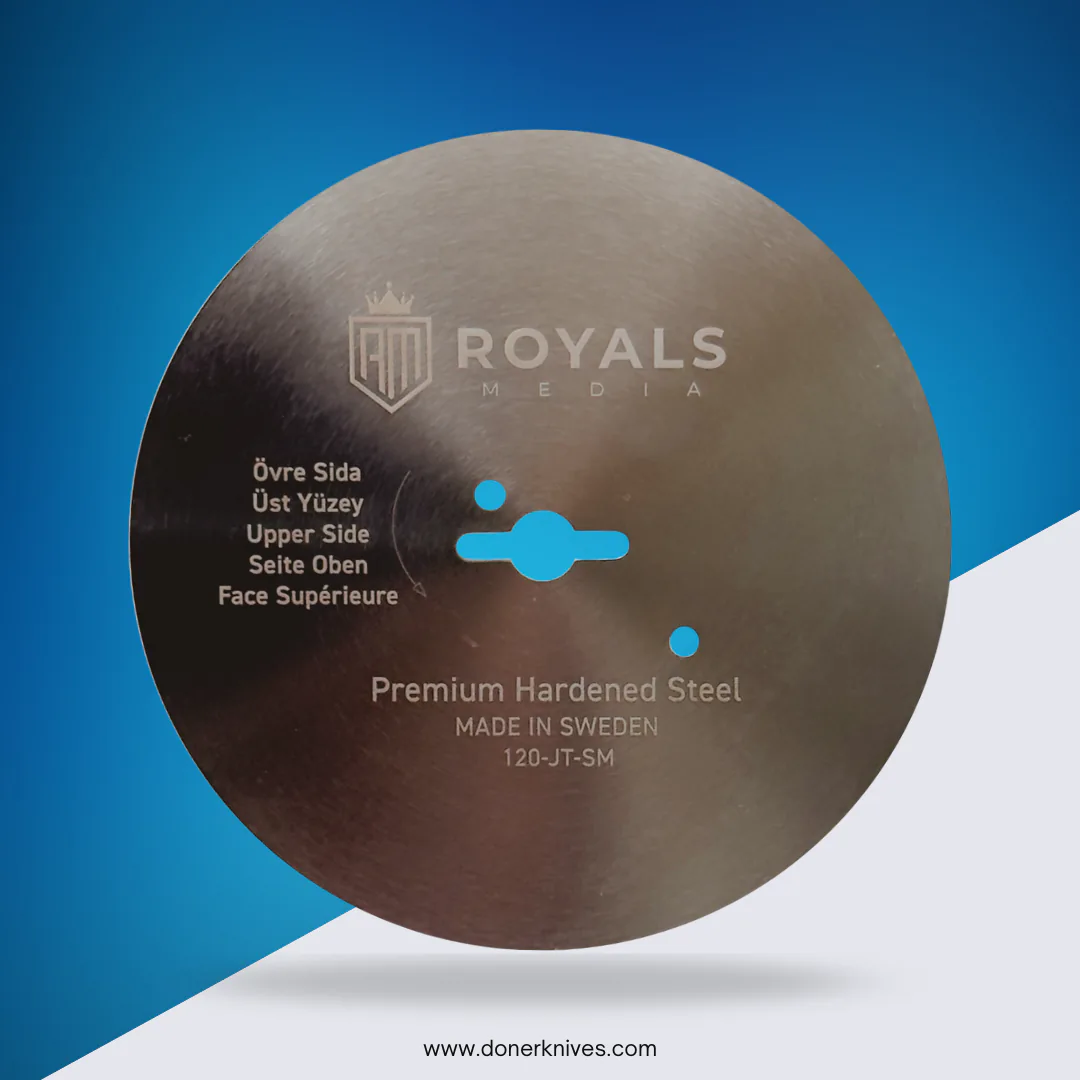
These feature a straight, smooth edge, making them ideal for cutting tender or pre-cooked meats. They produce thin, even slices, preserving the freshness and quality of the meat—a fundamental aspect of Halal meat cutting. Examples include:
Serrated Blades
These have small teeth along the cutting edge, making them suitable for frozen or tough-fibered meats. They reduce slipping and ensure clean cuts without tearing, maintaining Halal requirements. Available options include:
Which Is Better?
The choice depends on the meat type and preparation method:
- Smooth Blades: Ideal for fresh or cooked meats, providing precise cuts.
- Serrated Blades: Best for tough or frozen meats, reducing effort during cutting.
Ultimately, ensure the chosen blade meets Halal standards, whether smooth or serrated, and prioritize regular cleaning and maintenance to preserve quality.
Frequently Asked Questions About Halal Doner Blades
What are the requirements for halal doner blades?
Halal-certified doner blades must be made of stainless materials like stainless steel to ensure the meat does not mix with harmful substances. They should also be sharp enough to cut the meat smoothly without tearing it, preserving the meat's quality and cleanliness.
Can regular blades be used to cut halal doner?
It is not recommended, as regular blades may not meet halal requirements, such as having gaps between teeth that allow meat residue to accumulate, leading to cross-contamination. Halal-certified doner blades are specifically designed to avoid these issues.
How can I tell if a blade is compliant with halal standards?
Look for certifications included with the product, such as those from accredited Islamic organizations. Also, ensure the blade:
- Is made of safe materials.
- Is easy to clean to prevent bacterial buildup.
- Has a design that prevents meat mixing.
How often should halal doner blades be replaced?
This depends on usage intensity, but it is recommended to replace them every 6-12 months if signs of wear or dullness appear. Regular maintenance extends the blade's lifespan and ensures halal compliance.
What is the difference between halal and non-halal doner blades?
The main differences lie in materials and design. Halal blades:
- Do not contain materials prohibited in Islam (such as certain unsafe coatings).
- Are made with precise cutting angles to maintain meat purity.
- Are easy to fully clean to prevent contamination.
Can halal doner blades be cleaned in a dishwasher?
No. Machine detergent and long humid cycles attack the edge and can cause discolouration even on stainless steel. Wash by hand with hot water and degreasing detergent, working carefully between the teeth, and dry immediately.
Conclusion: Final Tips for Choosing Halal Doner Blades
Choosing halal-certified doner blades requires attention to several factors to ensure quality and compliance with Islamic law. Here are some final tips to help you make the right choice:
Ensure compliance with halal standards: Choose blades specifically designed for cutting halal meat, ensuring they are sharp and clean to avoid meat contamination. Learn more in the Doner Blade Compatibility Guide.
Select the right type:
- Smooth blades like the 90mm Universal – Slät (209kr) are suitable for fine cuts.
- Serrated blades like the 90mm Universal – Tandad (209kr) are ideal for thick cuts.
Regular maintenance: Keep your blades clean and sharp to prevent meat mixing or quality degradation, which could violate halal standards.
Avoid common mistakes: Such as using unsuitable blades or neglecting immediate cleaning after use.
Finally, invest in high-quality blades like the 120mm Tandir – Tandad (299kr) to ensure long-term optimal performance. Remember, halal compliance is not limited to the meat itself but extends to all tools used in its preparation.