
June 14, 2026
The Ultimate Guide to Doner Knives: Types, Uses, and Maintenance
Introduction to Doner Knives
The doner knife is an essential tool for preparing authentic doner kebabs, a beloved dish enjoyed worldwide. Designed specifically for slicing thin, uniform cuts of meat from a vertical rotisserie, this specialized blade ensures precision and efficiency in both commercial kitchens and home cooking. Whether you're a professional chef or an enthusiast, understanding the doner knife is key to mastering the art of doner preparation.
Unlike standard kitchen knives, a doner knife blade is a circular disc that mounts on an electric slicer. The blade's rotation does the work, giving even slices without force from the wrist, which makes it ideal for high-volume carving. For those new to doner knives, exploring resources like the 120mm Serrated Doner Blade Guide can help clarify the differences between blade types and their applications.
Choosing the right doner knife depends on factors like blade length, material, and serration. Modern innovations have introduced variations tailored to specific needs, such as the Best Doner Knife Blades for 2026, which highlights top-performing options. Whether you prioritize durability, sharpness, or ease of use, investing in a quality doner knife elevates your culinary results.
In the following sections, we’ll delve deeper into the types, mechanics, and maintenance of these indispensable tools, ensuring you make an informed choice for your kitchen.
What Is a Doner Knife?
What Is a Doner Blade?
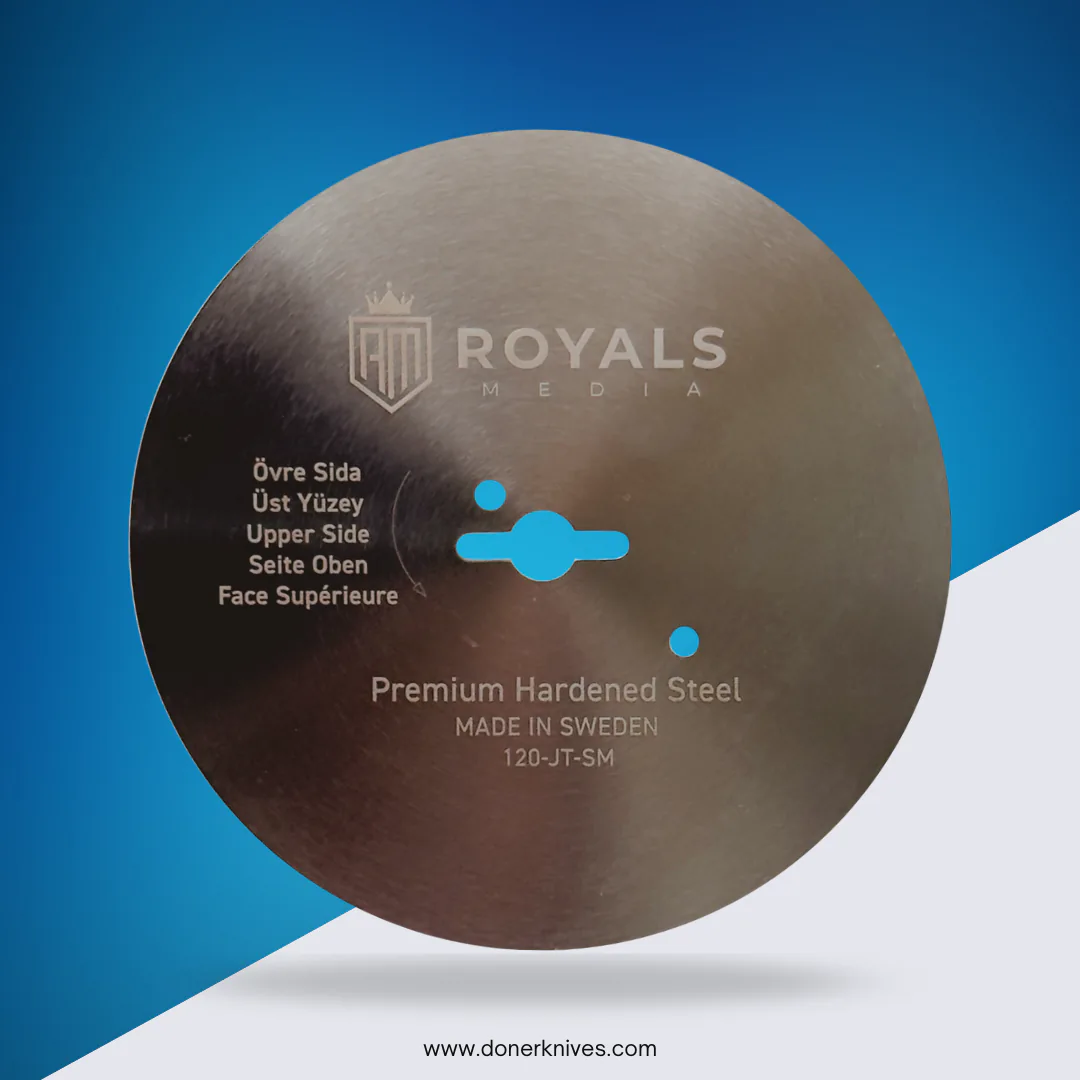
A doner knife blade is a circular steel disc that mounts on an electric doner slicer. The slicer is held against the rotating cone, and the blade — not the hand — does the cutting. Diameters run from 80 to 140 mm depending on the machine, and it is the machine's mount that decides which blade fits.
Do not confuse the blade with the long straight knives used for manual slicing. A circular blade has no point, no spine to hold and no handle: the whole circumference is the edge, and the centre hole is what holds it in place.
Key Features:
- Circular shape: the whole circumference shares the work, spreading wear evenly.
- Centre mount: keyhole (Universal), round hole (Dost), or bolts through 2, 3 or 4 holes (140 mm).
- Smooth or serrated edge: smooth for tender meat, serrated for firmer or fridge-cold cuts.
- Hardened stainless steel: copes with the damp, greasy environment at the cone without rusting.
Blades come in two edge types: smooth (clean cuts on tender meat like chicken or lamb) and serrated (better grip in tougher or colder meat). The 80mm Universal – Smooth delivers precision, while the 80mm Universal – Serrated handles denser textures better.
Types of Doner Knives
Doner knives come in various designs, each tailored for specific cutting tasks and user preferences. Understanding the differences between blade types, lengths, and edge styles ensures you select the right tool for your needs.
Blade Edge: Smooth vs. Serrated
The two primary edge types for a doner knife are smooth and serrated.
- Smooth blades, like the 90mm Dost – Smooth (209kr), deliver clean, precise cuts—ideal for slicing tender meats or vegetables without tearing. They require frequent sharpening but excel in professional kitchens where precision matters.
- Serrated blades, such as the 100mm Tandir – Serrated (219kr), feature teeth that grip and cut through tougher textures, like crusty bread or layered meats. These retain sharpness longer but are harder to sharpen.
Blade Diameter
The diameter has to match the machine — it is not a matter of preference. 80 and 90 mm fit compact slicers, 100 and 120 mm are the most common in restaurant service, and 140 mm belongs to larger industrial machines with a bolted mount. A blade that is too small will not reach properly; one that is too large strikes the guard and is dangerous. Measure the old blade before ordering.
Mount and Fitting
It is the mount, not the diameter, that separates the brands. Universal uses a keyhole, Dost a round centre hole, Jet and Tandir brand-specific mounts, and the 140 mm blades bolt on through 2, 3 or 4 holes. The blade must sit flat against the seating surface and be tightened without straining the threads — a blade left loose vibrates and produces uneven slices.
How a Doner Knife Works
A doner knife is a specialized tool designed for slicing meat from a vertical rotisserie, commonly used in preparing dishes like shawarma, gyros, or döner kebabs. Its function rests on three key elements: the edge, the mount to the machine, and steady pressure against the cone.
Blade Design and Cutting Mechanism
The blade is a circular disc (80 mm to 140 mm in diameter) whose entire circumference is the edge, which gives smooth, even slicing against the rotating meat. Serrated blades, like the 120mm Tandir – Serrated, excel at cutting through tougher or frozen meat, while smooth blades, such as the 90mm Dost – Smooth, provide cleaner cuts for tender meats. The curvature ensures minimal resistance, allowing the knife to glide effortlessly along the meat’s surface.
Pressure and Feed
Let the blade's rotation do the work. Pressing the slicer harder against the cone does not make the slices thinner — the edge rolls and the meat tears instead of cutting. Steady, light pressure with a continuous downward movement gives the most even slice and the longest edge life.
Slicing Technique
The user holds the knife at a slight angle (usually 20–30 degrees) and draws it horizontally across the meat’s surface in a smooth, sweeping motion. The blade’s sharpness and curvature work together to produce thin, consistent slices without tearing the meat. For optimal performance, ensure compatibility with your rotisserie setup using this doner blade compatibility chart.
By combining these elements, a doner knife delivers efficiency and precision, making it indispensable for professional kitchens and food vendors. Whether you choose a serrated or smooth blade, the right knife enhances both speed and quality in meat preparation.
Choosing the Right Doner Knife
Selecting the right doner knife is crucial for achieving precision, efficiency, and safety in meat carving, whether you're a professional chef or a home cook. Here’s a detailed guide to help you make an informed choice.
Diameter and Thickness
The diameter is set by the machine (80–140 mm). Thickness is normally 1.5–2 mm: thinner blades give cleaner slices but tolerate less, thicker ones hold their shape better at pace. For most restaurant kitchens the middle ground is right.
Blade Material
High-carbon stainless steel is the top choice for durability, edge retention, and rust resistance. Look for forged blades, which are sturdier than stamped alternatives. A well-crafted doner knife should maintain sharpness even with frequent use.
The Mount and Hole Pattern
Check the centre hole and hole pattern against your machine before ordering — the 2-, 3- and 4-hole variants of the 140 mm look alike at a glance but are not interchangeable. If you still have the old blade, it is the simplest reference.
Intended Use
- High volume: 120 and 140 mm give the largest cutting surface per revolution and are what sit on restaurant and industrial machines.
- Smaller operations: 80, 90 and 100 mm belong to the compact slicers — food trucks, kiosks and kitchens running smaller cones.
- The machine still decides: the diameter is not a preference but is set by the slicer you run.
Budget and Brand Reputation
Invest in reputable brands known for quality craftsmanship. While premium knives cost more, their longevity justifies the expense. Mid-range options can also perform well if maintained properly.
By considering these factors, you’ll find a doner knife that aligns with your needs, ensuring efficient and safe meat preparation every time.
Doner Knife Maintenance
Doner Knife Maintenance
Proper maintenance ensures your doner knife stays sharp, hygienic, and durable for long-term use. Follow these steps to keep it in optimal condition:
Cleaning
- Hand-wash only: Avoid dishwashers, as harsh detergents and heat damage the edge. Use warm water, mild soap and a soft sponge.
- Dry immediately: Prevent rust by towel-drying the blade thoroughly after washing, especially between the teeth.
- Sanitize regularly: For commercial kitchens, use food-safe sanitizers to eliminate bacteria buildup.
Sharpening
- Hone frequently: Use a honing rod to realign the edge before each use. This preserves sharpness between full sharpenings.
- Sharpen as needed: Depending on usage, sharpen the blade every 1–3 months with a whetstone (20° angle recommended) or a professional sharpener. For replacement blades, consider universal spare blades for convenience.
Storage
- Use a sheath or blade guard: Protect the edge and prevent accidents. Magnetic strips or knife blocks are ideal for home kitchens.
- Avoid moisture: Store in a dry place to prevent corrosion. For stacked blades, ensure they’re completely dry before storage.
Safety Tips for Using a Doner Knife
Using a doner knife requires precision and caution due to its sharpness and specialized design. Whether you're a professional chef or a home cook, following these safety tips ensures efficient and injury-free operation.
Safe Fitting and Handling
Always unplug the machine before changing a blade. The whole circumference is an edge — hold the blade by the centre, not the rim, and never leave it loose in a drawer. Check that the mounting screw is tight and the blade is fitted the right way round before starting.
Cutting Technique
- Ensure the meat is stable on the vertical rotisserie before slicing.
- Slice in smooth, downward motions—avoid jerky or uneven movements to minimize accidents.
- Never cut toward yourself; always angle the blade away from your body.
Blade Maintenance & Sharpness
- A dull blade increases risk by requiring excessive force. Regularly sharpen your doner knife using a honing rod or professional service. For guidance, refer to this blade maintenance guide.
- Inspect the blade for damage before each use.
Storage & Cleaning
- Store knives in a sheath or magnetic strip to prevent accidental contact.
- Hand-wash with mild detergent and dry immediately to avoid corrosion.
For a balanced, high-quality option, consider the 120mm Jet Smooth blade, designed for precision and safety. Always prioritize caution—proper technique prevents mishaps.
History and Cultural Significance
The doner knife has deep roots in Middle Eastern and Turkish culinary traditions, where it has been an essential tool for preparing doner kebab for centuries. Originating in the Ottoman Empire, the technique of stacking and grilling vertically roasted meat required a specialized blade—long, sharp, and sturdy enough to shave thin slices efficiently. This innovation not only revolutionized street food but also became a cultural symbol of Turkish cuisine.
Beyond its practical use, the doner knife represents craftsmanship and heritage. Traditional blades were hand-forged by skilled blacksmiths, often passed down through generations. In Turkey, the art of carving doner is nearly ceremonial, with chefs mastering precise, rhythmic cuts to achieve the perfect texture. The knife's design evolved to meet high-volume demands, especially in bustling bazaars and restaurants where doner remains a staple.
Today, the doner knife is celebrated worldwide, reflecting the global popularity of dishes like shawarma and gyros, which share its slicing technique. Modern versions balance tradition with innovation, using high-quality steel for durability. Whether in a family-run eatery or a high-end kitchen, this iconic blade continues to honor its rich history while adapting to contemporary culinary needs.
FAQs About Doner Knives
What is the best size for a doner knife?
The ideal size depends on your cutting needs. For home use or smaller vertical rotisseries, a 120mm blade (like the 120mm Jet Serrated) offers precision and control. For commercial kitchens handling larger meat cones, a 140mm blade (such as the 140mm Universal 4-Hole) provides better leverage and efficiency.
Are serrated or straight-edge doner knives better?
Serrated blades excel at slicing through crispy outer layers and fibrous meats, while straight-edge knives deliver cleaner cuts for tender portions. The 120mm Jet Serrated is a popular serrated option, ideal for evenly textured shavings.
How often should I sharpen my doner knife?
For professional use, sharpen the blade every 2–3 days with a honing rod to maintain edge alignment. A full sharpening is needed every 2–3 weeks, depending on usage. Home users can extend this to monthly maintenance.
Can I use a regular chef’s knife instead?
No. A doner blade is a rotating circular disc driven by an electric slicer, designed specifically for cutting from a vertical rotisserie. A hand knife cannot match the evenness or the pace.
What materials are best for doner knife blades?
High-carbon stainless steel is the top choice for durability, rust resistance, and edge retention. Look for forged blades, which are harder and longer-lasting than stamped alternatives.
How do I store a doner knife safely?
Use a magnetic strip or blade guard to protect the edge. Avoid tossing it in drawers, as this dulls the blade and poses safety risks.
Are doner knives dishwasher-safe?
Hand wash only. Dishwashers expose the blade to harsh detergents and heat, which attacks the edge over time. Dry immediately to prevent corrosion.
For specialized options, explore the 120mm Jet Serrated or 140mm Universal 4-Hole models.
Conclusion
A doner knife is an essential tool for anyone preparing doner kebab or other thinly sliced meats. Whether you're a professional chef or a home cook, choosing the right knife—such as the 80mm Universal – Smooth for precision or the 120mm Tandir – Serrated for thicker cuts—can elevate your culinary results.
Proper maintenance and safety practices ensure longevity and optimal performance. From selecting blade types to understanding cultural significance, this guide has covered key aspects to help you make informed decisions.
Investing in a high-quality doner knife, like the 90mm Dost – Smooth, ensures efficiency and consistency in your cuts. Whether for commercial kitchens or home use, the right knife enhances both technique and flavor.
Explore the full range of options to find the perfect fit for your needs, and enjoy the precision and tradition that a well-crafted doner knife brings to your cooking.