June 15, 2026
Doner Machine Blade Compatibility List: Find the Right Fit
Introduction to Doner Machine Blades
When replacing or upgrading your doner machine blades, understanding doner machine blade compatibility list is essential for optimal performance and food safety. The right blade ensures smooth, even cuts while minimizing wear on your equipment. Doner blades come in various sizes, hole configurations, and edge types—each designed for specific machines and meat textures.
Why Blade Compatibility Matters
Using an incompatible blade can lead to uneven slicing, excessive friction, or even damage to your machine. Manufacturers design blades with precise dimensions to fit their models, so verifying measurements before purchase is critical. For a deeper dive into blade types, refer to this ultimate guide to doner knife types.
Key Factors in Blade Selection
- Diameter & Hole Alignment: Must match your machine’s spindle and mounting system.
- Thickness: Affects durability and slicing precision.
- Edge Type: Smooth blades excel for tender meats, while serrated blades handle frozen or tougher cuts.
Whether you’re a kebab shop owner or a home enthusiast, selecting the correct blade ensures efficiency and extends your machine’s lifespan. The following sections will help you navigate compatibility specifics for popular brands and blade configurations.
Common Doner Machine Brands & Models
Common Doner Machine Brands & Models
When choosing a replacement blade, it is the brand of the slicer that decides — not the grill. The grill turns the cone; it does not cut. Below are the slicer brands we see most often on the European market and the blade each one takes.
| Slicer brand | Blade to use |
|---|---|
| Dost | 80/90 mm Universal, 90 mm Dost, 120 mm Dost |
| Jet | 120 mm Jet |
| Tandir | 100 mm Tandir, 120 mm Tandir |
| Alkadur, IDM, Korkmaz | 140 mm Universal 3-hole |
| Atalay | 140 mm Universal 4-hole |
| Ceylan, Gurden | 80 mm Universal |
| Potis | 80 mm Universal, 140 mm Universal |
Blade compatibility tips:
- Measure rather than guess. Model designations vary between years and markets. The diameter, centre hole and hole pattern of your old blade decide — not what a model list claims.
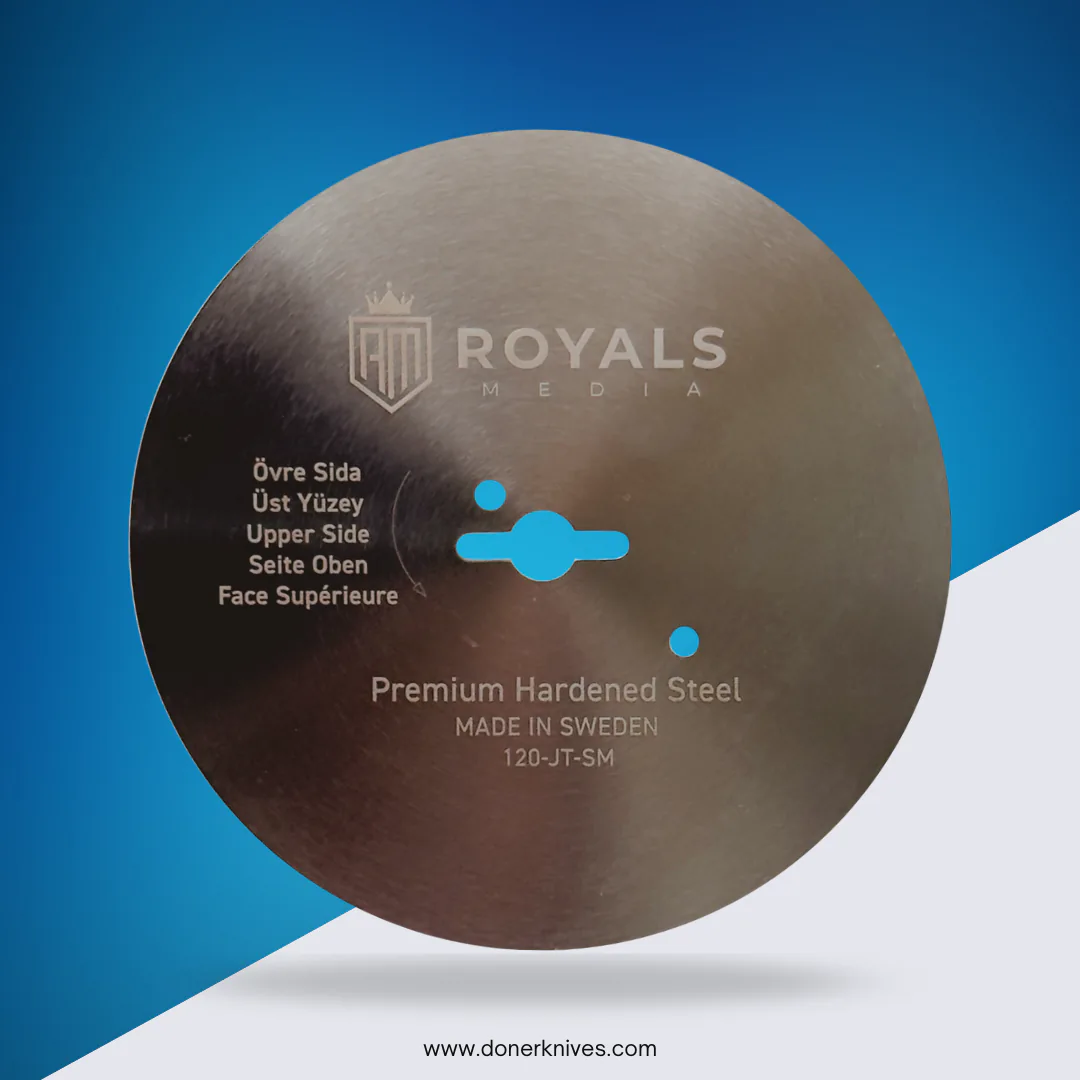
- The mount is what separates the brands: Universal uses a keyhole, Dost a round centre hole, Jet and Tandir brand-specific mounts, and the 140 mm blades bolt on through 2, 3 or 4 holes.
- No old blade to measure? Send a photo of the slicer's mount and we will tell you which blade fits.
- Older machines can have worn mounts that leave even the correct blade sitting loose. Check the seating surface before fitting.
Blade Size & Hole Configuration Guide
When selecting a replacement blade for your doner machine, understanding blade size and hole configuration is critical for ensuring proper fit and performance. A doner machine blade compatibility list typically categorizes blades by diameter (e.g., 80mm, 120mm) and hole pattern (e.g., 2-hole, 4-hole), as these factors determine whether the blade aligns with your machine’s spindle.
Blade Diameter
The blade’s diameter directly impacts slicing efficiency and compatibility. Common sizes include:
- 80mm–100mm: Ideal for compact or portable machines, such as the 80mm Universal – Smooth (199kr) or 100mm Tandir – Serrated (219kr).
- 120mm–140mm: Suited for high-capacity commercial machines, like the 120mm Tandir – Serrated (299kr) or 140mm Universal – 4 Hole (449kr).
For a detailed breakdown of 120mm blades, refer to our 120mm Serrated Doner Blade Guide.
Hole Configuration
The number and spacing of holes must match your machine’s spindle design:
- 2-Hole: Common in older or budget models (e.g., 140mm Universal – 2 Hole).
- 3-Hole or 4-Hole: Standard for modern machines (e.g., 140mm Universal – 3 Hole).
Key Considerations
- Material Thickness: Thicker blades (e.g., 140mm) offer durability for heavy use.
- Brand-Specific Designs: Some blades, like the 90mm Dost – Smooth, are tailored for specific brands.
Always cross-check measurements and hole patterns against your machine’s specifications to avoid mismatches. A precise doner machine blade compatibility list ensures seamless operation and extends equipment lifespan.
Smooth vs. Serrated Blades: When to Use Each
Choosing the right blade type for your doner machine is crucial for achieving the desired meat texture and efficiency. The two most common blade types—smooth and serrated—serve distinct purposes, and selecting the correct one depends on your specific needs. Below, we break down the differences and ideal use cases for each.
Smooth Blades: Precision & Clean Cuts
Smooth blades feature a straight, sharp edge, making them ideal for thin, uniform slices of tender meats like chicken, beef, or lamb. They excel in high-volume settings where consistency is key, such as kebab shops or restaurants. Smooth blades also minimize meat tearing, preserving presentation and texture.
For example, the 80mm Universal – Smooth (199kr) is a popular choice for smaller machines, while the 120mm Tandir – Smooth (299kr) suits larger setups.
Serrated Blades: Grip & Versatility
Serrated blades have small teeth that grip tougher or frozen meats, reducing slippage and ensuring cleaner cuts through fibrous textures. They’re ideal for gyros, frozen meat cones, or unevenly stacked doner.
The 90mm Universal – Serrated (209kr) is a versatile mid-range option, while the 120mm Jet – Serrated (299kr) handles heavy-duty needs.
When to Choose Which
- Smooth blades: Best for fresh, tender meats and high-precision slicing.
- Serrated blades: Optimal for frozen meats, tough cuts, or variable thickness.
For a detailed doner machine blade compatibility list, check our comprehensive guide to ensure the blade fits your machine model. Matching the right blade type to your meat and machine will enhance performance and longevity.
Doner Machine Blade Compatibility Chart
Doner Machine Blade Compatibility Chart
Choosing the right blade for your doner machine ensures optimal performance and longevity. Below is a compatibility guide to help you match blades with common machine models.
Blade Sizes & Compatible Machines
- 80mm Blades: Ideal for smaller vertical rotisseries like the Dost 80 series.
- 80mm Universal – Smooth (199kr)
- 80mm Universal – Serrated (199kr)
- 90mm Blades: Fits mid-sized machines such as the Dost 90 and Universal 90 models.
- 90mm Dost – Smooth (209kr)
- 90mm Universal – Serrated (209kr)
- 100mm Blades: Designed for Tandir-style machines.
- 100mm Tandir – Serrated (219kr)
- 120mm Blades: Compatible with larger commercial units like the Jet and Dost 120 series.
- 120mm Jet – Smooth (299kr)
- 120mm Dost – Serrated (299kr)
- 140mm Blades: For heavy-duty machines, available in 2, 3, or 4-hole configurations.
- 140mm Universal – 4 Hole (449kr)
Hole Configuration
Blades may have 2, 3, or 4 mounting holes. Verify your machine’s screw pattern before purchasing. For example:
- 2-hole: Common in older Dost models.
- 4-hole: Standard for Universal and Tandir machines.
Key Considerations
- Always cross-check the doner machine blade compatibility list with your model’s manual.
- Smooth blades are better for thinly sliced meats, while serrated blades excel with thicker cuts.
For a full doner machine blade compatibility list, consult your manufacturer or trusted suppliers like Doner Knives.
How to Measure Your Current Blade
To ensure your replacement blade fits correctly, accurately measuring your current doner machine blade is essential. Follow these steps to determine the right dimensions for compatibility with your machine:
Key Measurements to Take
Blade Diameter
Measure the blade’s total width from edge to edge at its widest point. Sizes run from 80 mm to 140 mm, with 120 mm being a standard for many commercial machines (e.g., 120mm Jet Smooth).Hole Configuration
Count the number of mounting holes and note their spacing (center-to-center distance). Most blades feature 3, 4, or 6 holes. Use a caliper for precision.Thickness
Check the blade’s thickness, typically between 1.5mm and 3mm, as this affects stability during slicing.
Tools You’ll Need
- A digital caliper (for precise measurements)
- A ruler or tape measure (for diameter)
- A notepad to record dimensions
Pro Tips
- Always measure twice to confirm accuracy.
- Cross-reference your measurements with a doner machine blade compatibility list to match your machine’s requirements.
- If your blade has worn edges, measure the unused portion for true dimensions.
Next Steps
Once you’ve recorded these details, compare them against manufacturer specifications or consult a compatibility guide. Incorrect measurements can lead to poor performance or safety hazards. For verified replacements, refer to trusted suppliers offering blades tailored to your machine’s model.
Accurate measurements ensure seamless integration with your doner machine, minimizing downtime and maintaining consistent slicing quality.
Installation Tips & Safety
Proper installation of your doner machine blade ensures optimal performance and longevity. Before beginning, always consult a doner machine blade compatibility list to confirm the correct size and hole configuration for your model. Here are key tips and safety precautions:
Pre-Installation Checks
- Power off and unplug the machine to prevent accidental activation.
- Inspect the blade for damage or imperfections—never install a bent or chipped blade.
- Verify the blade’s hole pattern matches your machine’s spindle. For example, the 140mm Universal 3-Hole fits most standard models.
Installation Steps
- Align the blade with the spindle, ensuring holes seat properly.
- Hand-tighten the retaining nut to avoid cross-threading.
- Use the machine’s included wrench to secure the nut firmly—over-tightening can warp the blade.
Safety Reminders
- Always wear cut-resistant gloves when handling blades.
- After installation, manually rotate the blade to check for wobbling or misalignment.
- Never operate the machine without the blade guard in place.
For further guidance, refer to your machine’s manual or a trusted doner machine blade compatibility list to avoid mismatches. Proper installation minimizes wear and ensures consistent slicing performance.
FAQs on Doner Machine Blade Replacement
How often should I replace my doner machine blade?
For optimal performance and food safety, replace your blade every 6–12 months with regular use. Dull blades increase friction, overheating meat and compromising slice quality. If you notice uneven cuts, excessive tearing, or increased effort during slicing, inspect the blade immediately.
Can I use any blade with my doner machine?
No. Blades must match your machine’s brand, model, and spindle specifications. Refer to a doner machine blade compatibility list or your manufacturer’s manual to confirm fitment. For example, universal blades like the 140mm 3-hole model suit many machines but verify hole alignment and diameter first.
What’s the difference between 3-hole and 4-hole blades?
The hole configuration ensures secure attachment to the spindle. 3-hole blades are common for smaller or mid-range machines (e.g., 140mm diameter), while 4-hole blades often fit heavy-duty models. Mismatched holes can cause wobbling or detachment. Always measure your spindle’s hole pattern before purchasing.
Are serrated blades better than smooth blades?
It depends on the meat type. Serrated blades excel for frozen or tough meats (e.g., lamb doner), while smooth blades provide cleaner cuts for tender meats (e.g., chicken or beef). Check your machine’s RPM compatibility—serrated blades may require slower speeds.
How do I know if a blade is compatible with my machine?
- Measure the blade diameter (80, 90, 100, 120 or 140 mm).
- Count spindle holes and note their spacing.
- Verify thickness (usually 1.5mm–2mm).
Cross-reference these specs with a doner machine blade compatibility list or consult your supplier.
Can I sharpen a dull doner blade instead of replacing it?
Professional sharpening is possible but often impractical. Repeated sharpening alters the blade’s geometry, reducing efficiency. For consistent results, replacement is recommended.
Where can I find replacement blades?
Reputable suppliers like DonerKnives offer blades with detailed compatibility guides. Ensure the seller provides specifications for your machine model.
Conclusion
Choosing the right blade for your doner machine ensures optimal performance, food safety, and longevity of your equipment. By referring to a doner machine blade compatibility list, you can easily match your machine’s requirements with the correct blade size, hole configuration, and edge type. Whether you need a smooth blade for precise cuts or a serrated edge for tougher meats, selecting the right option is crucial.
For most standard machines, universal blades like the 80mm Universal – Smooth (199kr) or 90mm Universal – Serrated (209kr) offer reliable compatibility. Larger vertical rotisseries may require 120mm Tandir – Serrated (299kr) or 140mm Universal – 3 Hole (449kr) blades.
Always verify measurements and consult manufacturer guidelines before purchasing. With the right blade, you’ll enhance efficiency and maintain consistent, high-quality cuts. Keep this guide handy for future replacements, and ensure your doner machine operates at its best.