October 21, 2026
140mm Straight Blade Guide for Dost Doner Machine
Dost Döner Machine and 140mm Smooth Blade Compatibility
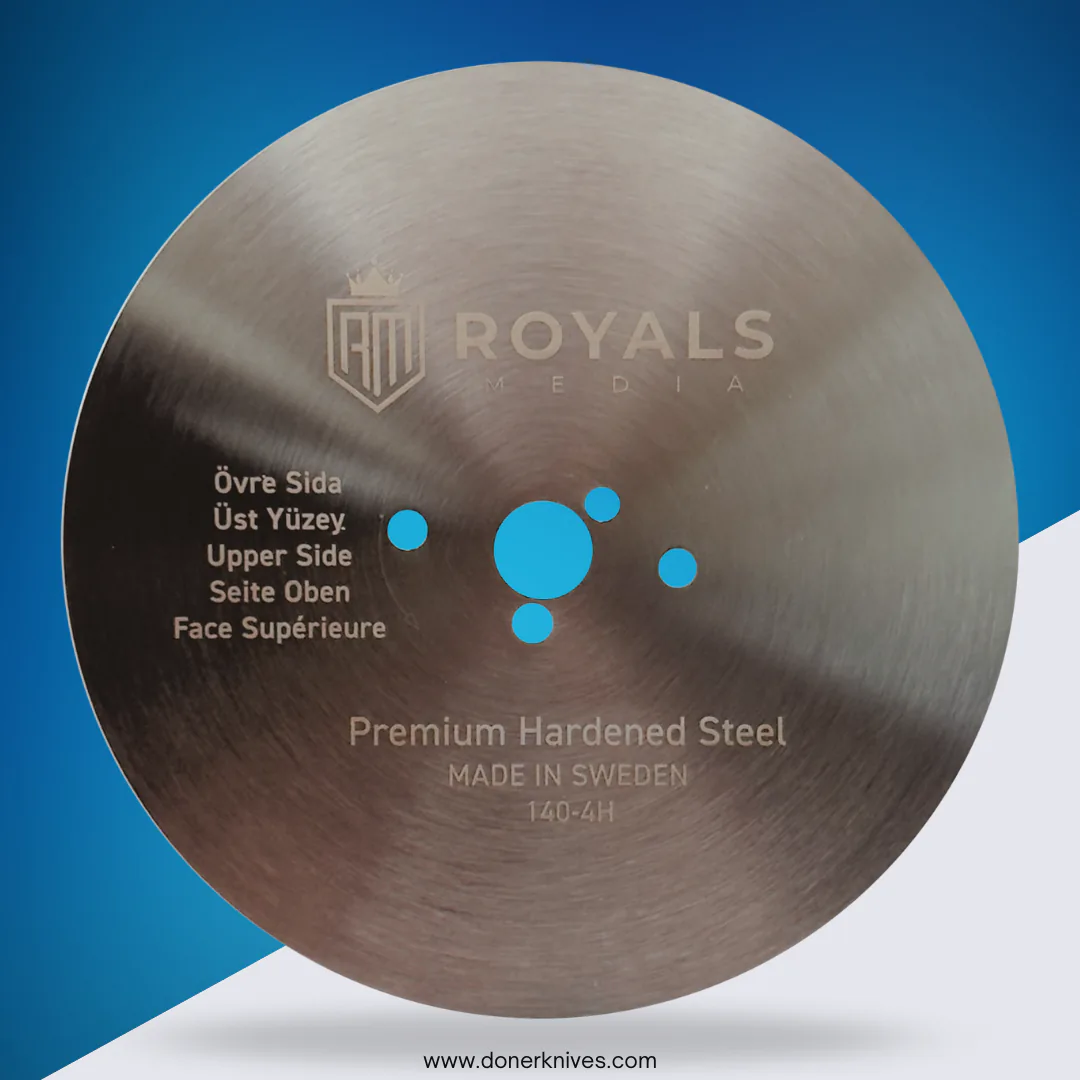
One of the most curious topics for doner masters is the compatibility of a 140mm smooth blade for Dost doner machines. This blade is a rotating circular steel disc used in electric doner slicing machines; it has no handle, tip, or spine, and its entire circumference serves as a cutting edge. It is mounted onto the machine shaft via the hole in its center, allowing you to produce thin, even slices from the rotating meat.
However, there is a critical point here: the 140mm blade is not a standard production size for Dost brand machines. Dost machines generally work with 90mm smooth or 120mm smooth blades. So when does the 140mm blade come into play? This size is a universal measurement produced for machines of different brands. For example, Alkadur, IDM, and Korkmaz machines use 140mm blades with 3 holes, while Atalay machines use 140mm blades with 4 holes.
Therefore, if your machine is not a Dost, or if you haven't measured your machine's blade housing, you run a high risk of purchasing the wrong product. To find the correct fit, you should first check your machine's brand and the number of mounting holes along with the center hole of your current blade. If you want to learn which blade fits which brand of machine, our guide explaining which doner blade fits Tandır machines can guide you. Remember, blade size is not a matter of preference but a necessity dictated by your machine's mechanical structure.
Which Blade Sizes Are Used in Dost Machines?
The blade size in Dost machines varies depending on the machine's model and shaft structure. Therefore, it's not possible to speak of a single standard size. However, the manufacturer has specified certain diameters for machines of different capacities. Generally, circular blades with diameters of 90 mm and 120 mm are used in Dost doner machines. Additionally, some compact or newer generation models may also prefer 80 mm universal blades.
The most common blade diameters for Dost machines are:
- 90 mm Dost Blade: This is the machine's standard and most frequently used size. It is available in both smooth and serrated options. If your machine handles a medium-sized doner skewer, this is most likely the size you're looking for. The 90mm Dost – Smooth and 90mm Dost – Serrated options fall into this group.
- 120 mm Dost Blade: Produced for larger, commercial-capacity Dost machines. It offers a wider cutting surface and processes large meat masses faster. The 120mm Dost – Smooth model is ideal for businesses with high sales volume.
- 80 mm Universal Blade: Some small or office-type Dost models have a universal mounting hole structure. In this case, 80 mm universal blades come into play.
The most important point to note is that not only the blade's diameter but also its center mounting hole must perfectly match the machine shaft. The vast majority of Dost machines use blades with a round center hole. However, to be sure, you need to measure your current blade or check your machine's mounting structure. For a comprehensive guide on this, you can review the Dost machine blade compatibility chart.
If your machine uses a blade with a 140 mm diameter, this is typically seen in models with a universal mounting system. In this case, your search for a 140mm smooth blade for Dost doner machines should be directed towards models with universal connection fittings. However, for standard Dost machines, the correct choice is usually 90 mm or 120 mm. Checking the diameter measurement on your old blade is the safest way to clarify which size your machine is compatible with.
Technical Specifications and Advantages of the 140mm Smooth Blade
The 140mm smooth blade is a critical part that directly affects your doner machine's performance. This size is particularly ideal for medium and large-scale businesses and is a standard frequently preferred by those looking for a 140mm smooth blade for Dost doner machines. So, what are the technical features that distinguish this blade from others?
Technical Specifications
- Material: Made from hardened stainless steel. This ensures the blade is long-lasting and resistant to rust.
- Design: It is in the form of a circular steel disc. There is no handle, tip, or spine; the entire circumference is a cutting edge. The hole in the center allows the blade to be secured to the machine shaft.
- Mounting: 140mm models are produced with 2, 3, or 4 holes depending on the machine model. This hole pattern guarantees the blade is mounted securely and without vibration.
- Edge Type: The smooth edge allows you to obtain clean, even slices without crushing or tearing the meat.
Advantages
- Flawless Slicing: The smooth edge is ideal, especially for fresh and tender doner meat. It makes a clean cut without the meat losing its natural juices. This allows you to offer your customers a superior presentation both visually and in terms of taste.
- High Efficiency: Thanks to its wide cutting surface, it slices more meat with each movement. It increases your speed during peak hours and shortens service time.
- Compatibility: This blade fits not only Dost machines but also the 140mm universal slots of many different brands such as Alkadur, IDM, and Korkmaz. The 140mm Universal – 3 hole option is the most common connection standard for these brands.
- Easy Maintenance: Its stainless steel structure makes cleaning very simple. Remember that you should always wash the blade by hand; dishwasher detergent damages the cutting edge.
The right blade extends the life of your machine and improves the quality of your work. By checking the hole pattern of your old blade, you can choose the most suitable model for you.
Smooth Blade or Serrated Blade?
One of the most debated topics among doner masters is whether the blade's cutting surface should be smooth or serrated. Both options are made from the same hardened stainless steel; the difference lies in the edge geometry that meets the meat and, consequently, in the slicing behavior.
A smooth blade, as the name suggests, has a smooth cutting edge. This edge cuts through the meat's fibers, resulting in a clean and smooth surface. If your doner is at the ideal consistency—neither too hot nor refrigerator-cold—a smooth blade yields the best results. Especially when you want to make thin slices, a smooth blade cuts without crushing or tearing the meat; this creates a more aesthetic appearance on pita bread and plate presentations. Additionally, smooth blades tend to stay sharp longer than their serrated counterparts because there are no teeth to wear down. For this reason, in heavy daily use, the smooth blade is frequently preferred in models like the 140mm smooth blade for Dost doner machines.
A serrated blade, on the other hand, has small protrusions like a saw blade. These teeth allow the blade to grip the meat as it cuts. A serrated blade is advantageous in two situations: when the meat is very firm and fibrous, or when the doner has just been taken out of the refrigerator and hasn't yet reached room temperature. The teeth grip the hard surface, preventing slipping and allowing cutting with less pressure. However, the disadvantage of a serrated blade is that it produces thicker and rougher slices compared to a smooth blade. The serrations can create micro-tears on the meat's surface, accelerating moisture loss.
So which should you choose? The basic rule is: If your doner is at the ideal consistency, choose smooth; if you're cutting firmer or colder meat, choose serrated. In most professional kitchens, a smooth blade is preferred as the main blade, while a serrated one is kept as a backup or for emergencies. If your machine supports the 140mm size, the smooth version of the 140mm Universal – 4 hole option will offer you the most balanced performance for daily use.
Machine Brands Compatible with the 140mm Blade
The 140mm smooth blade represents one of the most common mounting standards in the industry. This size is used in machines preferred, especially in medium and large-capacity businesses. However, the "140 mm" measurement does not always refer to the same mounting hole pattern; therefore, brand compatibility depends as much on the number of mounting holes as it does on the blade's diameter.
Brand and Mounting Hole Compatibility
- Alkadur, IDM, Korkmaz: Machines from these brands generally use 3-hole 140mm universal blades. The 140mm Universal – 3 hole option is the correct choice for these machines.
- Atalay: Atalay machines have a 4-hole mounting system. In this case, you should choose the 140mm Universal – 4 hole model.
- Potis: The Potis brand has models that use both 80 mm and 140 mm blades. If you are sure your machine works with a 140 mm blade, check the mounting hole pattern and select the appropriate model.
Important Note for Dost Machines
The Dost brand has its own specific mounting system. Even if you are looking for a "140mm smooth blade for Dost doner machines," Dost machines are designed to work with 90 mm or 120 mm blades, not 140 mm. Therefore, for your Dost machine, you should consider models like the 120mm Dost – Smooth or 90mm Dost – Smooth.
Not Sure About Compatibility?
If you are using a machine brand not listed above, or if you are unsure about your machine's mounting hole pattern, don't guess. The safest way is to measure the diameter, center hole, and hole pattern of your old blade, or take a photo of the mounting surface for comparison. For a comprehensive guide on this, check out our article on the universal doner machine blade replacement guide. A blade with the wrong hole pattern won't fit the machine properly, leading to vibration and safety risks.
Guide to Determining the Correct Blade Size: How to Measure?
The wrong blade size puts unnecessary strain on your machine's motor, doesn't cut the meat properly, and can even cause the blade to vibrate, creating dangerous situations. Fortunately, determining the correct size is much simpler than guessing; all you need to do is measure your current blade correctly. This guide will help you take the correct measurement step by step.
What You Need for Measurement
- A digital or analog caliper (for the most accurate results)
- A ruler or tape measure (for emergencies)
- Your current (old) blade
Step-by-Step Measurement Guide
1. Safely Remove the Blade: First, unplug the machine. Loosen the center nut or screws holding the blade with the appropriate wrench and carefully remove the circular blade from its housing. Be careful not to touch the cutting edges.
2. Measure the Diameter: Place the blade on a flat surface. Using a caliper or ruler, measure the widest distance from one edge of the blade to the other, passing exactly through the center. This value is the diameter of your blade. Note this measurement in millimeters (mm). For example, if your measurement is 140 mm, this means you are looking for a 140mm smooth blade for a Dost doner machine.
3. Check the Center Hole and Mounting Pattern: Equally as important as the diameter is how the blade is attached to the machine. Look at the shape of the hole in the exact center of the blade:
- Keyhole: This hole, wide on one side and narrow on the other, is found on Universal blades.
- Round Center Hole: If it's a completely circular hole, this is typically the mounting type used by Dost brand machines.
- Bolt Holes: There may be 2, 3, or 4 small screw holes on the blade's surface around the center hole. In this case, note the number of holes and their positions relative to each other. For example, 140mm blades are usually produced with 2, 3, or 4 holes.
4. Compare the Results: Evaluate the diameter and mounting pattern information you've obtained, along with your machine's brand. For example, if you're using an Atalay brand machine and your blade has 4 holes, the 140mm Universal – 4 hole model is the right choice for you. If you're unsure, you can review the detailed chart in our guide for determining blade size.
Remember, blade size is determined by the machine, not personal preference. If you can't measure, taking a photo of your machine's mounting apparatus and sending it to the seller is the safest route.
140mm Blade Replacement Steps and Safety Precautions
Before replacing the blade, unplug the machine and ensure the blade has completely stopped. Wearing protective gloves is the most basic safety precaution against sharp edges. Always grasp the old blade by its flat surface, never by its cutting circumference.
Removal Process: Loosen the center nut with the appropriate wrench. Once the nut is off, carefully pull the blade towards you to separate it from the shaft without damaging it. If the blade is stuck, don't force it; try tapping lightly around its circumference to loosen it. Note the number of mounting holes (2, 3, or 4 holes) on the old blade; this is critical when choosing your new 140mm Universal blade.
Installation Process: Place the new blade onto the shaft. Ensure the holes align perfectly with the pins on the shaft. Tighten the nut by hand, then give it a final tighten with the wrench. Avoid over-tightening; this can cause stress in the blade and lead to warping later.
Check: Turn the blade by hand to verify its rotation is smooth and it doesn't rub against anything. Re-check all fasteners before starting the machine.
Remember: Each machine model has a different mounting hole pattern. If you're unsure, take measurements of your old blade or refer to our blade selection guide. Choosing the correct 140mm smooth blade for Dost doner machines model is the first step towards a safe and flawless slicing experience.
Doner Blade Maintenance and Tips to Extend Its Lifespan
Your doner blade's performance depends not only on its sharpness but also on your maintenance habits. A quality steel disc like the 140mm smooth blade for Dost doner machines is long-lasting when used correctly; however, improper cleaning and storage methods can significantly shorten the blade's lifespan.
Cleaning: No Way Other Than By Hand
These blades, made from hardened stainless steel, should never go in the dishwasher. Machine detergent erodes the micro-structure of the cutting edge, irreversibly dulling the sharpness. Hand wash the blade after each use with warm water and a soft sponge. You can use dish soap to remove greasy residue, but make sure to rinse thoroughly. Then dry it with a soft cloth; moisture can cause stains even on stainless steel.
Storage and Usage Habits
- Store the blade in its own case or a protective cover, not in a drawer where it might come into contact with other metal tools.
- Avoid touching the cutting edge with hard objects while washing the blade.
- Always slice the doner meat at a steady, consistent speed. Applying excessive pressure causes the blade's edge to wear out prematurely.
Sharpening and Replacement Time
These types of thin steel discs should not be sharpened at home; incorrect sharpening can ruin the blade's balance. When you notice a decline in cut quality and the meat tearing, it's time to replace the blade. To ensure the blade size fits your machine, it's helpful to measure your old blade or learn the general logic by reviewing the 100mm doner blade selection guide.
Regular maintenance preserves your blade's sharpness and hygiene, ensuring you get flawless doner slices every time.
Frequently Asked Questions (FAQ)
Does a 140mm blade fit any doner machine?
No, a 140 mm blade can only be mounted on machines with a compatible connection hole pattern. These blades are used with a 3-hole version on Alkadur, IDM, Korkmaz, and Potis brand machines, and a 4-hole version on Atalay brand machines. If your machine's brand isn't on this list, you can determine the correct model by measuring your old blade or sending a photo of the mounting surface. Furthermore, the 140 mm blade, including for those seeking a 140mm smooth blade for Dost doner machines, only works safely on devices with compatible mounting.
What is the difference between a 140 mm smooth blade and a serrated blade?
A smooth blade is ideal for obtaining smooth, thin, and even slices from meat at room temperature or slightly rested. A serrated blade provides better grip on meat that is refrigerator-cold or has a firmer texture. Both options are available in the 140 mm size; however, a smooth blade is preferred, especially in businesses where presentation quality is paramount.
How do I know if my blade is 140 mm?
Measure the blade's diameter from end to end with a ruler. 140 mm is approximately 14 centimeters. Also, check the center hole and the number of bolt holes: options with 2, 3, or 4 holes are available. You need to choose the correct hole pattern based on your machine's brand. When measuring, don't account for worn edges; take the measurement on a flat surface.
Which brand machines is the 140 mm blade compatible with?
The clear compatibility chart for this blade size is as follows: Alkadur, IDM, and Korkmaz machines use the 3-hole version, Atalay uses the 4-hole version, and Potis uses both 80 mm and 140 mm options. If you have a machine brand not listed above, you'll need to measure your old blade's connection pattern or send a photo to find the right product. The brand and connection type should be the basis, rather than machine model names.
Can I sharpen my blade, or do I need to replace it?
Hardened stainless steel blades can be sharpened a few times with professional sharpening tools. However, if the blade has cracks, warping, or excessive wear, replacing it with a new one is safest for safety reasons. To avoid disturbing the balance of the circular structure during sharpening, it's recommended to have the process done by an experienced professional.
Can the 140 mm smooth blade be washed in the dishwasher?
Absolutely not. Dishwasher detergent damages the blade's sharp edge and the steel's structure, shortening its lifespan. Always wash this blade by hand with warm, soapy water and dry it immediately. This maintenance routine preserves the performance of the 140mm smooth blade for Dost doner machines for a long time.
Which 140 mm blade model should I choose?
First, determine the number of holes on your machine (2, 3, or 4). Then, choose the smooth or serrated edge type based on the consistency of your meat. All models are made from hardened stainless steel, so there's no difference in durability; the difference lies only in fit and slicing characteristics.
Conclusion: Flawless Doner Slices with the Right Blade
The right blade is the most critical part directly affecting your doner machine's performance. The wrong size or mounting hole fit causes both improper meat cutting and excessive strain on the machine's motor. If your machine uses a 140mm diameter disc, you should choose between the 140mm Universal – 3 hole or 140mm Universal – 4 hole options, whichever fits your machine.
Remember that when choosing a 140mm smooth blade for Dost doner machines, not only the diameter but also the number of mounting holes is critical. Don't order without checking the hole pattern on your machine's connection plate. Smooth blades offer the thinnest, most homogeneous slices on rested and tender meat.
Working with the right blade means less meat waste, more consistent cooking, and a professional presentation. When you remove your old blade, measure its diameter and hole pattern, and choose the right product, you'll get years of flawless performance from your machine. You can extend its lifespan by hand-washing and drying your blade after each use.