October 13, 2026
How to Determine the Right Doner Blade Size for Your Machine?
Introduction: Why Does the Doner Knife Blade Size Matter?
The question "How do I know which doner blade size fits my machine?" is not just a technical inquiry; it is the most important step to ensure your machine operates efficiently and safely. Using an unsuitable blade not only results in poor meat cutting but can also cause dangerous vibrations, damage to the machine's motor, and accidents, God forbid.
The size is not a matter of taste or preference; it is governed by the machine's own specifications. The doner blade is a circular disc of stainless steel, with a diameter ranging only between 80 and 140 mm, and this diameter is precisely defined by the manufacturer. Installing a blade smaller or larger than required makes the edge misaligned with the cutting slot, ruining the meat slices and wasting a significant amount of product.
In addition to the diameter, the type of mounting plays a crucial role; some machines use a central circular hole, others use a keyhole system, and a third type relies on screws passing through multiple holes. Understanding these details prevents you from buying the wrong blade and saves you the hassle of returns and exchanges. In this guide, we will take you step-by-step to determine the correct size with complete accuracy.
How Do I Know Which Doner Blade Size Fits My Machine?
First, check the blade diameter, which is the most important number. The available sizes are only 80, 90, 100, 120, and 140 mm, and no other size can be installed. The diameter is determined by your machine's design, not your personal preference. If your machine is from the Dost brand, you will likely need a blade in size 90 or 120 mm. Jet machines exclusively use size 120 mm, while Tandir uses size 100 or 120 mm. For larger machines like Alkadur, IDM, and Korkmaz, you will need a universal 140 mm blade with three holes.
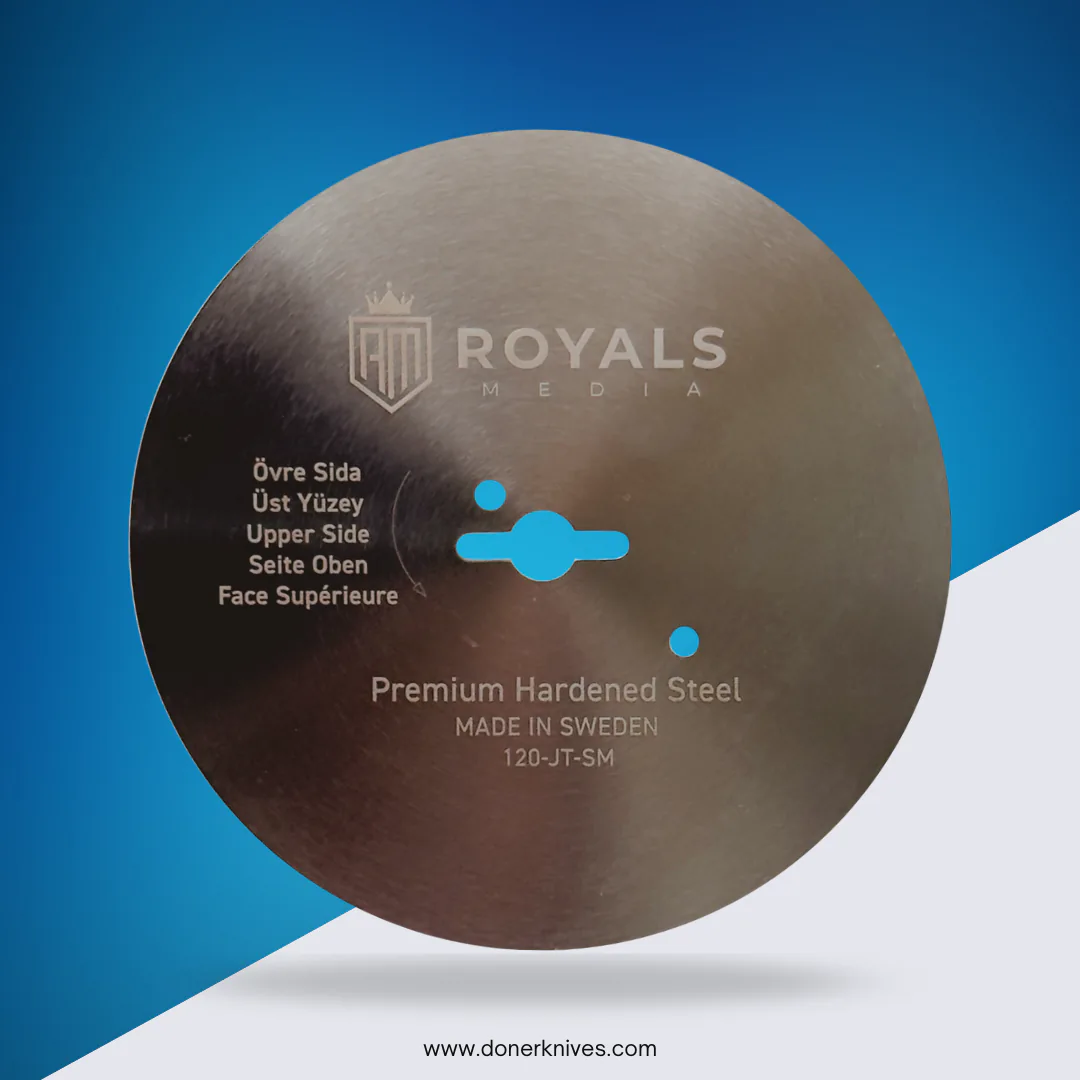
Second, look at the type of mounting in the center of the blade. There are three main patterns: a keyhole slot (called Universal), a circular hole in the center, and holes for screws (2, 3, or 4 holes). 140 mm blades always come with holes for screws, so you must count the holes accurately.
Third, determine the type of edge: Do you need a smooth blade for evenly cutting tender meat, or a serrated one for cold or firm meat from the refrigerator?
If your machine's brand is not listed in the compatibility table, never guess. Measure the old blade yourself: measure the diameter from edge to edge, measure the diameter of the central hole, and count the number and arrangement of the holes. You can also send a clear picture of the old blade's mounting, and we will help you determine the correct size. Always remember that the right question is: "How do I know which doner blade size fits my machine?" and the answer always starts with accurate measurement, not guesswork.
Identifying Your Doner Machine Brand: The First Step
Before you search for the answer to the question "How do I know which doner blade size fits my machine", you must accurately identify the brand of your doner machine. This is the first and most important step, because each major brand has designed its own mounting system, and mixing sizes between brands can damage the blade or the machine itself.
Start by looking for the identification sticker, usually found on the back or bottom side of the machine, or in the included user manual. If the brand is Dost, you will likely need a blade with a diameter of 90 mm or 120 mm with its specific circular mounting system. If it's Jet, the standard size is 120 mm with a unique mounting that doesn't fit others. For Tandir machines, blades with a diameter of 100 mm and 120 mm are available.
In contrast, if your machine is from brands like Alkadur, IDM, or Korkmaz, you need the universal blade with a diameter of 140 mm and three mounting holes. Atalay, however, requires the same diameter (140 mm) but with four holes.
Remember: Knowing the brand alone isn't enough, but it narrows down the options from 17 products to just one or two. After that, you can move on to measuring the old blade to be 100% sure. Never guess — an error in this decision means wasting money and precious time in the kitchen.
Measuring the Old Blade: A Detailed Guide
If your machine doesn't appear in the table, or you want to be 100% sure, the best solution is to measure the old blade yourself. You don't need complex tools, just a ruler or a precise measuring tape.
Step 1: Measure the Diameter (The Basic Size)
Place the blade on a flat surface. Measure the distance from one edge to the opposite edge, passing exactly through the center of the hole. This is the diameter, and it must match one of the following sizes: 80, 90, 100, 120, or 140 mm. There are no other sizes. If you get a number between two sizes, round down to the nearest smaller size and make sure the mounting center matches your machine.
Step 2: Examine the Mounting Center
The diameter alone isn't enough. Look at the center of the blade:
- A simple circular hole? This is the "Dost" or general system.
- A keyhole-shaped slot (a circular hole with a side groove)? This is the most common universal system.
- Four small holes around the center? This is specific to the 140 mm size.
Step 3: Count the Outer Holes
Specifically for the 140 mm blade, you may find additional small holes on the disc's surface. Count them accurately: Are there 2, 3, or 4 holes? This determines the required model (Universal – 2 holes, 3 holes, or 4 holes).
Step 4: Take a Picture
If you're hesitant, take a clear picture of the old blade from both sides (front and back) and send it to your supplier. This is the fastest way to get an accurate answer.
With these three measurements (diameter, center shape, number of holes), you will have answered the question "How do I know which doner blade size fits my machine" yourself without any guesswork.
Understanding Mounting Types: Keyhole, Circular, and Holes
When searching for the answer to "How do I know which doner blade size fits my machine", you'll discover that the diameter isn't everything; the method of attaching the blade to the motor is equally important. There are three main mounting systems, and recognizing your machine's system prevents you from buying a blade that will never fit.
- The Circular Hole (Dost): A blade with a simple central circular hole, usually secured with a central nut. This type is common in Dost models and is the easiest to install.
- The Keyhole Slot (Universal): Features a central hole shaped like a "lock" or "key" with a side notch. This design allows the blade to slide onto a square or splined shaft in the machine, ensuring it rotates with the axle without slipping. You'll find this system in universal blades in sizes 80 and 90 mm.
- The Side Holes (Brand-specific): Instead of a central hole, these blades rely on small holes (2, 3, or 4) around the center, secured with screws onto the machine's face. This system is specific to 140 mm blades for machines like Jet and Tandir.
Before purchasing, inspect the old blade: Is the hole circular or does it have a notch? Are there screws around the center? The answer precisely determines the mounting type and answers "How do I know which doner blade size fits my machine" in terms of mechanical compatibility, not just the diameter.
Compatibility Table: Brand → Blade Size
| Brand | Suitable Blade Size |
|---|---|
| Dost | 80/90 mm Universal, 90 mm Dost, 120 mm Dost |
| Jet | 120 mm Jet |
| Tandir | 100 mm Tandir, 120 mm Tandir |
| Alkadur, IDM, Korkmaz | 140 mm Universal (3 holes) |
| Atalay | 140 mm Universal (4 holes) |
| Ceylan, Gurden | 80 mm Universal |
| Potis | 80 mm Universal, 140 mm Universal |
This table summarizes the answer to the question "How do I know which doner blade size fits my machine" for the most popular brands on the market. If your machine is from the Dost brand, you'll likely need a blade in size 90 mm or 120 mm with its specific mounting type, while Jet machines are exclusively compatible with a 120 mm blade with the distinctive Jet mounting.
For famous Turkish brands like Alkadur, IDM, and Korkmaz, the standard size is 140 mm with the universal three-hole mounting system. Atalay machines, however, require the same size but with four mounting holes. If you own a machine from Ceylan, Gurden, or Potis, the universal 80 mm blade is the safe choice.
Important Notes When Using the Table
- Check the mounting type: Even if the size is correct, the shape of the mounting hole (keyhole, circular, or holes) may differ. Refer to the five-hole mounting guide to understand the differences.
- The size is determined by the machine, not preference: You cannot install a 100 mm blade on a machine designed for 120 mm, no matter the quality of the blade.
- The universal 4-hole blade: If your machine is from an unlisted brand, try the 100 mm universal blade with four holes as a widely compatible option.
Direct Recommendations
- For Dost machines: 90 mm Dost smooth blade or serrated.
- For Tandir machines: 100 mm Tandir smooth blade or serrated.
- For universal 140 mm machines: 140 mm blade with four holes.
If you don't find your brand in the table, don't choose randomly — move to the next step to measure your old blade accurately.
Smooth or Serrated Blade? Choosing the Right Edge
After you determine the correct size by measuring the old blade, one important question remains: Do you choose a smooth or serrated blade? This decision isn't about quality, as all our blades are made of hardened stainless steel, but rather depends on the nature of the meat and its degree of freezing.
The serrated blade is ideal for firm or refrigerated meat, as the teeth grip the meat's surface and cut it smoothly without tearing the fibers. If you serve freshly grilled doner directly, you might find that the serrated blade cuts the meat fibers more aggressively, which can sometimes affect the tenderness of the slices.
The smooth blade, on the other hand, gives you perfectly thin and even slices, making it ideal for tender, well-cooked meat. The smooth edge cuts through the meat as if it "glides" through it, suiting most doner shops that rely on very tender meat that is continuously grilled.
Try a practical comparison: If your meat cuts easily with a smooth hand knife, choose the smooth blade. But if you notice the meat is firm when cutting, the serrated blade is your best choice to ensure regular slices.
With this decision, you have completed the answer to "How do I know which doner blade size fits my machine", especially regarding the edge type, and you're ready for the final choice from our blade collection.
What If Your Machine Isn't in the Table?
If you don't find your machine's brand in the compatibility table above, don't worry — this doesn't mean the solution is impossible; it just requires a more precise approach. The fundamental question remains: How do I know which doner blade size fits my machine if its brand isn't listed? The answer lies in directly measuring the old blade, not in the brand name.
Start by removing the current blade and accurately measuring three things: the total diameter (should be 80, 90, 100, 120, or 140 mm), the diameter of the central hole, and the hole pattern around the center (is it a single circular hole, a keyhole-shaped hole, or 2, 3, or 4 small holes?). If your old blade is damaged or missing, take a clear picture of the mounting disc on your machine itself and send it to us.
Since all blades in our collection are made of hardened stainless steel, compatibility depends entirely on mechanical dimensions, not metal quality. If your measurement matches one of the available sizes, choose the appropriate blade from the comprehensive replacement guide — often the universal 90 mm blade or the 140 mm with 3 holes is the ideal solution for unknown machines. Never guess — accurate measurement is the only guarantee.
Doner Blade Care: Hand Wash Only
After you've learned the answer to "How do I know which doner blade size fits my machine" and bought the correct blade, it's time to maintain it. The first and last golden rule: Hand wash only. Never put the blade in the dishwasher, regardless of temperature or program.
Strong chemical cleaning agents and high-pressure hot water in the dishwasher attack the stainless steel edge, gradually and quickly weakening its sharpness. This means premature replacement and extra cost.
Here's the correct hand-washing method:
- Use warm water (not boiling) and a mild liquid detergent.
- Clean the blade with a soft sponge or cloth, wiping in one direction only, not back and forth, to protect the cutting edge.
- Dry the blade immediately with a clean, soft cloth to prevent any water spots.
- Never soak the blade in water, especially for long periods, as moisture is the enemy of the edge.
Store the blade in a dry place, and it will maintain its sharpness and lifespan for longer, ensuring even meat cutting every time.
Frequently Asked Questions About Doner Blade Size
Can I install a blade larger or smaller than recommended for my machine?
No, absolutely not. The doner blade size is determined by the machine's design, not your desire. The blade diameter (80, 90, 100, 120, or 140 mm) is related to the distance of the axle from the cutting surface, and installing a blade with a different diameter means the edge won't touch the meat or will collide with machine parts. If you're wondering "How do I know which doner blade size fits my machine", the answer always starts with inspecting the old blade or referring to the compatibility table.
What's the difference between smooth and serrated blades, and which is better?
There's no absolute "better", only what's more suitable for your method of work. The smooth blade gives thin, even slices with an elegant appearance, ideal for tender meat cut shortly before. The serrated blade grips cold or firm meat from the refrigerator and prevents slipping, but it may leave a slightly rougher surface. Try both types if possible, as many professionals own both for the same machine.
How do I clean a doner blade without damaging it?
Hand washing only is the golden rule. Use warm water, mild liquid soap, and a soft brush, then dry it immediately with a clean cloth. Never put it in the dishwasher, as harsh chemical detergents attack the stainless steel edge and weaken its sharpness. Store it in a dry place, separate from other tools, to protect the circular edge.
What if my doner machine is from a brand not listed in the table?
Never guess and never buy a random blade. The practical solution is to measure the old blade: determine the outer diameter, the central hole diameter, and the mounting pattern (keyhole, circular, or number of holes). If you don't have an old blade, photograph the mounting area and send it to us, and we'll help you determine the correct size. Accuracy here saves you the cost of an incompatible blade.
Can the blade be sharpened when it loses its edge?
Yes, it can be sharpened, but it's preferable for a specialist with the appropriate equipment for circular blades to do it. Incorrect manual sharpening can change the edge angle and make it unbalanced. When the edge becomes too dull and doesn't respond to sharpening, replace it with a new one of the same size and mounting to ensure the best performance and safety.
Conclusion: Choose the Right Blade with Confidence
Now that we've shown you step-by-step how to know which doner blade size fits your machine, the decision is confidently in your hands. Always remember that correct sizing starts with reading your device's brand, then accurately measuring the old blade, and finally matching the mounting type (keyhole, circular, or holes).
Don't choose the diameter based on personal preference, but strictly based on what your machine dictates. For daily use with tender meats, choose the smooth edge, while the serrated edge is ideal for frozen or firm meats.
If you own a Tandir machine, you'll find your ideal choice at 120 mm diameter. For Dost machines, choose from the 90 or 120 mm sizes.
Invest in a rust-resistant stainless steel blade, hand wash it only, and you'll enjoy professional cutting for years to come.