October 5, 2026
Universal Doner Machine Blade Replacement Guide
Introduction to Doner Machine Blade Replacement
A dull or damaged blade is the fastest way to ruin a perfect doner cone, producing torn meat and slowing down your service. This universal doner machine blade replacement guide covers everything you need to know to select, install, and maintain the correct circular cutting disc for your vertical slicer.
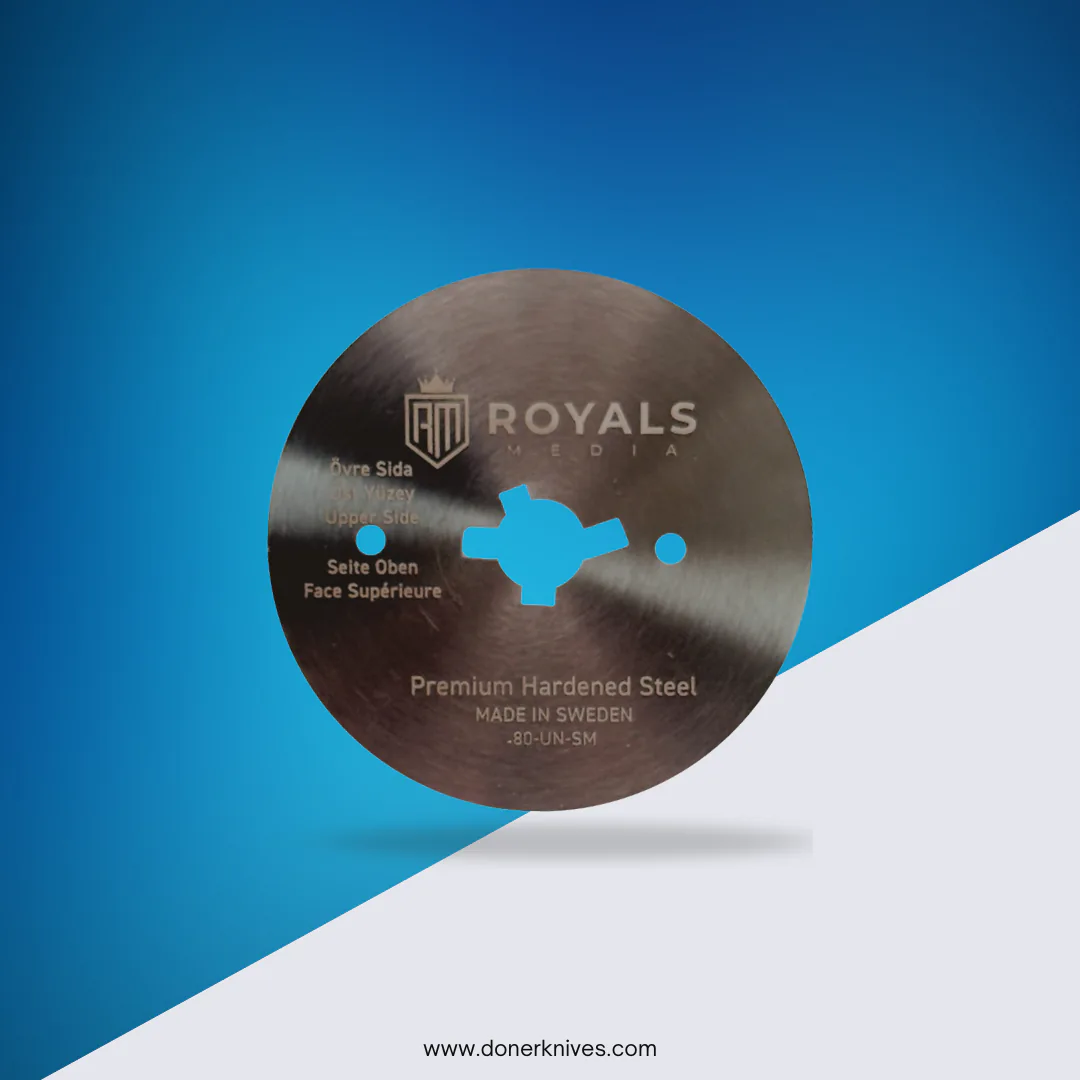
Before you begin, it is critical to understand what you are working with. The blade is a hardened stainless steel disc, not a hand knife. It has no handle, no point, and no spine; the entire circumference is the cutting edge, and the centre hole is what secures it to the machine's spindle. Your slicer dictates the required diameter—available sizes are 80, 90, 100, 120, and 140 mm—so you cannot simply choose a larger or smaller blade to suit your preference. The mount type is equally fixed: keyhole (Universal), round centre (Dost), or brand-specific (Jet and Tandir), with larger 140 mm blades using 2, 3, or 4 bolt holes.
Getting this right the first time saves you downtime and prevents damage to your equipment. The following sections break down the measurement method, mount types, and edge options so you can confidently order the correct 90mm Universal – Smooth or any other blade in the range.
How to Identify the Correct Replacement Blade (The Measurement Method)
Before ordering a replacement, you must confirm three physical measurements from your existing blade. Guessing based on the machine’s brand name alone is risky, as even within a single brand, different models use different mounts. The correct approach is a simple, three-step measurement method.
Step 1: Measure the Diameter Lay the old blade flat on a table. Measure straight across the centre, from one outer edge to the opposite outer edge. The result must match one of the five standard sizes: 80 mm, 90 mm, 100 mm, 120 mm, or 140 mm. If your measurement falls between these figures, round up to the nearest standard size, but verify the fit against the machine’s spindle guard before purchasing. The diameter is dictated by the machine’s housing, not by the thickness of meat you typically slice.
Step 2: Identify the Centre Mount The centre hole is the critical differentiator. Look at the shape of the aperture and the surrounding metal. You are looking for one of three patterns:
- Keyhole: A slot with a wider circular section and a narrower channel. This is the Universal mount.
- Round Centre: A simple, clean circular hole. This is the Dost mount.
- Brand-Specific: A distinctive shape or a recessed collar unique to Jet or Tandir machines.
Step 3: Count the Bolt Holes (for 140 mm Only) If your blade measures 140 mm, you must also count the number of small screw holes surrounding the centre aperture. The range offers 2-hole, 3-hole, and 4-hole variants. This pattern is not interchangeable; a 3-hole blade will not align with a 4-hole spindle.
Once you have these three data points—diameter, mount type, and hole count—you can confidently select the correct product from this universal doner machine blade replacement guide. If your machine brand is not listed in the compatibility table, do not guess; send a photo of the old blade’s mount to your supplier for confirmation.
Understanding Blade Mounts: Keyhole, Round Centre, and Brand-Specific Fittings
The mount is the critical interface between the blade and your machine’s drive shaft, and getting this wrong is the most common cause of returns. There are three primary mounting configurations you will encounter, and identifying yours is straightforward.
Keyhole Mounts (Universal) This is the most versatile option, designed to fit a wide range of machines with a tapered drive pin. The blade features a keyhole-shaped centre—a round hole with a narrow slot leading to it. You slide the blade onto the pin and then rotate it slightly to lock it into place. This system is common on 80 mm and 90 mm blades, such as the 90mm Universal Smooth, and is the default for many compact slicers.
Round Centre Hole Mounts (Dost) A simple, precise circular centre hole is typical of Dost machines. This design relies on a perfectly machined shaft and often a locking nut to secure the blade. The fit must be exact; any play will cause vibration and uneven cuts. For these machines, you need a blade with a matching round centre, such as the 90mm Dost Smooth.
Brand-Specific Fittings (Jet and Tandir) Some manufacturers, like Jet and Tandir, use proprietary mounting patterns that differ from the standard universal or Dost designs. These blades are machined to match the unique shaft geometry of their respective machines. For example, a Jet machine requires a 120mm Jet Serrated blade, while a Tandir unit needs a 120mm Tandir Serrated blade. Attempting to force a universal blade onto these fittings will damage both the blade and the machine.
Larger 140 mm Machines For high-capacity units from brands like Alkadur, IDM, Korkmaz, and Atalay, the 140 mm blades use a different system entirely: they are secured by bolts through 2, 3, or 4 holes around the centre. You must match the hole count to your machine’s drive plate.
If your machine brand is not listed here, do not guess. The safest approach in any universal doner machine blade replacement guide is to measure the old blade’s diameter and centre hole pattern, or send a photo of the mount to your supplier for verification.
Smooth vs. Serrated Edges: Which One Do You Need?
The choice between a smooth and a serrated edge is not about preference; it is about the state of the meat you are slicing. Each edge profile is engineered for a specific texture and temperature, and selecting the wrong one will compromise both yield and presentation.
A smooth edge is the default choice for standard, freshly cooked doner. It produces the clean, tender, and even slices that are ideal for sandwiches and platters. The continuous edge glides through warm, juicy meat without tearing the fibres. If you serve meat that is cooked to order and carved immediately, the 80mm Universal Smooth or its 90mm counterpart is your primary tool.
A serrated edge is designed for firmer conditions. If your meat is pressed, chilled, or held at a lower temperature, a smooth blade will crush and shred the surface rather than cut it. The serrations grip the surface and saw through the denser texture, maintaining portion control and preventing the meat from tearing away in ragged chunks. For operations that prepare meat in advance or serve it from a slightly cooler spit, the 80mm Universal Serrated is the correct specification.
As you consult the universal doner machine blade replacement guide, remember that the edge type is a functional requirement, not an upgrade. A serrated blade on warm meat will create a rough, torn surface, while a smooth blade on cold meat will struggle and waste product. Match the edge to your serving workflow to ensure every slice is clean and profitable.
Step-by-Step Blade Removal and Installation
Before touching the blade, disconnect the doner machine from its power source. This is non-negotiable. You are working with a hardened stainless steel disc that is sharp along its entire circumference.
Removal
- Expose the Mount: Remove the protective guard or cone cover to access the centre nut and the blade itself.
- Secure the Blade: Hold the blade firmly with a clean, dry cloth to prevent it from spinning while you work.
- Loosen the Nut: Use the appropriate spanner or wrench to loosen the centre retaining nut. Turn it counter-clockwise. Do not force it; if it resists, apply a small amount of penetrating oil and wait a few minutes.
- Slide the Blade Off: Once the nut is free, carefully slide the blade straight off the drive shaft. Set it aside on a flat, safe surface. Never lay it flat on its cutting edge.
Installation
- Align the Mount: This is the most critical step. Your replacement blade must match the old one’s mount. A keyhole mount slides over a pin, a round centre hole fits directly over the shaft, and brand-specific fittings (like those for Jet or Tandir) have a unique shape. If the alignment is wrong, the blade will not sit flush and will vibrate dangerously.
- Fit the Blade: Slide the new blade onto the shaft, ensuring the mount aligns perfectly with the drive pin or fitting. The blade must sit flat against the mounting plate with no gaps.
- Hand-Tighten the Nut: Thread the retaining nut back on by hand until it is snug. This prevents cross-threading.
- Secure with a Wrench: Tighten the nut firmly with your wrench. The blade must be rigid; any wobble indicates improper seating.
- Test Spin: Before replacing the guard, rotate the blade by hand to confirm it spins true and does not catch on the machine housing.
If you are unsure about the mount type, consult the earlier sections of this universal doner machine blade replacement guide. When in doubt, measure the old blade’s centre hole and bolt pattern, or contact us with a photo of the mount for confirmation.
Blade Care and Maintenance: Hand-Washing Only
Blade Care and Maintenance: Hand-Washing Only
Your doner blade is a precision-ground, hardened stainless steel disc. The single most important rule for preserving its edge is simple: hand-wash only. Never place it in a dishwasher. The combination of high heat, aggressive alkaline detergents, and high-pressure water jets will dull the cutting edge and can cause micro-crazing on the steel surface, permanently compromising its performance.
After each use, rinse the blade under warm running water to remove meat fibres and fat. Use a soft sponge or cloth with a mild dish soap. Avoid abrasive scouring pads, steel wool, or harsh chemical cleaners, as these will scratch the polished surface and create friction points that accelerate wear.
Dry the blade immediately with a soft, lint-free towel. Do not allow it to air-dry, as standing moisture can lead to surface staining, even on stainless steel. Once dry, store the blade flat in a protective sleeve or between soft cloths. Never stack other utensils or blades on top of it, as contact can nick the edge.
Regular hand-washing and careful storage will extend the life of your blade significantly. When the edge eventually dulls, consult this universal doner machine blade replacement guide to identify the correct new disc for your machine. A well-maintained blade not only produces cleaner cuts but also reduces strain on your slicer’s motor.
When to Replace Your Doner Blade (Signs of Wear)
A dull blade is not merely an inconvenience; it is a safety hazard and a direct threat to the quality of your meat. Knowing when to stop sharpening and start replacing is critical for consistent, professional results.
The most obvious sign is visible damage. Inspect the edge for nicks, chips, or small burrs that cannot be honed out. These imperfections tear the meat fibres, producing a ragged cut that ruins presentation and accelerates spoilage.
Next, pay attention to performance. If you find yourself applying extra pressure to slice through the meat, or if the blade begins to produce a fine metallic dust or a high-pitched squeal during operation, the hardened steel has lost its structural integrity. This is a clear indicator that the temper has fatigued.
Finally, consider rust and discolouration. While our blades are hardened stainless steel, prolonged exposure to acidic marinades or improper cleaning can cause pitting. Once pitting begins, the edge will fail rapidly.
As a rule of thumb, a commercial blade used daily should be replaced every 3–6 months. If you notice any of these signs, consult this universal doner machine blade replacement guide to find the correct size and mount for your machine. Delaying replacement compromises both safety and yield.
Blade Materials and What They Mean for You
The material of your doner blade determines its longevity, edge retention, and how it handles the demands of daily service. Every blade in our range is manufactured from hardened stainless steel, a deliberate choice that balances strength with corrosion resistance. This material is essential for a circular disc that must maintain a sharp, uniform edge across its entire circumference while being exposed to meat juices and frequent cleaning.
Hardened stainless steel offers two distinct advantages. First, it resists the dulling that occurs from repeated contact with the rotating meat block, meaning your blade holds its edge far longer than softer alternatives. Second, its corrosion resistance ensures that the blade does not pit or rust, which is critical for food safety and for maintaining a smooth cutting surface.
You will not find carbon steel, titanium-coated, or ceramic blades in this range. Carbon steel, while hard, is prone to rust and requires meticulous care. Coatings can flake off into food, and ceramic, though sharp, is brittle and unsuitable for the lateral forces of a doner machine. For a professional kitchen, hardened stainless steel is the reliable, low-maintenance choice. As you work through this universal doner machine blade replacement guide, remember that the material is the foundation of consistent performance—choose the correct size and mount, and the steel will do the rest.
Compatibility Table: Slicer Brands and Recommended Blades
The most direct way to confirm compatibility is to reference the manufacturer’s mounting system. Use the table below as a starting point, but always verify the diameter and hole pattern against your existing blade before ordering.
| Slicer Brand | Recommended Blade Options |
|---|---|
| Dost | 80/90 mm Universal, 90 mm Dost Smooth, 120 mm Dost |
| Jet | 120 mm Jet – Smooth or Serrated |
| Tandir | 100 mm Tandir, 120 mm Tandir |
| Alkadur, IDM, Korkmaz | 140 mm Universal – 3 Hole |
| Atalay | 140 mm Universal – 4 Hole |
| Ceylan, Gurden | 80 mm Universal – Smooth |
| Potis | 80 mm Universal, 140 mm Universal |
Important Note on Universal Blades
The "Universal" designation refers to the keyhole or multi-hole mount, not a one-size-fits-all diameter. For instance, a 90mm Universal Smooth blade is for machines that accept a 90 mm disc with a keyhole mount. Similarly, the 140 mm Universal blades use a bolt-through system; you must select the correct variant (2, 3, or 4 holes) that matches your machine's drive pins.
If Your Brand Isn't Listed
Do not guess. The safest approach is to measure your old blade's diameter and centre hole pattern, then cross-reference it with the specifications in this universal doner machine blade replacement guide. Alternatively, contact the supplier with a photo of the blade mount for a definitive match.
Frequently Asked Questions
How do I know which blade fits my doner machine?
The most reliable method is to measure your existing blade. You need three pieces of information: the diameter (80, 90, 100, 120, or 140 mm), the centre hole shape (keyhole, round, or brand-specific), and the bolt pattern (for 140 mm blades, this is 2, 3, or 4 holes). If your machine is a Dost, Jet, or Tandir, consult the compatibility table above for the correct mount. For other brands, measuring the old blade is the only safe approach—never guess, as an incorrect mount can damage the machine or create a safety hazard.
Can I use a universal blade on any doner slicer?
Universal blades are designed for machines that use a keyhole or round centre mount. The 80 mm and 90 mm Universal blades fit a wide range of machines, including Ceylan, Gurden, and Potis. However, the 140 mm Universal blades require a specific bolt pattern (2, 3, or 4 holes), so you must verify the hole configuration on your existing blade before ordering. If your machine uses a brand-specific mount, such as Jet or Tandir, a universal blade will not fit correctly.
What is the difference between smooth and serrated edges?
A smooth edge produces clean, even slices and is ideal for tender, room-temperature or slightly chilled meat. A serrated edge grips better and is recommended for firmer meat or meat straight from the fridge, as it reduces tearing. If you serve both textures, consider keeping one of each on hand for different batches.
Are these blades dishwasher safe?
No. All blades in this range are hardened stainless steel and must be hand-washed only. Dishwasher detergents contain chemicals that attack the cutting edge, causing premature dulling and corrosion. Wash with warm soapy water, rinse, and dry immediately.
How often should I replace my doner blade?
Replace the blade when you notice visible nicks, warping, or a significant drop in slicing performance. A dull blade tears the meat and puts extra strain on the motor. As a rule of thumb, inspect your blade monthly and replace it at the first sign of damage.
For a complete overview of sizing and mounting, refer to the rest of this universal doner machine blade replacement guide.
Conclusion: Keep Your Doner Machine Slicing Perfectly
Replacing your doner blade is a straightforward task once you know your machine’s exact specifications. By measuring the diameter, identifying the correct mount type, and choosing between a smooth or serrated edge, you have eliminated the guesswork. A properly fitted, sharp blade not only produces consistent, professional cuts but also reduces strain on your motor and ensures safer operation.
Remember to always hand-wash your blade and store it securely. Whether you need a precision 90mm Universal – Smooth for a Dost machine or a robust 140mm Universal – 3 Hole for an Alkadur, selecting the right part from the start saves time and money. This universal doner machine blade replacement guide is designed to keep your equipment running at peak performance. Invest in the correct replacement today, and your doner machine will continue slicing perfectly for years to come.