October 3, 2026
Which Doner Knife Blade Fits Your Dost Machine? – Complete Guide
Introduction: Finding the Right Doner Knife Blade for Your Dost Machine
Asking yourself which doner knife blade fits a Dost machine is the first step toward perfectly sliced kebab – and the answer is simpler than you think. With us, you'll find two specific Dost blades: 90 mm Dost – Smooth and 120 mm Dost – Smooth, plus serrated variants in both sizes.
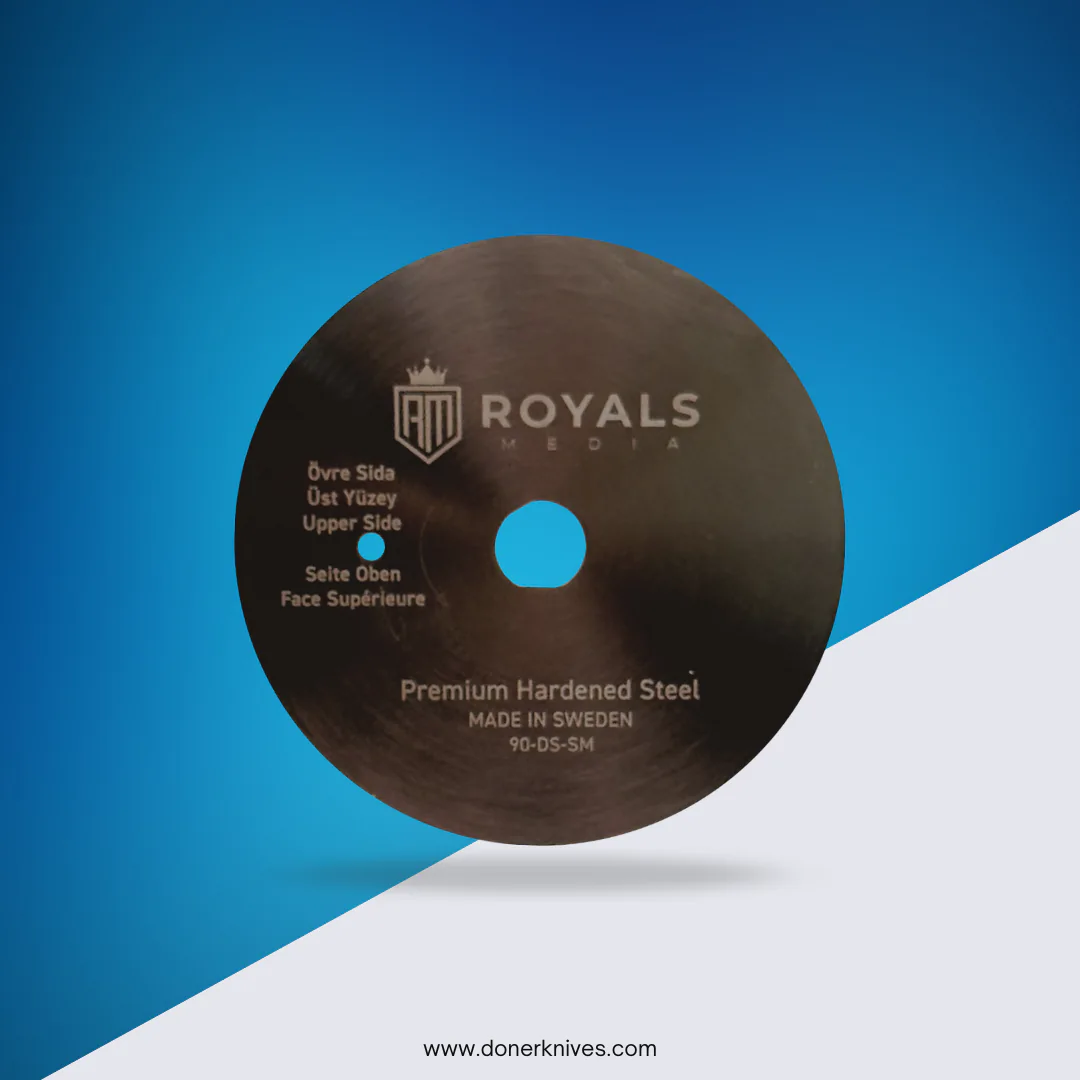
Before you order: check the diameter of your current blade. Dost machines use either 90 mm or 120 mm, and the correct size is determined entirely by your machine model – not by preference. All our Dost blades have a round center hole, which distinguishes them from the Universal blades' keyhole mounting.
Whichever you choose, you get hardened stainless steel with a sharp edge around the entire circumference. A smooth blade gives even, thin slices – perfect for freshly grilled meat. A serrated blade handles firmer or refrigerator-cold meat without tearing the fibers.
Unsure which Dost model you have? Measure the old blade's diameter and center hole – then you can't go wrong.
Which Doner Knife Blade Fits a Dost Machine? – Compatibility Table
To answer the question which doner knife blade fits a Dost machine, you need to know two things: the diameter of your machine's shaft and the type of center mounting you have. Dost machines use either a round center hole (Dost-specific) or the universal keyhole mounting. Here's a quick compatibility table for the most common models:
| Dost model (type) | Recommended blade |
|---|---|
| Dost with round center hole, 90 mm | 90mm Dost – Smooth or 90mm Dost – Serrated |
| Dost with round center hole, 120 mm | 120mm Dost – Smooth or 120mm Dost – Serrated |
| Dost with keyhole mounting, 80/90 mm | 80mm Universal or 90mm Universal |
Important to note: Not all Dost machines are identical. If your machine doesn't match the above – for example, if you have an older model or one with unusual dimensions – don't guess. Measure the old blade's diameter and center hole carefully, or send us a picture of the mounting and we'll help you identify the right blade.
For most modern Dost machines with a round center hole, 90 mm is the most common size, while 120 mm is used for larger volumes. Both are available in smooth and serrated variants – choose smooth for tender, evenly sliced meat, or serrated if you're cutting firmer or refrigerator-cold meat.
How to Identify Your Dost Model by Measuring the Old Blade
The fastest way to get a definitive answer to the question which doner knife blade fits a Dost machine is to measure the old blade before you take the machine apart. You only need a caliper or a ruler and three measurements.
1. The diameter (the most important measurement) Measure from outer edge to outer edge straight across the center of the blade. Dost machines use either 90 mm or 120 mm blades. If you round to the nearest whole number and get 90 mm, either 90mm Dost – Smooth or 90mm Dost – Serrated will fit. If the measurement is 120 mm, you choose between 120mm Dost – Smooth and 120mm Dost – Serrated.
2. The shape of the center hole Look at the hole in the middle. Dost blades have a round center hole, not a keyhole mounting. If your old blade has a round hole, that confirms you should choose a blade marked "Dost" rather than "Universal." Measure the hole's diameter to be safe, but it's the shape that determines compatibility.
3. The cutting edge Carefully feel the edge. Is it completely smooth or does it have teeth? This determines whether you should order a smooth or serrated blade. Serrated is better for firmer, cold-cut meat while smooth gives more even slices on room-temperature meat.
Unsure? If the measurements don't match the table, or if the center hole has an unusual shape, send us a photo of the blade's mounting and we'll help you. Guessing is unnecessary – the right measurement guarantees you get a blade that fits your Dost perfectly.
Round Center Hole vs. Keyhole Mounting – What's the Difference?
When you're going to replace the blade, the first thing you must check is how the blade is attached to the machine. That determines which doner knife blade fits a Dost machine – and it's about two completely different systems.
Round center hole is the mounting found on Dost machines. The blade has a circular hole in the middle that threads directly onto the machine's shaft and locks with a nut or washer. This provides a very stable and precise rotation, which is important for even slices. If you want a blade with a round center hole, you'll find it in 90mm Dost – Smooth or 120mm Dost – Serrated.
Keyhole mounting (also called Universal) has a hole shaped like a keyhole – a round hole with a narrow slit out toward the edge. This allows the blade to slide into place over a screw or pin and then lock when rotated. The system is common on universal machines and makes changes faster, but it's not compatible with the Dost machine's shaft.
Most important to remember: You can't use a universal blade on a Dost machine, and vice versa. If you're unsure which mounting your machine has, measure the diameter of the old blade and look at the shape of the hole. A 90mm Universal – Smooth won't work on a Dost, for example – there you need a blade with a round center hole.
90 mm or 120 mm – Which Diameter Does Your Dost Need?
When you're going to replace the blade on your Dost, the diameter is the first thing you must get right. There's no room for opinion here – it's the machine's shaft and blade guard that decide, not your preference. For Dost machines, two diameters apply: 90 mm and 120 mm.
A 90 mm blade fits the smaller, often portable Dost models. It gives a tighter cutting arc and is perfect for lower-volume service, where you slice thin pieces directly from a smaller meat stack. 90 mm Dost – Serrated is a common choice for those who want grip even in slightly firmer meat.
The 120 mm blade is standard on the larger Dost machines that are permanently mounted in the kitchen. The larger diameter gives a longer cutting edge per revolution, which means more efficient slicing of a larger stack. Here you'll find 120 mm Dost – Serrated as a durable option in hardened stainless steel.
To answer the question which doner knife blade fits a Dost machine – measure the diameter of your old blade before ordering. Is it 90 mm or 120 mm? If in doubt, measure the center hole and compare with the existing mounting. The right diameter is the foundation for a clean cut and safe installation.
Smooth or Serrated Blade – What Suits Your Service Best?
When choosing between a smooth or serrated blade, it's not about which is "better" – but about what type of meat you serve and how it's been handled. The question of which doner knife blade fits a Dost machine therefore gets a nuanced answer depending on your needs.
Smooth blade gives a clean, even cut with thinner slices. It's ideal for well-done, juicy doner meat that should melt in the mouth. The slices become smooth and fine, perfect for classic servings in pita bread or on a plate. A 90mm Dost – Smooth is a safe choice if you run a classic hot doner.
Serrated blade has saw-toothed edges that bite into the meat. It's superior when slicing firmer or refrigerator-cold meat, because the teeth tear through the surface without shredding or mashing the fibers. The serration also gives a slightly rough surface on the slice, which some guests prefer. Choose a 90mm Dost – Serrated if you often slice freshly grilled meat that's still a bit firm in the core.
Many chefs run two blades – one smooth for the lunch rush and one serrated for the last slices of the evening when the meat has had time to cool. Keep in mind that both types are available in the same diameter and mounting, so changing takes just a few minutes.
Hardened Stainless Steel – Material and Care
All blades in our range are made of hardened stainless steel – that applies whether you choose a 90mm Dost – Smooth or a serrated option. The material is chosen to handle the tough daily life in a kitchen: it's corrosion-resistant, withstands moisture, and retains its sharpness for a long time thanks to the hardening process.
However, for the blade to last as long as possible, proper care is required. Hand washing is a must – the dishwasher's aggressive chemicals attack the edge and significantly shorten its lifespan. After each use, rinse the blade in warm water and dry it immediately with a soft cloth.
Avoid using steel wool or abrasive sponges that can scratch the surface. For those wondering which doner knife blade fits a Dost machine, the material is thus always the same – it's the diameter and mounting that differ.
A well-maintained blade not only gives more even slices, it also reduces the risk of the meat tearing apart. For you looking for a new blade for your Dost, we recommend matching your old blade's measurements, but you can be confident in the material – it's always hardened stainless steel.
Installing a Doner Knife Blade – Step by Step
Start by turning off the machine and unplugging it – safety first. Remove the old blade by loosening the center nut or mounting screw, depending on your Dost model. Save the nut and any washers; they should be reused.
Clean the mounting surface on the machine's shaft with a dry cloth so no grease or meat residue remains. Then take your new blade – if you're unsure which one to choose, return to the question which doner knife blade fits a Dost machine and check the diameter against the old blade.
Place the blade centered over the shaft so the center hole slides into place. For 90mm Dost – Smooth or 120mm Dost – Serrated, the hole sits tight, so wiggle it gently until it rests against the shaft's plane. Tighten the center nut by hand until it catches, then a quarter turn more with a fixed wrench – don't overtighten, as the blade can warp.
Spin the blade by hand a full revolution to ensure it runs evenly without play. Reattach the protective plate and run the machine for 10 seconds without meat to confirm everything is stable. Always wash the blade by hand after the first use – the dishwasher destroys the edge.
When Is It Time to Replace Your Dost Blade?
A doner knife blade doesn't wear evenly, and the signs that it's time to replace are clear once you know what to look for. The first and most common is that the slices become uneven or the meat starts tearing apart instead of being cut cleanly. A dull blade also requires more pressure, which you notice as vibrations or a strained sound from the machine. Visible nicks or a shiny, rounded edge are sure signs of wear.
Another important sign is rust or discoloration. Despite all blades in the series being made of hardened stainless steel, improper care – such as machine washing – can break down the edge and cause corrosion. If you see any of this, replace it immediately.
To answer the question about which doner knife blade fits a Dost machine, it's always safest to replace with a blade of the same diameter and mounting as the old one. While you're at it, take the opportunity to inspect the center hole – if it's worn or deformed, it's definitely time. Feel free to read our guide on replacing doner blades on Tandir machines for general tips, or look specifically at 100 mm serrated blade for Dost if you're unsure about the model.
Frequently Asked Questions About Doner Knife Blades for Dost Machines
How do I know which doner knife blade fits my Dost?
Start by measuring the diameter of your old blade. Dost machines use either 90 mm or 120 mm blades. Measure from outer edge to outer edge straight across the center. Does it match 90 mm? Then you choose among 90mm Dost – Smooth or 90mm Dost – Serrated. Is it 120 mm? Then 120mm Dost – Smooth or 120mm Dost – Serrated fits.
Can I use a Universal blade on my Dost?
Yes, that works. Dost machines with 80 or 90 mm diameter can also use Universal blades with a round center hole. For example, 90mm Universal – Smooth or 80mm Universal – Serrated. Just check that the center hole matches your machine's shaft before ordering.
What's the difference between a smooth and serrated edge?
A smooth edge gives even, thin slices – perfect for freshly grilled, tender meat. A serrated edge gets a better grip on firmer or refrigerator-cold meat and gives a more even cut without tearing the surface.
How many holes should the blade have?
Dost blades have a round center hole. Universal blades for 140 mm come with 2, 3, or 4 bolts – but they don't fit Dost. For your Dost machine, it's always a round center hole that applies.
How do I clean the blade?
Always by hand in warm water with mild dish soap. The dishwasher destroys the edge – it dissolves the hardening and makes the blade dull. Dry it thoroughly immediately after washing.
How often do I need to replace it?
When you notice the meat tearing apart or that you have to press harder to cut – then it's time. A dull blade ruins both the appearance and taste of your doner.
Unsure which doner knife blade fits a Dost machine? Always measure the old blade or send a picture of the mounting and we'll help you choose the right one.
Conclusion – Find the Right Blade and Keep Your Dost in Top Condition
Finding the right blade isn't about luck – it's about matching diameter, mounting, and edge type to your machine. The question which doner knife blade fits a Dost machine is answered most easily by measuring your old blade and comparing it with our compatibility table. For 90 mm models, choose 90mm Dost – Smooth for an even, fine slice, while 120 mm variants like 120mm Dost – Smooth give the same quality in a larger format.
Remember to always wash the blade by hand – dishwasher detergent damages the edge. A well-maintained, hardened stainless steel blade gives you both more beautiful slices and a longer lifespan. Once you've found the right model and installed it correctly, you'll notice the difference in both speed and results immediately. Your Dost deserves a blade that fits perfectly – measure carefully, choose right, and keep your machine in top condition for every service.