September 26, 2026
Replacing Döner Knife Blades on Tandir Machines – Complete Guide
Introduction: Why It’s Important to Replace the Doner Knife Blade in Your Tandir Machine
Replacing the doner knife blade on a Tandir machine is one of the most important maintenance tasks to keep your slicer in top condition. A dull or damaged blade doesn’t just affect the quality of your slices – it also makes the motor work harder and causes the meat to tear instead of being cut cleanly.
When you replace it with a new, hardened steel blade, you get even, thin slices that look professional on the plate. You also reduce the risk of the machine overheating or vibrating abnormally. For those running a kebab restaurant or food truck, it ultimately comes down to both food quality and the lifespan of your investment.
A common mistake is waiting too long to replace it. A blade that has lost its edge creates more resistance, which leads to unevenly cut meat and a surface that dries out faster. By replacing the blade in time – and choosing the right diameter for your Tandir model – you ensure smooth and efficient operation every day. Read on to learn how to replace the doner knife blade on a Tandir machine properly.
Signs That Your Tandir Blade Needs Replacing
A dull blade isn’t just annoying – it affects both the quality of the meat and your working environment. Here are the clearest signs that it’s time to replace the doner knife blade on your Tandir machine:
- The meat tears or gets crushed instead of being cut into even, thin slices. A sharp blade gives clean cuts, while a dull one crushes the fibers.
- You have to press harder or move the meat back and forth to get through it. A sharp knife should glide through with minimal resistance.
- Visible nicks or damage on the edge. Inspect the blade in good light – even small nicks spread quickly.
- Uneven slices where some pieces are thick and others almost transparent. This indicates the edge is worn unevenly.
- Increased meat loss – a dull blade “mashes” away more meat than it cuts, resulting in less volume on the plate.
- The blade has discolored or rusted despite being hardened stainless steel. This can be a sign of chemical damage or improper cleaning.
If you experience any of these, it’s time to act. Waiting too long can also put strain on the motor in your machine. A good rule of thumb: replace the blade when you notice the slices no longer look professional – usually every 4–6 weeks with daily use, depending on how hard you run it.
How to Measure the Right Diameter – 100 mm or 120 mm for Tandir
Measuring the diameter of your old blade is the only sure way to know whether you need 100 mm or 120 mm. Tandir machines use exactly these two sizes, but this isn’t something you should guess – the wrong diameter simply won’t fit in the machine.
Here’s how to measure:
- Remove the blade from the machine according to the manufacturer’s instructions.
- Measure straight across the center – from one outer edge to the opposite one. Place the tape measure or ruler through the center hole to get the correct measurement.
- Round to the nearest whole number. A blade measuring 99–100 mm is a 100 mm blade. A blade measuring 119–120 mm is a 120 mm blade.
Always measure in millimeters – tape measures with inch markings can mislead you.
What happens if you choose the wrong diameter?
A blade that’s too small will be loose and produce unstable cuts. A blade that’s too large will hit the machine’s protective cover or motor. That’s why measuring is so important before you replace the doner knife blade on a Tandir machine – a wrong purchase just means more downtime in the kitchen.
Also check the mounting
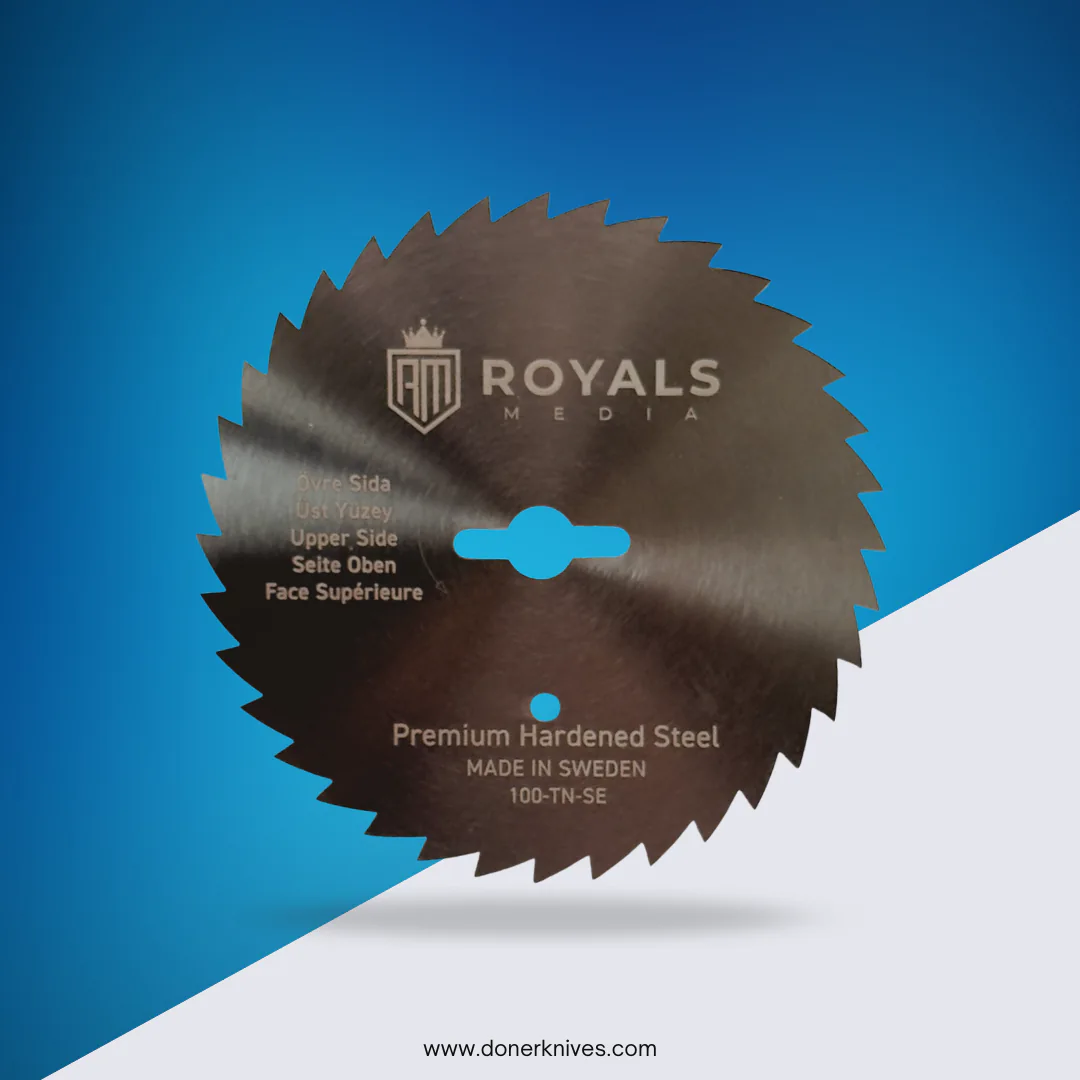
In addition to the diameter, you need to look at how the blade is attached. Tandir blades have either a keyhole or a round center hole. Compare with your old blade before ordering.
Once you know the diameter, choose between 100 mm Tandir – serrated or 120 mm Tandir – serrated. Unsure about the measurement? Measure again – it takes 30 seconds and saves you both time and money.
Tandir Mounts: Keyhole or Round Center Hole?
When you’re going to replace the doner knife blade on a Tandir machine, the mount is just as important as the diameter. Tandir machines use two different center mounts, and choosing the wrong one means the blade won’t sit securely.
Keyhole (Universal)
This mount has an elongated, keyhole-shaped slot in the center. It’s designed to fit several brands, but for Tandir specifically, 100 mm and 120 mm blades with this mounting apply. The keyhole provides a flexible fit against the machine’s drive unit.
Round center hole (Dost)
The round center hole is common on Dost models but also appears on certain Tandir variants. The hole is perfectly circular and requires an exact fit against the pin on the machine spindle. If you measure wrong here, you risk vibration and wear.
How to determine the right mount
Always measure the old blade’s center hole – both shape and inner diameter. Then compare with your machine model. For Tandir:
Unsure which mount your machine has? Measure the old blade or send a picture of the mounting – then you’ll get the right blade right away.
Step-by-Step: Replacing the Doner Knife Blade on a Tandir Machine
Replacing the doner knife blade in your Tandir machine is a simple procedure you can handle in a few minutes – without special tools. Here’s the entire process, step by step.
Before you start: Safety first Always unplug the machine before touching the blade. The blade is extremely sharp along its entire circumference, so use metal mesh protective gloves if you have them. Otherwise, a pair of sturdy work gloves will do.
Step 1: Remove the old blade Loosen the central nut or locking screw that holds the blade in place. On Tandir machines, the blade is attached either with a keyhole mount or a round center hole. Carefully twist the blade off the shaft and set it aside – remember it’s still sharp.
Step 2: Measure and check Before mounting the new blade, double-check the diameter. Tandir machines use either 100 mm or 120 mm blades. Measure the old blade’s diameter from edge to edge through the center. Also check that the mount matches – keyhole or round center hole. If you’re unsure, compare with the old blade.
Step 3: Mount the new blade Take your new blade out of the packaging – it should be hardened stainless steel. Align the center hole with the shaft and carefully slide it into place. Make sure the blade sits flat and isn’t crooked. Tighten the nut or locking screw properly, but don’t overdo it – you don’t want to damage the threads.
Step 4: Test run Plug the machine back in and run it for a few seconds without meat. Listen for vibrations or unusual noises. A correctly mounted blade spins quietly and evenly.
Step 5: Reset the machine Now you’re ready to replace the doner knife blade on your Tandir machine and continue slicing. Remember to hand-wash the new blade after the first use – the dishwasher ruins the edge.
Tip: Always keep the old blade until the new one sits perfectly. That way you have a reference if anything feels wrong.
Smooth or Serrated Blade – Which Should You Choose?
When you’re going to replace the doner knife blade on a Tandir machine, the choice between smooth and serrated blade is crucial for the result. Both are available in hardened stainless steel, but they’re designed for different types of meat and degrees of doneness.
Smooth blade is the standard choice for most restaurants. The even edge cuts through tender, freshly grilled meat without tearing the fibers. The result is thin, even slices with a fine surface – perfect when the doner meat is juicy and has been cooked to the desired temperature. If you serve classic doner with bread and salad, the 120mm Tandir – Smooth is a safe bet.
Serrated blade has a saw-toothed edge that bites into the surface. It’s ideal when the meat is firmer, for example if it’s just been taken out of the fridge or if you’re running a higher proportion of beef with more connective tissue. The teeth grip and cut through without requiring as much pressure, giving more even slices on colder or tougher raw material.
Keep in mind that the serration gives a slightly coarser slice. For many customers, there’s no noticeable difference, but for thin, elegantly sliced doner, a smooth blade is superior. If you choose serrated, go for the 120mm Tandir – Serrated for the best grip.
Our recommendation: Have one of each on hand. Use smooth for the lunch rush when the meat is perfect, and switch to serrated when you’re cutting colder or firmer pieces. That way you always get the best possible slice – no matter what time of day you’re cutting.
The Material: Why Hardened Stainless Steel Is the Only Right Choice
When you’re going to replace the doner knife blade on a Tandir machine, the material is the most important thing to look at. All blades in our range are made of hardened stainless steel – and that’s no coincidence. It’s the only material that can handle the tough demands of a professional doner operation.
The hardening makes the steel extremely wear-resistant. An unhardened blade loses its edge after just a few rotations, resulting in uneven slices and increased strain on the motor. A hardened stainless blade retains its edge longer, which means fewer replacements and more consistent meat quality day in and day out.
Stainless steel is also a requirement from a hygiene perspective. The material withstands daily cleaning and is completely unaffected by the meat’s natural acids and fats. There’s no risk of rust or discoloration that could affect flavor or safety.
You never have to think about carbon steel, titanium, or ceramic – they simply don’t exist in our range. Hardened stainless steel is the only right choice for your Tandir machine. For a deeper look at the steel’s properties, read our guide on stainless doner blades.
Maintenance After Replacement: Hand Washing and Storage
Once you’ve replaced the blade, you naturally want it to last as long as possible. The most important advice is simple: always wash by hand. The dishwasher’s aggressive detergents and hot water attack the blade’s edge and can make it dull prematurely. It doesn’t matter if you’ve just replaced it with a 120 mm Tandir blade with serrated edge or a smooth one – hand washing is a must for both variants.
Wash the blade immediately after use in warm water with a mild dish soap. Use a soft sponge or brush and remember that the entire circumference is sharp – hold the blade by its center or use a protective glove. Avoid steel wool and abrasive scouring pads that scratch the hardened steel surface and create areas where residue can stick.
After washing, it’s important to dry the blade immediately with a soft, lint-free cloth. If you leave it to air-dry, limescale spots and water deposits can form. Then store the blade dry and protected, preferably in its original packaging or between soft protectors. Avoid storing it loose in a drawer with other metal objects – that risks both damaging the edge and hurting yourself when you look for it next time. A well-maintained blade retains its sharpness longer and means you won’t need to replace the doner knife blade on your Tandir machine as often.
Compatibility: Which Tandir Models Use Which Blade?
Tandir machines from different manufacturers have different mounts and diameters, so you can’t just buy any blade. For your Tandir machine, there are two specific options: 100 mm Tandir and 120 mm Tandir. Which diameter you need is determined entirely by your machine’s center hole and the blade’s outer diameter – nothing else.
For Tandir models with a smaller cutting head, use the 100mm Tandir – Serrated or 100mm Tandir – Smooth. If you have a larger machine, the 120mm Tandir – Serrated or 120mm Tandir – Smooth applies.
Other brands have their own systems: Dost uses 90 mm or 120 mm Dost blades, Jet has 120 mm Jet blades, and Universal blades (80, 90, or 140 mm) fit many other machines. For 140 mm Universal, there are variants with 2, 3, or 4 holes – you need to know how many holes your machine has.
If your machine isn’t on the list – measure the old blade. Check the diameter, the shape of the center hole, and the bolt pattern. You can also send a picture of the mounting to be sure. Properly replacing the doner knife blade on a Tandir machine always starts with the right blade type – then you avoid both looseness and vibration.
Frequently Asked Questions About Replacing the Doner Knife Blade on a Tandir
How do I know which diameter my Tandir blade should be?
The diameter is determined entirely by your machine, not personal preference. Tandir machines use either 100 mm or 120 mm blades. Measure the old blade’s diameter from edge to edge through the center – if you’re unsure, measure the center hole and compare with the mount. A 100 mm blade won’t fit a 120 mm machine and vice versa.
What’s the difference between keyhole and round center hole?
It’s about how the blade attaches to the machine’s shaft. Keyhole (also called Universal) has an oval opening that slides into place, while round center hole is exactly what it sounds like – a circular hole that screws on. Tandir machines use a specific mount, so always check which type your machine has before ordering.
Can I use a Dost or Jet blade on my Tandir?
No. Even if the diameter happens to be the same, the mounts differ between brands. A 120mm Tandir – Serrated or 120mm Tandir – Smooth is designed specifically for the Tandir machine’s shaft. Forcing the wrong mount damages both the blade and the machine.
How often do I need to replace the doner knife blade on my Tandir machine?
It depends on how much you cut. If you run daily with cold, firm meat, the edge wears faster. If you notice the meat tearing or the machine pressing rather than cutting, it’s time to replace it. As a rule of thumb: replace every 4–6 weeks with normal restaurant use.
Should I choose a smooth or serrated blade?
Smooth blades give thin, even slices and are perfect for freshly grilled, tender meat. Serrated blades are better if you’re cutting meat that’s refrigerator-cold or has a firmer surface – the teeth get better grip and reduce the risk of the meat tearing. Many run serrated as standard and smooth for weekends and catering.
How do I clean the blade after replacement?
Always by hand – dishwasher detergents attack the edge and significantly shorten its lifespan. Rinse the blade in warm water, dry it immediately, and store it protected. A well-maintained blade holds its sharpness considerably longer, whether you replace the doner knife blade on your Tandir machine every month or less often.
What do I do if my brand isn’t on the list?
Always measure the old blade’s diameter, the shape of the center hole, and any screw holes. Take a picture of the mount – then you can compare with the 90mm Universal – Smooth or other Universal models to find the right fit.
Conclusion: Measure, Choose Right, and Replace Safely
Replacing the doner knife blade on a Tandir machine isn’t about personal preference – it’s about measuring correctly. Start with the diameter: 100 mm or 120 mm, depending on your machine model. Then measure the mount. Tandir uses a specific mount, so double-check that the center hole matches before ordering.
Once you know the measurements, the choice is simple. Choose a smooth blade for 100 mm Tandir if you’re slicing raw meat into thin, even slices. If you need to cut firmer or chilled pieces, take the serrated 120 mm Tandir blade instead. Both are in hardened stainless steel and can handle the tough daily grind.
Remember: always measure the old blade. If you’re unsure about the mount, compare with the 90 mm universal with smooth edge or the 140 mm universal with 3 holes to see the difference. The right blade, the right mounting – then safety and cutting results are guaranteed.