September 22, 2026
Stainless Steel Doner Knife 140mm Guide
What Is a 140mm Stainless Steel Doner Knife?
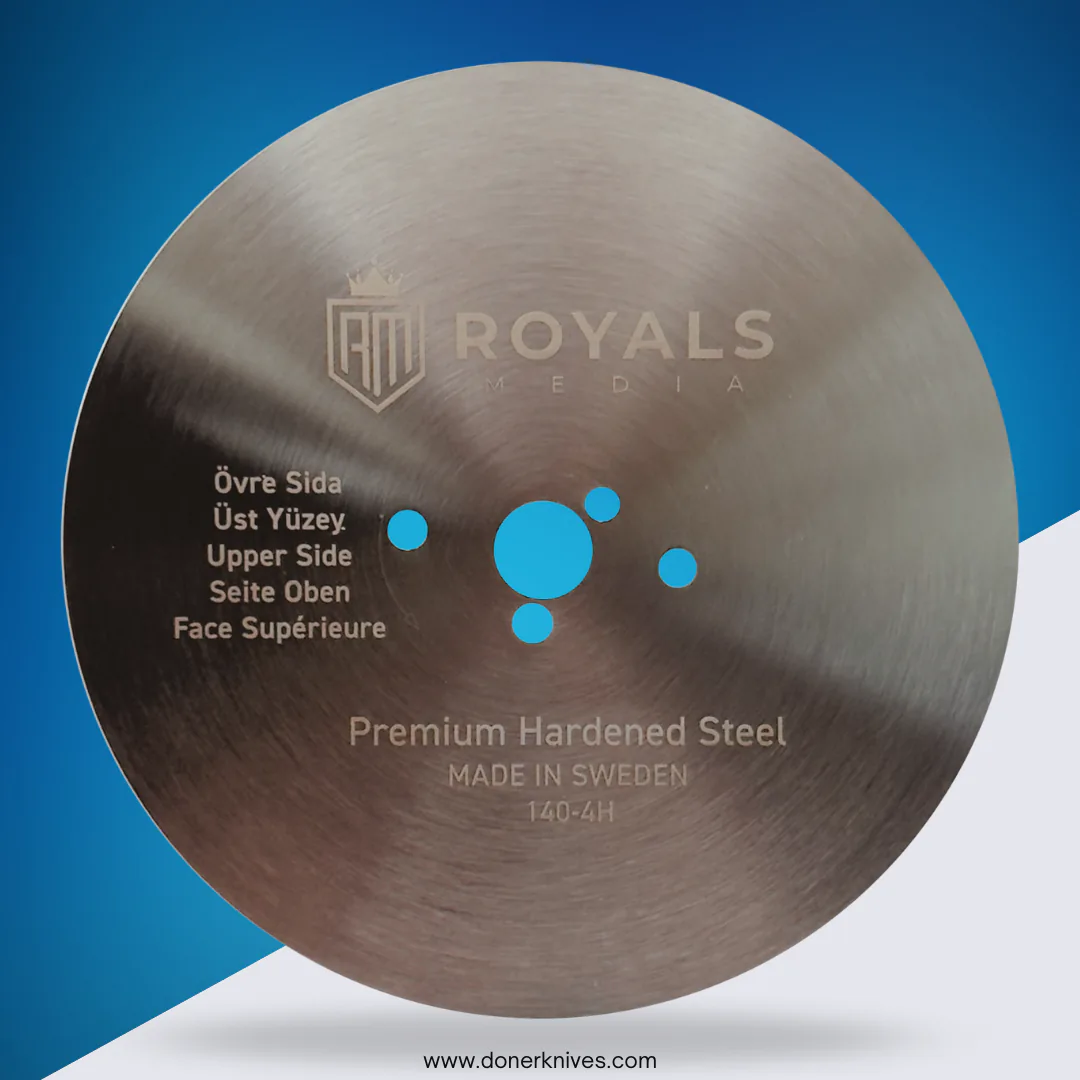
A 140mm stainless steel doner knife is a circular disc used to cut meat into thin, even slices in electric doner cutting machines. Unlike a hand knife, it has no handle, tip, or spine; its entire circumference is a cutting edge, and it is mounted onto the machine shaft through the hole in its center. This size is determined by your machine's motor power and design; it is chosen based on compatibility, not preference.
This blade is manufactured from hardened stainless steel. This material maintains its sharpness for a long time even under heavy use while also offering superior resistance to rust and corrosion. This 140mm diameter model is specifically designed for medium and large-capacity doner machines. The mounting pattern varies depending on your machine's brand; options with 2, 3, or 4 holes are available. For example, Alkadur, IDM, and Korkmaz machines use the 3-hole model, while Atalay uses the 4-hole model.
To choose the correct blade, simply measure your old blade's diameter, center hole, and hole pattern, or know your machine's brand.
Why Is Stainless Steel the Standard for Doner Knives?
Stainless steel is not just a preference in doner knife manufacturing; it is the indispensable standard of professional kitchens. The most important reason is that the material uniquely balances hygiene and durability. A cutting surface in constant contact with meat cannot be porous or prone to corrosion. Thanks to the chromium oxide layer on its surface, stainless steel resists meat juices, salt, and acids; this prevents rust spots and pits that could harbor bacteria from forming on the blade. This feature is critically important in businesses with strict food safety standards.
Furthermore, models made from hardened stainless steel maintain their sharpness longer than carbon steel and provide extra protection against rust. For example, 140mm stainless steel doner knife models delay deformation of the blade edge even under heavy use. Carbon steel may offer a sharper edge, but it stains quickly if not dried after every use. Stainless steel, on the other hand, saves business owners time with its low maintenance cost and long-lasting structure. As a result, stainless steel has become the industrial norm for doner machines because it offers hygiene, safety, and economic lifespan all together. This standard provides the same confidence in both small family-run restaurants and large-scale production facilities.
Which Doner Machines Are Compatible with a 140mm Blade?
The 140mm blade is one of the most common standards for professional doner machines, but thinking "it fits every machine" would be misleading. Compatibility depends not only on diameter but also on the shaft hole shape and the pattern of screw holes. A 140mm stainless steel doner knife in this size is generally offered with three different mounting patterns, and knowing which model you have is the first step to finding the correct spare part.
The most common groups on the market are:
- Alkadur, IDM, and Korkmaz machines: The vast majority of these brands use a 3-hole mounting pattern with holes evenly spaced around the central shaft housing. If your machine's brand is on this list, you most likely need the 140mm Universal 3-hole model.
- Atalay machines: Some Atalay models prefer a 4-hole pattern for a more secure grip. In this case, the 140mm Universal 4-hole option is the correct match.
- Potis machines: Potis models using 140mm may be compatible with both 3 and 4-hole variants; therefore, checking your old blade is critical.
Additionally, you may encounter a 2-hole pattern on some older or less common machines. In this case, the 140mm Universal 2-hole product comes into play.
Important Note: If you have a machine brand not mentioned above (for example, a local manufacturer), do not guess. Measure your old blade's diameter, center hole, and the distance between screw holes with a caliper. Accurate measurement prevents you from purchasing the wrong product and balances the load on your machine's motor.
2, 3, or 4 Holes: Choosing the Correct Mounting Pattern
In 140mm stainless steel doner knife models, the mounting pattern is determined by your machine's shaft structure. An incorrect number of holes will cause the blade to wobble and the meat to cut unevenly. Therefore, before making a choice, remove your current blade and check the hole arrangement.
2 Holes: Generally seen on lighter machines and blades below 90mm. It is rare for 140mm, but you may encounter it on some older universal bodies. If your blade is secured with two opposing screws, it falls into this group.
3 Holes: The vast majority of Alkadur, IDM, and Korkmaz brand machines use this pattern. Three holes, positioned at equal angles, provide balanced rotation. If your machine's brand is on this list, you can directly choose the 140mm Universal – 3-hole model.
4 Holes: Atalay machines standardly use four holes. Four screws attach the blade more firmly to the shaft, reducing vibration in high-speed machines. The 140mm Universal – 4-hole option is manufactured for this type of machine.
If your machine's brand is not on the list, count the number of holes on your old blade and measure the center hole diameter, then verify using the mounting holes guide. A blade seating without wobble is critical for both cutting quality and safety.
Straight and Serrated Edge: Which Should You Choose?
One of the most critical decisions when choosing a doner knife is whether the cutting edge should be straight or serrated. Both options are manufactured at the same 140mm stainless steel doner knife quality; the difference depends entirely on the condition of the meat and your presentation preference.
Straight Edge: Ideal for meat that has been rested, is close to room temperature, and is tender. The straight surface cuts through muscle fibers without crushing them, producing much smoother, thinner, and more elegant slices. Especially when the fat ratio on the doner is balanced, the straight edge preserves the meat's natural juices, enhancing service quality.
Serrated Edge: If your meat has just come out of the refrigerator, is slightly frozen, or has a firmer texture, the serrated edge is the undisputed winner. The serrations grip the hard outer crust and cold meat, cutting without slipping; this way, the blade does not strain the meat, reduces load on the machine's motor, and slices remain intact without falling apart.
As a practical rule: If you have high-volume service and prepare the meat in advance, choose serrated; if you are slicing fresh, thin portions, choose a straight edge. Most professionals keep the 140mm Universal 3-hole straight model as their main blade and have a serrated one as a backup to be prepared for both situations.
Finding the Correct Spare Part by Measuring Your Old Blade
Once you remove your old blade and hold it in your hand, finding the correct spare part is much easier than you think. First, measure the blade's diameter with a ruler. If it is 140mm, the product you are looking for is most likely the 140mm stainless steel doner knife series. However, diameter alone is not sufficient; the critical point is the mounting holes in the center of the blade.
Turn the blade over and examine the hole pattern. How many screw holes are there? Options with two, three, or four holes are available. The position of the holes relative to each other and the shape of the center bore (round or keyhole?) help you determine your brand. For example, some machines only support 3-hole mounting, while others support 4-hole.
If you do not know your machine's brand or cannot find it on the list, do not panic. Simply take a photo of your old blade showing the mounting surface. Additionally, in some cases, adaptation may be required for smaller diameter blades; you can find detailed information on this in our Tandır 90mm blade replacement guide. Accurate measurement saves both time and cost.
Installation and Maintenance of the 140mm Stainless Steel Doner Knife
The installation process should begin after ensuring the machine is disconnected from its power source. First, loosen the center nut or bolts holding the current blade with an appropriate wrench. Carefully remove the old blade and wipe away any meat residue or oils that may have accumulated on the surface contacting the shaft with a clean cloth. When removing the new 140mm stainless steel doner knife from its packaging, be careful not to touch the cutting edge; wearing gloves is ideal at this point for both safety and hygiene.
When placing the blade onto the shaft, ensure the center hole aligns perfectly with the shaft. Then, insert the bolts or nut corresponding to the number of holes on the blade (2, 3, or 4). Tighten all connection points gradually in a crisscross order (for example, 1-3-2-4 for a 4-hole blade). This ensures the blade seats evenly and prevents vibration that can occur at high speeds. Avoid over-tightening the blade; this can cause stress in the metal.
Regarding maintenance, after each use, remove large meat pieces from the blade with a wooden or plastic scraper before removing it from the machine. Never wash the blade by hand in a sink; instead, wipe it with a damp cloth and dry it immediately. The use of detergent and water is strictly not recommended; this can erode the protective layer on the stainless steel surface. If you will not use the blade for an extended period, protect it with a thin coat of food-grade mineral oil. Proper installation and regular maintenance extend the life of your blade and ensure the meat is cut evenly with every slice. If you are unsure which model fits your machine, you can review our guide to choosing the right blade.
Safety and Hygiene: What to Consider in a Professional Kitchen
In a professional kitchen, safety and hygiene are inseparable when using a 140mm stainless steel doner knife. First and foremost, never perform cleaning or adjustments while the blade is attached to the machine; unplug the machine. Never touch the sharp edge of the blade with bare hands; always use steel mesh gloves or a thick cloth.
From a hygiene standpoint, remove the blade from the machine after every use. Clean food residue immediately with warm water and a soft sponge. Never put the blade in a dishwasher; detergent damages the stainless steel surface and reduces sharpness. After cleaning, dry the blade completely and store it in a dry environment.
Additionally, check the blade's mounting screws weekly; a loose screw can cause vibration and accidents during slicing. For occupational safety, never hold your hand against the blade's rotation direction. These simple rules extend the life of your equipment and guarantee the safety of kitchen staff.
When Should You Replace Your Doner Knife?
A stainless steel doner knife can last a long time with proper care; however, like any tool, it has a lifespan. A decline in cutting quality is the clearest indicator that it is time for a replacement. If the meat is not being cut into clean, thin slices, or if the blade snags and tears the meat, this is usually a sign that the cutting edge has worn down. While sharpening offers a temporary solution, performance cannot be permanently restored once the blade metal has thinned and its shape has distorted.
Furthermore, if you notice visible scratches, discoloration, or the onset of corrosion on the blade surface, this poses a hygiene risk. In professional kitchens, safety and hygiene are priorities; therefore, replacing a suspicious-looking blade with a new one is the best course of action rather than continuing to use it. With regular use, it is recommended that a quality 140mm stainless steel doner knife model be replaced once or twice a year. Take these signs seriously to avoid compromising cutting quality and placing unnecessary strain on your machine's motor.
Frequently Asked Questions
Which machines does my 140mm blade fit?
140mm blades are designed for industrial-type doner machines. Check your brand in the list below:
- Alkadur, IDM, Korkmaz: 140mm Universal, 3 holes
- Atalay: 140mm Universal, 4 holes
- Potis: 140mm Universal (you can choose the 2, 3, or 4-hole model depending on your machine's mounting pattern)
If your brand is not on the list, you need to measure your old blade. Diameter, center hole, and hole pattern (number of holes and distance between them) determine compatibility. You can also find the correct model by sending a photo of the blade.
What is the difference between the 2, 3, and 4-hole models?
The number of holes is how the blade is secured to the machine shaft and depends directly on your machine's mounting flange. This is not a matter of preference but of compatibility. You must match the number and pattern of holes on your machine's current blade exactly. An incorrect hole pattern will cause the blade to wobble, cut unevenly, and pose a safety risk.
Should I use a straight or serrated edge?
This depends on the condition of the meat you are cutting:
- Straight edge: Ideal for meat at room temperature or slightly cold, tender meat. You get clean and smooth slices.
- Serrated edge: Suitable for meat that has just come out of the refrigerator, is firmer, or colder. The serrations grip the hard surface, making cutting easier and more even.
Can I wash my stainless steel blade in the dishwasher?
Absolutely not. Dishwasher detergents damage the blade's sharp edge and can cause rust. To extend the life of the blade, always wash it by hand with warm water and mild detergent, and dry it immediately. All 140mm stainless steel doner knife models are subject to this rule.
When should I replace my blade?
When you notice the meat is not slicing properly, the blade is not cutting even thicknesses, or nicks are forming on the edges, it is time for a replacement. Additionally, if there is visible bending or cracking on the blade, remove it from use immediately.
Conclusion: Uninterrupted Slicing with the Correct 140mm Blade
Choosing the correct 140mm stainless steel doner knife is the most critical decision directly affecting slicing quality in your professional kitchen. By following the steps in this guide, you can establish an uninterrupted workflow with a blade that is fully compatible with your machine, sharp, and hygienic. First, verify the hole count and center measurement of your old blade; incorrect mounting damages both equipment and safety. After determining the correct pattern, such as the 2-hole universal model or the 3-hole universal option, you can also enhance your machine's stability with the 4-hole universal blade. Remember, the stainless steel construction and the choice of serrated or straight edge determine your slicing performance based on the type of meat. With proper care and timely replacement, your blade will maintain its first-day performance for years. Now, take your measurements, choose the correct spare part, and enjoy your doner experience without interruption.