November 13, 2026
100mm Serrated Blade Guide for Dost Doner Machines
100mm Serrated Blade for Dost Doner Machine: The Right Information
One of the most curious topics for doner masters is finding the right information when choosing a 100mm serrated blade for a Dost doner machine. This guide has been prepared to eliminate confusion and make it easier for you to find the correct blade that is fully compatible with your machine.
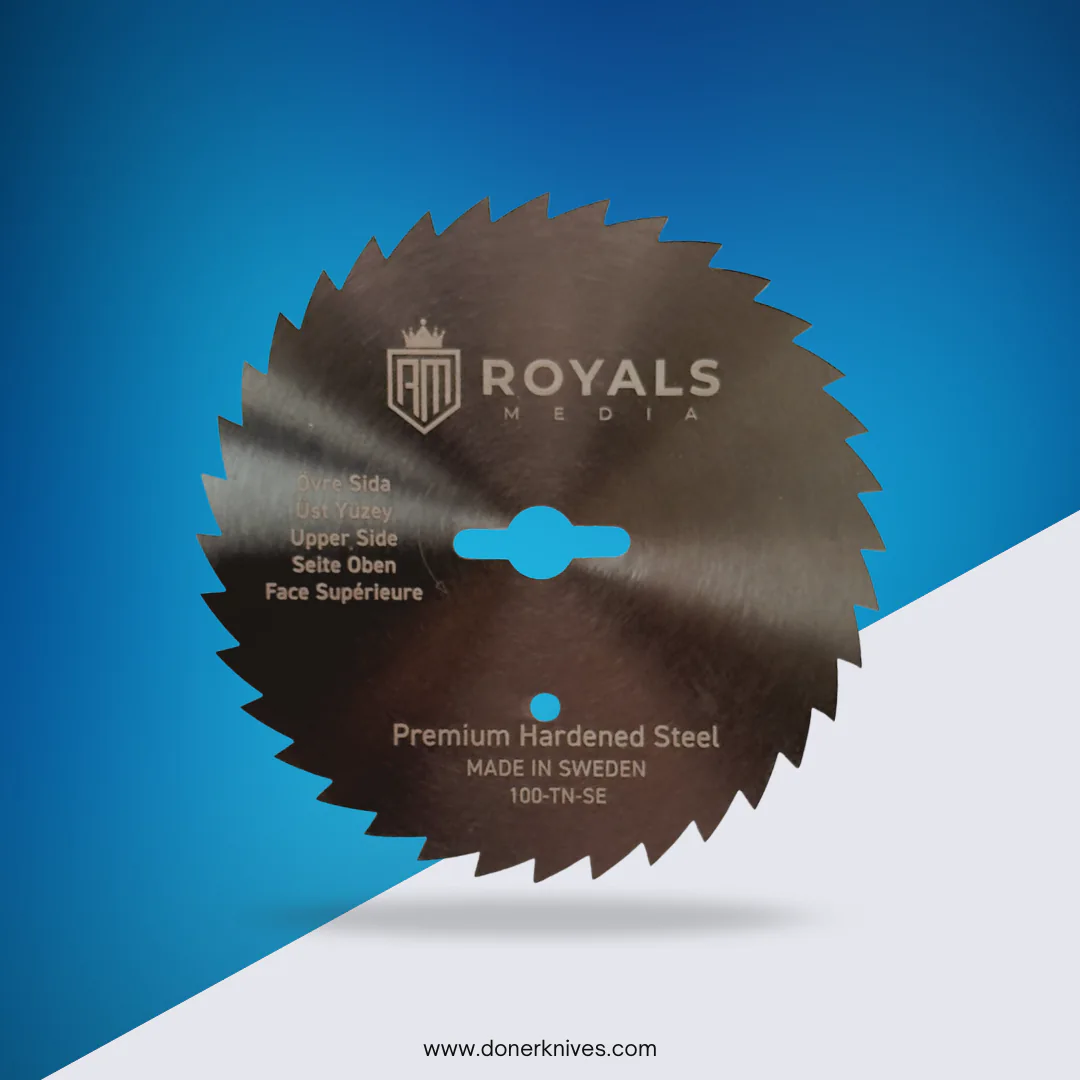
First, let's clarify a fundamental fact: This product is not a hand-held knife, but a circular steel disc that mounts onto the motor shaft of the electric doner machine. It has no handle, tip, or spine; its entire circumference is a cutting edge, and it is secured to the machine via the hole in its center. The diameter selection (80, 90, 100, 120, or 140 mm) depends entirely on your machine's model, not personal preference.
All blades in this series are manufactured from hardened stainless steel. Options such as ceramic, carbon steel, or titanium coating are not available. Additionally, these blades should never be washed in a dishwasher; detergent damages the cutting edge, so hand washing is mandatory.
To choose the correct blade, you primarily need to know your machine's brand. For example, the 100mm Tandir blade is compatible with Tandir brand machines. You can find compatibility details and installation steps in the sections below.
Which Machines Does the 100mm Serrated Blade Fit?
The 100mm serrated blade holds a special place in the doner machine world because this size is designed for Tandir-type machines, one of the most common standards in the industry. If you have a Tandir brand doner machine in your kitchen, you're in the right place. This blade is manufactured to fit perfectly into the mounting system of Tandir machines.
However, here's the key point: Not every 100mm blade fits every machine. Just as with Dost machines, diameter is not the only determining factor when choosing a blade; the center hole shape and mounting mechanism are equally critical. For example, if you're looking for a 100mm serrated blade for a Dost doner machine, you should know that Dost machines typically use 90mm or 120mm blades, not 100mm. Therefore, you must clarify your brand to avoid making a wrong purchase.
So, which brand uses which blade?
- Tandir machines: Compatible with 100mm and 120mm options.
- Dost machines: Work with 90mm and 120mm blades.
- Jet machines: Use only 120mm blades.
- Universal machines: 80mm, 90mm, and 140mm options are available.
If your machine is not on this list or you're unsure of its brand, the safest approach is to measure your existing blade. You can find the right product by checking the diameter, center hole, and the position of the screw holes. For your Tandir machine, you have two options: 100mm Tandir – Serrated or 100mm Tandir – Smooth. Both models are made of hardened stainless steel and have the same mounting system; the only difference between them is cutting performance.
Blade Compatibility and Mounting Systems in Dost Machines
In Dost machines, the blade is secured using the central round hole and a pin or lug system on the shaft. This prevents the blade from slipping during rotation and ensures even pressure on every slice. If you're looking for a 100mm serrated blade for a Dost doner machine, you first need to verify your machine's shaft structure; since 90mm and 120mm options are standard in the Dost series, the 100mm diameter is manufactured directly for Tandir machines.
You'll encounter two different mounting types in Dost machines: older models have a fully round hole in the center, while some newer models use a keyhole slot. If your machine has the center-hole system, the 90mm Dost – Serrated or 120mm Dost – Serrated models will fit directly. However, the 100mm diameter does not mechanically fit Dost bodies; in this case, you should turn to the Tandir series.
Before installation, take these three measurements: blade diameter, center hole diameter, and the number of pins on the shaft. If you don't know these values, take a photo of your old blade and compare it with the technical drawing on the product page. A blade with the wrong diameter will create play on the shaft and cause vibration, which both reduces cutting quality and strains the motor. Also, never force the blade; if one of the holes doesn't align, that model is not for your machine. Correct fit is indicated by the blade seating perfectly on the center pin and rotating without friction when turned by hand.
Serrated vs. Smooth Blade: Which Should You Choose?
The choice between a serrated and smooth blade depends entirely on how the meat is prepared and its temperature at the time of serving. Both edge types are made of hardened stainless steel; what makes the difference is cutting performance.
Serrated (Toothed) Blade: The serrated edge grips the meat's surface with its teeth as it cuts. This feature is ideal, especially for doner that has just come out of the oven, with a seared exterior and rare interior. It also provides clean slicing without applying pressure on meat that has come out of the refrigerator, is slightly hardened, or has been rested. The teeth prevent slipping, allowing you to achieve thin, even slices. If you typically cook your doner over high heat and make the outer layer crispy, the 100mm Tandir – Serrated model is perfect for this job.
Smooth Blade: The smooth edge slices meat effortlessly and smoothly with a razor-sharp surface. This type performs best on soft, rested, and evenly cooked meat. Since the meat's cell structure is less damaged with smooth blade cuts, the slices look neater and more elegant. If you cook your doner at low heat for a long time and keep the interior completely tender, the 100mm Tandir – Smooth model offers you more controlled slicing.
Rule of Thumb: The harder or colder your meat, use a serrated blade; the softer and warmer it is, use a smooth blade. Many professionals keep both blades on hand and switch according to the day's conditions. Remember, the right choice directly affects not only the appearance but also the flavor and presentation quality of the meat.
100mm Blade Replacement Steps (Tandir Machines)
Replacing the blade on your Tandir machine takes less than five minutes when following the correct steps. First, unplug the machine and make sure the blade has completely stopped. Loosen the center nut holding the old blade with an appropriate wrench; the nut typically opens counterclockwise.
1. Remove the Old Blade After the nut is removed, loosen the blade by gently moving it back and forth toward the shaft. Never use a hammer if it's stuck; you could damage the blade's center hole and the shaft. Pull the blade straight toward you to remove it.
2. Place the New Blade Check that the new blade's center hole aligns perfectly with the shaft. The 100mm Tandir – Serrated or 100mm Tandir – Smooth models, manufactured for Tandir machines, fit your machine's mounting system exactly. Slide the blade onto the shaft; the direction of the cutting edge doesn't matter because both sides are symmetrical.
3. Tighten the Nut Tighten the center nut by hand, then give it one final turn with the wrench. Avoid over-tightening; this can cause the blade to warp. Turn the blade by hand to check that it rotates smoothly and doesn't rub against the shaft.
4. Test It Run the machine and watch it spin idle for a few seconds. If there's vibration or abnormal noise, stop, loosen the nut, and realign the blade.
For detailed visuals, you can check our guide on installing a blade on a universal machine. Complete the replacement by reviewing the 100mm serrated blade for Dost doner machine options suitable for your Tandir machine.
Blade Care and Lifespan: Tips for Long-Lasting Use
If you're using a 100mm serrated blade for a Dost doner machine, the first rule to extend its life is to never put it in the dishwasher. The abrasive chemicals in detergent dull the cutting edge of hardened stainless steel and accelerate wear on the serrations. After each use, hand wash the blade with warm water and a soft sponge, then dry it immediately.
Every time you remove the blade from the machine, check whether meat fibers or grease residue have accumulated on the serrated surface. Buildup reduces cutting performance and increases the risk of rust. Also, keep the mounting surface around the center hole clean; otherwise, the blade will vibrate during rotation, straining the motor and compromising slicing quality.
To know when your blade needs replacing, monitor the cutting quality. If the meat is tearing, producing ragged cuts instead of clean slices, or the serrations are visibly worn, it's time for a replacement. With average-intensity use, this period ranges from 6-12 months.
When choosing a replacement blade, the 100mm Tandir – Serrated model is ideal for firmer meats, while the 100mm Tandir – Smooth model provides softer, more uniform slicing. With proper care and timely replacement, you'll get maximum efficiency from your blade.
Guide to Choosing the Right Blade: Step by Step
Choosing the right blade directly affects your machine's performance. A wrong choice can result in uneven meat cutting and unnecessary strain on the machine's motor. Here's a step-by-step guide to making the right choice:
1. Determine Your Machine's Brand First, clarify the brand of your doner machine. Just as there are models made for Dost machines, there are also compatible blades specific to brands like Jet or Tandir. For example, if your machine is a Dost, you can consider 90mm or 120mm options. If your brand isn't on the list, you'll need to measure your old blade.
2. Measure the Diameter and Mounting Hole The blade's diameter (80, 90, 100, 120, or 140 mm) is determined by the machine, not personal preference. Measure the blade's outer diameter with a ruler. Then check the shape of the center mounting hole: Is it a keyhole (Universal) or a round center hole (Dost)? Also note whether there are 2, 3, or 4 bolt holes, as with the 140mm models.
3. Decide on the Cutting Type: Serrated or Smooth? The condition of the meat is critical in blade selection. If you typically cut meat that's refrigerator-cold or firmer, a serrated blade grips better and cuts without tearing. For soft, rested meat at room temperature, a smooth blade offers cleaner, more seamless slices.
4. Check the Product Page After making your selection, be sure to read the compatibility notes on the relevant product page. For example, the 100mm Tandir – Serrated model is only for Tandir brand machines. Similarly, the 120mm Dost – Smooth model only fits Dost machines. If you're unsure, send a photo of your old blade for support.
Remember, these blades are made of hardened stainless steel and must be hand washed. The dishwasher damages the cutting edge.
Frequently Asked Questions (FAQ)
Does the 100mm serrated blade fit all doner machines?
No. The 100mm diameter is only compatible with the mounting system of Tandir brand machines. The 100mm blade is not used in Dost, Jet, or Universal machines. For Dost machines, 90mm or 120mm options are available. If you don't know your machine's brand, remove your old blade and measure its diameter, center hole, and screw holes; or take a photo of the mounting surface and share it with us.
What's the difference between serrated and smooth blades?
A serrated (toothed) blade provides superior cutting on refrigerator-cold or firmer meat; the teeth on the surface grip the meat and slice it without tearing. A smooth blade offers smoother, thinner slices on rested meat at room temperature. If you generally cut your meat raw or cold, serrated is suitable; if cooked and hot, smooth is appropriate. Both options are available for your Tandir machine: 100mm Tandir – Serrated and 100mm Tandir – Smooth.
Can I wash the blade in the dishwasher?
Absolutely not. Dishwasher detergent chemically attacks the cutting edge of hardened stainless steel and dulls the blade. All blades, including the 100mm serrated blade for Dost doner machine, must be hand washed with warm soapy water and dried immediately. Follow this rule strictly for longevity.
How do I know if my blade is worn out?
If meat slices are tearing, getting thicker, or the blade struggles while pushing through the meat, the blade has dulled. Additionally, visible nicks or discoloration on the surface also indicate it's time for a replacement. With average heavy use, replacing every 6-8 months is recommended.
Can I use the 100mm Tandir blade on another brand of machine?
No. The center hole and mounting pattern are specific to Tandir machines. Forcing it on a different brand will damage both the blade and the machine. Refer to the compatibility table above to choose the blade appropriate for your machine's brand.
Conclusion: Perfect Slicing with the Right Blade
Choosing the right blade directly affects not only the flavor of your doner but also its presentation. Thin, even slices increase customer satisfaction and ensure the meat is served without losing its juices. By following the steps in this guide, you can achieve perfect results with a fully compatible, sharp, and durable 100mm Tandir – Serrated blade for your machine. Remember, with proper care and cleaning, your blade will extend its lifespan and become an indispensable part of your business. If you're cutting meat at refrigerator temperature, consider the serrated option; for rested meat at room temperature, the 100mm Tandir – Smooth option is worth evaluating. With the right equipment, every slice will reflect your craftsmanship.