
November 5, 2026
How Often Should You Replace Your Doner Knife Blade? A Comprehensive Guide
Introduction: Why Timely Replacement of the Doner Knife Blade is Vital?
The question "How often should you replace a doner knife blade?" is not just a matter of routine scheduling, but a direct decision that affects the quality of the meat, the safety of your staff, and the production efficiency of your restaurant. The circular stainless steel blade is the heart of the doner slicing machine, and with every use, its precise edge wears down, causing it to tear the meat instead of slicing it cleanly and evenly.
Timely replacement prevents three main problems: Firstly, torn meat loses its juices and becomes dry when served, harming your restaurant's reputation. Secondly, a dull blade increases the strain on the machine's motor and can lead to costly breakdowns. Thirdly, health risks: a blunt blade can slip and cause serious injuries to the staff, and it also leaves unevenly cut pieces that may not cook properly.
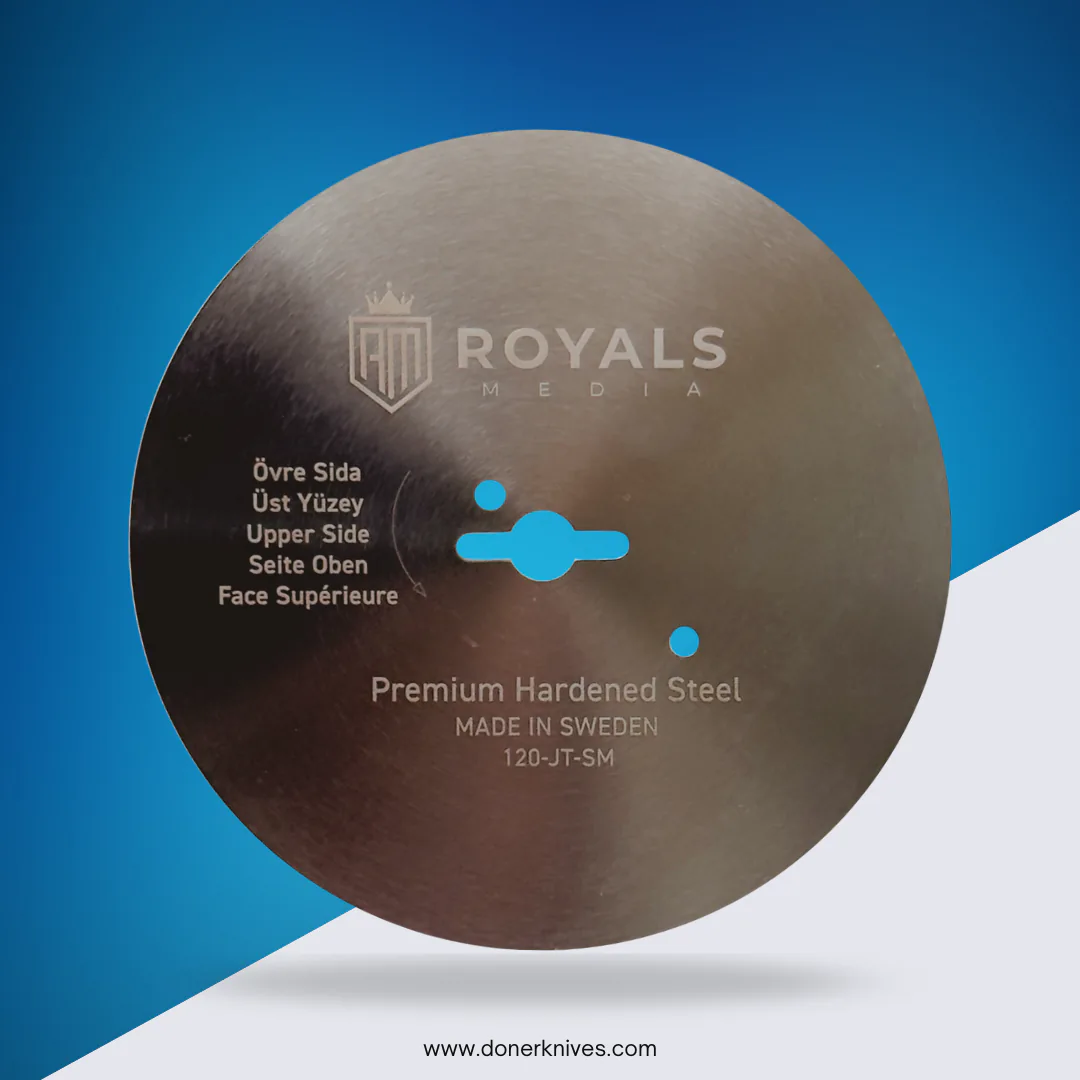
Remember that this blade is a circular steel disc without a handle, and its diameter (from 80 to 140 mm) is determined by your machine type, not your choice. If you notice the meat coming out unevenly or the machine vibrating, it's time for an inspection. For practical guidance on dealing with a dull blade, you can refer to this detailed guide. Investing in replacing the blade at the right time is an investment in the continuity of your business and the quality of your product.
Signs of Blade Damage Requiring Immediate Replacement
One of the most common questions on the minds of doner restaurant owners is: "How often should you replace a doner knife blade?", but before reaching the schedule, there are clear signs that cannot be postponed. If you notice any of them, replacing the blade immediately is the only correct decision.
First: Meat tearing instead of clean slicing
If the doner slices come out with torn edges or a rough texture instead of being smooth and even, this is a sure sign that the edge has lost its sharpness. This tearing not only ruins the dish's appearance but also increases juice loss and makes the meat dry. You can check the reasons for meat tearing instead of slicing for a deeper understanding of the problem.
Second: Rust or discoloration of the edge
Although all blades in our collection are made of hardened stainless steel, repeated neglect in drying or incorrect cleaning can cause spots or surface rust. Rust not only contaminates the meat but also weakens the edge's structure, making it brittle and prone to cracking.
Third: Vibration or abnormal noise during operation
If you hear a "cracking" sound or notice vibration in the circular blade (which is a fully circular steel disc without a handle or teeth), there may be a fine invisible crack. This is a real safety hazard, as continued operation could lead to metal fragments flying off.
Fourth: Accumulation of burnt grease on the edge
A black layer of burnt grease accumulating on the cutting circumference does not come off with hand washing and affects the cleanliness of the cut and how smoothly the blade slides through the meat. This layer hides the underlying edge wear and accelerates its deterioration.
If you notice any of these signs, do not gamble with the quality of your food or the safety of your equipment. Go directly to choose a suitable replacement from our range of blades compatible with your machine, such as the 120 mm or 140 mm size, depending on the machine type.
Factors Affecting the Default Lifespan of the Blade
The default lifespan of a doner knife blade depends on several operational factors, not just the number of days. First is the type of meat and its temperature: frozen or heavily chilled meat (as is the case with serrated edges) increases friction and wear on the edge, while fresh tender meat reduces the strain on the steel. Second is the machine's rotation speed and the blade's pressure on the meat column: the more manual pressure applied or the higher the machine's speeds, the faster the edge loses its sharpness.
Daily cleaning practices also play a pivotal role; hand washing with warm water and mild soap preserves the edge, while using harsh detergents or leaving the blade to soak leads to early chemical corrosion. Nor should we forget daily operating duration: a restaurant slicing 50 kilograms a day will consume the blade much faster than one slicing 10 kilograms.
Finally, the quality of the steel itself; all our blades are made of hardened stainless steel, but even this steel is affected by storage methods (preferably hung individually, not stacked with other tools). Therefore, the precise answer to the question "How often should you replace a doner knife blade?" depends on the sum of these factors, not on a fixed date. If you notice that the 120 mm Dost – Serrated blade requires more pressure to cut, or that the 100 mm Tandir – Smooth blade leaves crumbs instead of clean slices, this is a direct indicator that its useful life has effectively ended.
Smooth vs. Serrated Edge: Which Lasts Longer?
When comparing smooth and serrated edges, it's not about which is "stronger," but which maintains its sharpness longer under different operating conditions. The serrated edge, such as the 120mm Tandir – Serrated, features less contact with the meat, meaning less pressure on the cutting edge itself. This typically allows it to last 20% to 30% longer before losing effectiveness, especially when slicing chilled or partially frozen doner meat, as the teeth work to tear the fibers rather than press against them.
The smooth edge, such as the 120mm Tandir – Smooth, provides a finer and more precise cut, but it loses its sharpness faster because the continuous contact surface with the meat causes greater friction. In high-volume restaurants, a smooth blade may need replacement after half the time a serrated one can withstand.
But the golden rule remains: monitor the quality of the cut, not the number of days. If you notice the meat tearing or the blade requiring more pressure, that is the true indicator. When wondering "how often should you replace a doner knife blade?", remember that serrated is a better choice for heavy use and cold meat, while smooth is ideal for the final presentation and tender meat.
How Often Should You Replace a Doner Knife Blade? A Reference Schedule
Although there is no single magic number that fits everyone, a clear reference schedule can be established based on usage intensity. The golden rule experts agree on is: replace the blade every 3 to 6 months in restaurants with medium production, while high-volume restaurants (more than 10 operating hours daily) need replacement monthly or every 6 weeks.
This schedule assumes you are performing periodic sharpening (weekly or bi-weekly) to maintain the edge. If you notice the blade no longer holds its sharpness after sharpening, this is a strong indicator that its useful life has ended.
Here is a more detailed breakdown:
- Light use (small restaurant, 2-3 hours daily): Replace every 6 months.
- Medium use (4-6 hours daily): Replace every 3-4 months.
- Heavy use (more than 8 hours daily): Replace every 4-6 weeks.
Keep in mind that the edge type affects the schedule. The 120 mm serrated edge tends to stay sharp longer on cold or frozen meats, while the 120 mm smooth edge may require more frequent replacement if you are slicing tender, high-fat meat.
Practical takeaway: Don't wait until the blade completely fails. If you notice the slices becoming rough or the motor working harder, it means you've passed the ideal replacement time. Always remember that measuring the old blade (diameter and mounting hole) is the only way to ensure you purchase the correct replacement for your machine.
How to Inspect the Blade and Diagnose Its Condition Yourself
Regularly inspecting the circular blade prevents deterioration in slicing quality and saves you the cost of replacing wasted meat. Start by inspecting the entire edge along the circumference, not just one part. Gently run your finger (or a cloth) along the edge; if you feel bumps or rough areas, this indicates uneven wear.
The paper test: Run the blade over a paper towel. If it tears the paper instead of cutting it cleanly, this is evidence of lost sharpness.
Visual inspection: Look for small cracks, rust, or discoloration of the stainless steel. Any brown or black spots mean edge corrosion, even if the blade looks intact.
The meat test: Slice a thin piece of doner. If the edges are torn or uneven, or you have to press hard on the arm, the blade needs attention.
Mounting measurement: Ensure there is no vibration at the mounting center. Any lateral movement means wear in the mounting hole, requiring immediate replacement.
If you notice any of these signs, the answer to "how often should you replace a doner knife blade?" becomes: now. Don't delay the inspection for more than two weeks under intensive daily use.
Steps for Safe Replacement of the Circular Blade
Steps for Safe Replacement of the Circular Blade
Before you begin, make sure the machine is completely disconnected from the power supply. Safety first, as even a dull blade can cause deep cuts.
Required tools: A suitable wrench for the mounting nut size, cut-resistant gloves, and a clean cloth.
Step by Step
- Remove the protective cover: Remove the plastic or metal cover that protects the blade during operation.
- Secure the blade: Place a cloth on the blade's edge and hold it firmly to prevent it from rotating while loosening the nut.
- Loosen the central nut: Turn the wrench counterclockwise. Do not use excessive force if the nut is stuck; try a rust-releasing spray.
- Remove the old blade: Pull it outward in a straight motion. Do not touch the edge.
- Clean the mounting area: Remove any meat residue or grease from the shaft and the rotating assembly.
- Install the new blade: Align the mounting hole with the shaft's shape. If your blade is of the Universal keyhole type, orient the hole so it fits securely. For blades with holes (2, 3, or 4 holes), align the holes with the mounting pins before tightening any screw.
- Tighten the nut: Tighten clockwise. Do not over-tighten — just enough to secure the blade without vibration.
- Reinstall the protective cover: Before operating, turn the blade manually to ensure it does not rub against any part.
Always remember that the question "how often should you replace a doner knife blade?" has nothing to do with the installation method, but correct installation prevents the vibration that shortens its lifespan. If you are unsure about the mounting type, measure the old blade's diameter, its central hole, and observe the hole pattern before ordering from the products by type section.
Proper Maintenance to Extend Blade Life
Proper maintenance to extend blade life begins from the moment of installation, as the circular blade made of solid stainless steel requires simple but crucial daily care. The first golden rule is hand washing only, as dishwashers contain caustic chemicals that attack the cutting edge and weaken it over time, making you ask "how often should you replace a doner knife blade?" more frequently than necessary.
After each use, wash the blade with warm water and mild soap, then dry it immediately with a soft cloth. Never leave it soaking in water, as excess moisture can cause fine corrosion on the edge even with stainless steel. Store the blade in a dry place, preferably hung or inside a protective cover, away from contact with other metal tools that could cause fine scratches.
Also pay attention to the mounting method: ensure the blade is securely fastened to the shaft according to the mounting system (keyhole, central, or screws), as vibration during operation causes uneven friction that accelerates edge damage. Finally, don't neglect cleaning accumulated fat residue around the blade's center, as it increases friction and affects cutting precision, thereby extending the blade's life and delaying the need for replacement.
When Is Sharpening an Alternative to Replacement?
Sharpening is a smart option when the circular blade has lost its sharpness due to normal use, but has not suffered cracking, warping, or significant loss of edge metal. If you notice the slices becoming rough or torn instead of smooth, sharpening may be sufficient to restore optimal performance, especially with smooth-edged blades that are easier to refine.
However, keep in mind that the serrated blade, such as the 120mm Dost – Serrated, loses its sharpness gradually, and sharpening the teeth yourself can be difficult and requires special tools. In this case, if the blade is still performing acceptably, continue using it until clear signs of damage appear that warrant replacement.
The golden rule: if you're asking yourself "how often should you replace a doner knife blade?" because the blade doesn't cut well even after sharpening, this is a strong indicator that it's time for replacement. Sharpening extends the lifespan, but it doesn't restore lost metal. If you notice cracks or bends in the circular disc, stop sharpening immediately and replace the blade to prevent unsafe slices resulting from a damaged blade. Simply put, sharpening is a temporary solution, and replacement is the permanent solution when the blade reaches the end of its useful life.
Frequently Asked Questions About Replacing a Doner Knife Blade
How long does a doner knife blade last before it needs replacement?
There is no one-size-fits-all answer, but the golden rule is: when you notice a significant decline in slicing quality or clear signs of damage, it's time for replacement. On average, with daily commercial use, a blade may last 3 to 6 months, but this is heavily influenced by the type of meat (tender or frozen), usage frequency, and the regularity of maintenance. Remember that the circular blade made of hardened stainless steel loses its sharpness gradually, so monitor its performance continuously.
How do I know if the blade needs replacement and not just sharpening?
It depends on the type of damage. If the edge is merely dull, sharpening may suffice. But if you notice small chips (cracks) along the cutting edge, a bend in the blade disc, or deep rust that doesn't come off with cleaning, these are signs of structural damage requiring immediate replacement. Never attempt to sharpen a cracked blade, as this poses a risk to your safety and meat quality.
Does a serrated blade last longer than a smooth blade?
Usually, yes. The serrated edge maintains its effectiveness longer because the teeth withstand pressure differently than a smooth edge, especially when slicing cold or firm meat. But this doesn't mean it doesn't need replacement; serrated blades also lose their edge, showing wear as rounded or chipped teeth. For fresh tender meat, a smooth blade gives you a finer, more precise cut, but it may require more frequent replacement.
What is the difference between blade sizes, and can I install any size?
No, the size is determined by your slicing machine, not your personal preference. Available sizes are 80, 90, 100, 120, and 140 mm, and each machine has a specific size. For example, Dost machines use 80/90/120 mm sizes, while Jet machines exclusively use the 120 mm size. If you're unsure, measure the old blade (diameter, center hole, and hole pattern) or send a photo of the machine's mounting to accurately determine the right blade for you.
How can I extend the blade's life to reduce replacement frequency?
The most important rule: wash the blade by hand only, as the dishwasher quickly destroys the edge's sharpness. Also, clean and dry the blade thoroughly after each use to prevent grease buildup and rust formation, and apply light lubrication if necessary. Finally, store spare blades in a dry place, separated from each other to avoid any scratches.
Can incorrect blade installation cause rapid damage?
Yes, absolutely. Installing a blade that doesn't fit your machine (such as using a universal blade on a machine requiring a specific mounting) can lead to vibration and instability, causing uneven wear and premature breakage. Always ensure the blade matches your machine model: Tandir for 100/120 mm sizes, and Universal for 80/90/140 mm sizes depending on the mounting holes.
Conclusion: Don't Wait Until the Blade Fails
Don't wait until you notice the meat slices becoming torn or the machine vibrating abnormally. Blade failure is not just a matter of slicing quality; it's a risk to your safety and your staff's safety, and an additional cost due to damaged and wasted meat. The fundamental question "how often should you replace a doner knife blade?" has no single magic number, but the golden rule is: preventive replacement is much cheaper than emergency replacement after an accident.
Monitor the blade's performance weekly. If you notice increased manual pressure or uneven slices, that's a sign of wear. Don't try to "squeeze out" its useful life by force. At the first doubt, replace it immediately with a new blade of the same type and size to ensure compatibility, such as the 120 mm Dost smooth blade or the 90 mm Universal serrated blade. Always remember: a sharp and safe blade means faster work and higher profit.