November 3, 2026
Dull Doner Blade? Immediate Help & Replacement
Dull Doner Blade – What to Do? First Aid for Your Slicing Machine
Dull doner blade – what to do? Every operator of a doner slicing machine asks this question sooner or later – usually when the meat is no longer being cut cleanly but is instead being shredded or fraying. However, before you consider an expensive new purchase or lengthy repairs, you should know this: often, just a few simple steps are enough to significantly improve your machine's cutting performance.
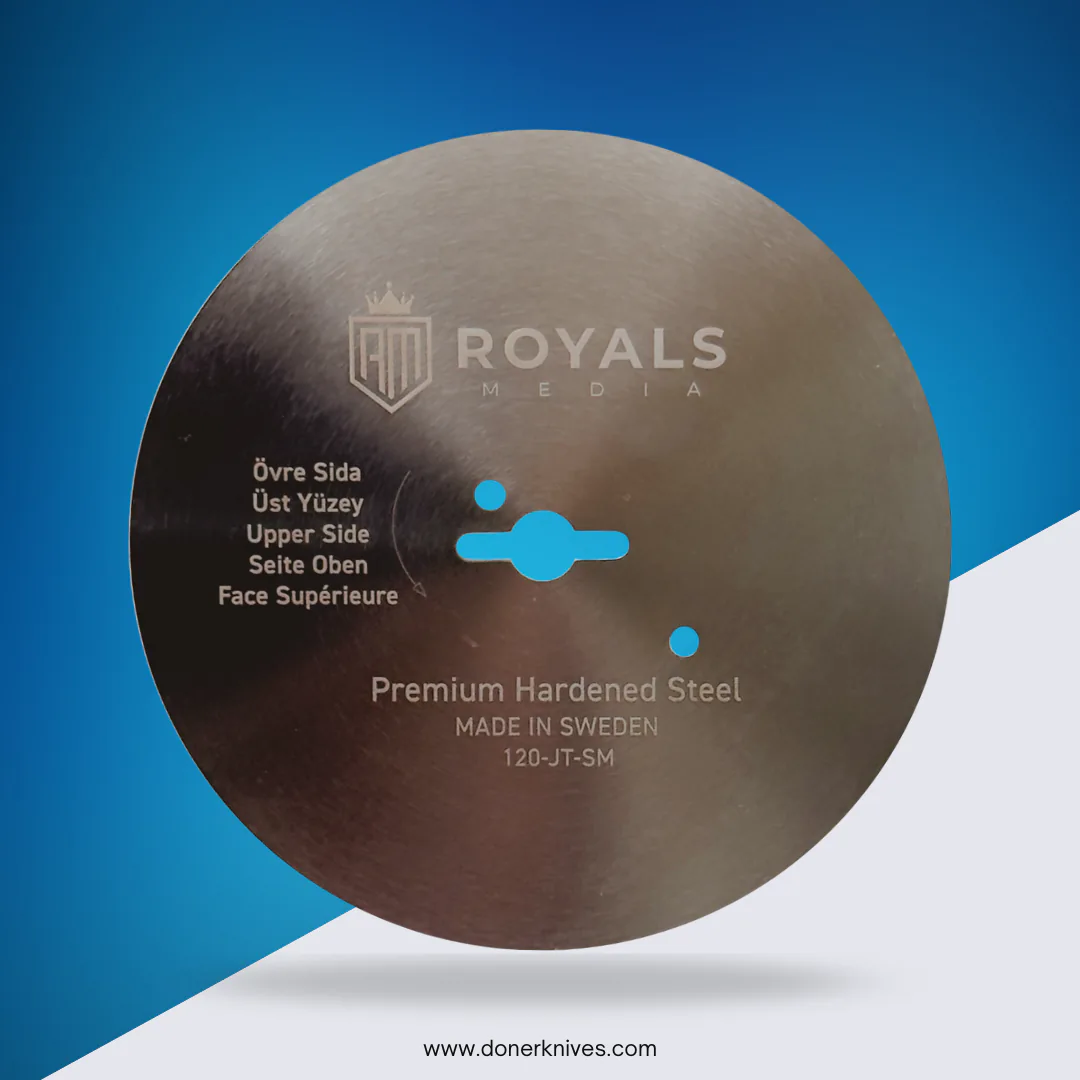
The doner blade is a circular steel disc whose entire circumference serves as the cutting edge. When it becomes dull, this is rarely due to a single cause. Most often, it is contamination from meat residue or fat that accumulates on the cutting edge and impedes the cut. In many cases, a thorough hand wash will help before you even think about sharpening or replacing it.
This article guides you through the first steps: from a quick inspection and proper cleaning to deciding whether your blade can still be saved or a new doner blade is needed. This way, you can quickly and safely restore your slicing machine's performance – without unnecessary costs.
Identifying the Causes: Why Does the Doner Blade Become Dull?
The question "Dull doner blade – what to do?" can only be answered once you know the cause. A doner blade doesn't become dull overnight – it's usually a combination of material fatigue, improper handling, and external influences. Those who understand the reasons can take targeted countermeasures and significantly extend the blade's lifespan.
The most common causes at a glance:
- Normal wear and tear: Every blade is a wear part. When cutting meat, microscopic particles rub against the cutting edge and gradually wear it down. This is physically unavoidable.
- Contact with hard surfaces: The classic mistake: The blade touches the spit holder, cutting board, or metal parts of the machine. Even brief contact can damage or even chip the delicate cutting edge.
- Incorrect cleaning: The dishwasher is the death of any doner blade. The aggressive cleaning agents and high heat attack the material and dull the cutting edge. Abrasive scouring pads also leave micro-scratches.
- Improper storage: If blades are stored loose in a drawer and knock against other metal parts, the cutting edge suffers.
- Material fatigue: Even high-quality hardened stainless steel has a limited lifespan. After intensive use, the material loses its hardness, and the blade quickly becomes dull again despite sharpening.
If you notice that the blade is no longer cutting cleanly but is tearing or fraying the meat, this is a clear warning sign. An uneven cut also indicates an unevenly worn cutting edge. Observe your blade closely – this way, you'll recognize early on when action is needed.
Immediate Measures: Cleaning and Inspecting the Blade
Before you think about sharpening or buying a new blade, a thorough cleaning and inspection is in order. A blade that seems dull is often just contaminated with fat residue and meat remnants, which massively increase cutting resistance.
Important note beforehand: Clean the blade exclusively by hand with warm water and a mild dish soap. Never use the dishwasher – the aggressive cleaning agent attacks the cutting edge and makes it permanently dull.
Step-by-Step Cleaning
- Turn off the machine and unplug it. Safety is the top priority.
- Carefully remove the blade according to your machine's instructions.
- Soak the blade in warm soapy water to loosen dried-on residue.
- Clean the surface with a soft sponge. Avoid steel wool or abrasive sponges – these scratch the surface and promote rust and contamination.
- Rinse the blade with clear water and dry it immediately with a lint-free cloth.
The Inspection: What Exactly to Check
After cleaning, assess the actual condition:
- Light reflection: Hold the blade up to the light. A uniformly shiny edge is sharp. Interruptions or dull spots indicate wear.
- Visual inspection: Look for cracks, rust spots, or bent areas. Even small damages are a safety risk – only replacement helps here.
- Feeling (carefully): Run your finger along the edge (never across!). A rough or hooked surface indicates micro-chipping.
If the blade cuts cleanly again after cleaning, it was just a matter of hygiene. If it remains dull, the answer to "Dull doner blade – what to do?" is: Sharpen or replace – how to decide this is covered in the next section.
Sharpen or Replace? How to Decide Correctly
The question "Dull doner blade – what to do?" inevitably leads to the decision: sharpen or replace? As a rule: A doner blade is a hardened precision component designed for high performance. Sharpening is only worthwhile if the blade is still flawless – meaning it shows no visible grooves, chipping, or deformation. Minor irregularities can be corrected with a whetstone or a special blade sharpener, provided you have the necessary skill.
But caution: Sharpening too frequently alters the geometry of the cutting edge. The blade becomes thinner, loses stability, and cutting performance permanently decreases. If you have already sharpened it several times or the blade shows visible damage, replacement is the more economical and safer solution. You should also not hesitate in cases of severe rust formation or if the blade no longer runs perfectly round.
Another criterion is the time factor. In ongoing operations, sharpening means downtime. A new blade can be installed in minutes and immediately provides clean, uniform cuts again. Also consider: The durability of a blade depends heavily on care. Hand washing and dry storage significantly extend its lifespan.
Our recommendation: When in doubt, replace it. The investment in a new, hardened stainless steel blade pays off through consistent quality and less downtime. For common machines, you'll find suitable models like the 120mm Dost – Smooth or the 90mm Universal – Serrated. When in doubt, measure the diameter of the old blade and compare the mounting – this way, you'll definitely make the right choice.
Finding the Right Replacement Blade: Measuring Diameter and Mounting
Once you've determined that your blade is dull, the question quickly arises: "Dull doner blade – what to do?" – The answer is usually: A new replacement blade is needed. But before you order, you need to take two crucial measurements. This is the only way to avoid wrong purchases and ensure the new blade fits your machine exactly.
Measuring the Diameter
Measure the diameter of the old blade from one cutting edge to the opposite edge through the center point. Common sizes are 80, 90, 100, 120, and 140 mm. The diameter is not determined by your preference but solely by the machine. A wrong size leads to vibrations or uneven cuts. Use a ruler or caliper for a precise result.
Checking the Mounting
The mounting is just as important as the diameter. Look closely at the center of the blade. There are various systems:
- Keyhole mount (Universal): A hole with a lateral recess.
- Round center hole (Dost): A simple, circular hole.
- Brand-specific mounts: For example, on Jet or Tandir machines.
- Boreholes: On 140-mm blades, you'll often find 2, 3, or 4 holes around the center.
Count the holes and note the arrangement. Measure the distance between the holes, if present. A step-by-step installation guide will help you with the installation later.
Making the Right Choice
Based on your measurements, you can now select the appropriate blade. For Dost machines, for example, the 90 mm Dost – Smooth or the 120 mm Dost – Serrated are suitable. For universal machines, choose the 80 mm Universal – Smooth or the 140 mm Universal – 3 Hole.
If you're unsure, measure twice. A photo of the mounting can help with advice if needed. Only an exactly fitting blade ensures clean cuts and safe handling.
Compatibility: Which Doner Blade Fits Which Machine?
The question "Dull doner blade – what to do?" often leads directly to the next one: Which blade even fits my machine? Opinions differ here, as there is no universal solution for all devices. Compatibility depends on three factors: the diameter, the type of mounting, and the brand of your slicing machine.
Assignment by Machine Brand
- Dost machines: Use 90-mm blades with Dost mounting or 80/90-mm universal blades. For larger models, the 120mm Dost – Serrated is an option.
- Jet machines: These require special blades with Jet mounting, like the 120mm Jet – Smooth. A detailed overview can be found in our guide on the 100mm blade for Jet machines.
- Tandir machines: The 100-mm or 120-mm blades with Tandir mounting fit here. Learn more in our article on Tandir compatibility.
- Alkadur, IDM, Korkmaz: These brands use the 140-mm universal blade with 3-hole mounting.
- Atalay: Requires the 140-mm universal blade with 4 holes.
- Ceylan, Gurden, Potis: Rely on the compact 80-mm universal blade.
The Universal Type as an All-Rounder
Many older or cheaper machines without a clear brand assignment use the universal keyhole system. These blades have a central opening with a lateral recess. A good example is the 90mm Universal – Smooth, which is easy to install.
What to Do If Your Brand Is Not Listed?
Don't worry. Simply measure your old blade: the outer diameter, the diameter of the center bore, and the hole distribution. Alternatively, send us a photo of the mounting – we'll definitely find the right blade. A look at our guide on the 90mm universal blade will also help. Only with the right blade does the question "Dull doner blade – what to do?" get a lasting positive answer.
Smooth or Serrated Doner Blade? Making the Right Choice
The choice between a smooth and a serrated blade depends less on taste and more on the condition of your meat. A smooth blade cuts tender, well-cooked meat particularly cleanly and leaves a uniform, shiny surface. Ideal for the classic doner that isn't served too cold.
A serrated blade, on the other hand, is the better choice when processing meat straight from the refrigerator. The teeth grip the firmer, colder structure and prevent the blade from slipping or tearing the meat. The serrated version is also advantageous with slightly frozen spits.
If you regularly ask yourself "Dull doner blade – what to do?", remember: A dull blade is often a wrongly chosen blade. A serrated blade remains effective longer with cold meat, as the teeth lose their sharpness less quickly than a smooth edge.
For most standard machines, we recommend the 90mm Universal – Smooth for warm meat or the 90mm Universal – Serrated for refrigerator operation. Measure the diameter of your old blade before purchasing – the machine determines the size, not your preference.
Installation and Safety: Blade Replacement Step by Step
Before installing the new blade, disconnect the machine from the power supply. Unplug it – don't just switch it off. Wear cut-resistant gloves; the blade is a circular steel disc whose entire circumference forms the cutting edge.
Step 1: Remove the old blade
Loosen the central mounting screw or nut. For 140-mm blades with 2, 3, or 4 holes, remove all screws. Keep the screws in a safe place. Pull the blade straight off the shaft – never at an angle.
Step 2: Clean the mounting surface
Remove meat residue and fat from the mounting surface and the shaft. Only then will the new blade sit flush and run without wobble.
Step 3: Place the new blade
Pay attention to the fit: The center hole must fit exactly onto the shaft; for universal blades with keyhole mounting, the blade sits positively. For Dost, Jet, or Tandir machines, use exclusively the designated blade. When in doubt, measure the diameter and hole pattern of the old blade.
Step 4: Tighten with feel
Tighten the screw or nut hand-tight. Do not use a pipe extension – too much force damages the shaft or warps the blade. For hole mounting, tighten the screws crosswise.
Step 5: Function test
Turn the blade by hand for one full revolution. It must run without resistance. Only then switch on and let it run briefly without meat.
A detailed illustrated guide can be found in our guide to blade replacement. After installation: Wash the blade only by hand – never put it in the dishwasher, as the aggressive cleaning agent permanently damages the cutting edge. The question "Dull doner blade – what to do?" is thus answered not only by the purchase but also by correct installation.
Common Mistakes That Make Your Doner Blade Dull – and How to Avoid Them
Many dull blades are not material wear but the result of avoidable everyday mistakes. The most common: The blade is "quickly" worked on with a sharpening steel or whetstone while still installed. This creates an uneven cutting edge and permanently damages the hardened steel surface. Cutting on hard surfaces like metal or marble is also fatal – the fine edge immediately folds over.
Another classic is cleaning in the dishwasher. The aggressive detergent and high temperature attack the hardened steel edge and make it brittle over time. Therefore, wash your doner blade exclusively by hand with warm water and a soft sponge.
Incorrect pressure when cutting also causes damage: Don't press the meat block against the blade with full force. High contact pressure generates friction heat that softens the cutting edge. Instead, let the machine work evenly and without forced pressure.
The question "Dull doner blade – what to do?" is thus often answered by avoiding these mistakes. Also, regularly check that the blade is stored clean and dry – rust can form even on stainless steel if moisture acts for a long time. Those who observe these points significantly extend the blade's lifespan and save themselves frequent replacements.
FAQ: Dull Doner Blade – Your Questions Answered
How often should I sharpen or replace the doner blade?
This depends heavily on your usage. With intensive daily operation, it's recommended to replace the blade every one to two weeks or have it professionally sharpened. A clear sign is when the cut pattern becomes uneven, the meat slices fray, or the machine noticeably requires more pressure. A dull blade not only works slower, it also unnecessarily heats the meat and impairs quality.
Can I sharpen a dull doner blade myself?
We strongly advise against attempting to sharpen it yourself with whetstones or commercially available sharpening devices. A doner blade is an ultra-thin, hardened steel disc designed for high speeds. Improper sharpening quickly leads to micro-cracks, imbalance, or altered cutting edge geometry – this endangers safety and cut quality. Professional sharpening is possible, but given the low cost of a new blade, it's often uneconomical.
How do I know the blade really needs to be replaced?
In addition to the obvious drop in performance, you should inspect the blade closely at every change. Look for visible grooves, notches, rust spots, or discoloration on the cutting edge. Even a slight impact, such as contact with bone, can invisibly damage the blade. When in doubt: Better to replace sooner rather than later.
What is the difference between smooth and serrated blades?
Smooth blades produce particularly delicate, uniform slices – ideal for freshly grilled, soft meat. Serrated blades grip better on firmer or refrigerator-cold meat and prevent tearing. Your choice therefore depends mainly on your typical meat temperature.
Dull doner blade – what to do? How do I find the right replacement blade?
The most important question is compatibility. Measure the diameter of your old blade (80, 90, 100, 120, or 140 mm) and check the mounting system: keyhole, round hole, or boreholes. For Dost machines, you'll find suitable models like the 90mm Dost – Smooth or 120mm Dost – Serrated. If unsure, a photo of the mounting helps – this way, you avoid wrong purchases.
Conclusion: Dull Doner Blade – Now Act Correctly
The question "Dull doner blade – what to do?" now leads you to a clear decision: You've checked the cause, cleaned the blade, and know whether sharpening or replacement makes sense. Don't hesitate – a dull blade costs time, meat quality, and ultimately money.
Act correctly now: Measure the diameter and mounting of your old blade precisely and choose the appropriate model from our range. For common machines, you'll find the right solution directly, such as the 120mm Dost – Serrated for Dost devices or the 140mm Universal – 3 Hole for Alkadur, IDM, and Korkmaz. All blades are made of hardened stainless steel and should be cleaned by hand – never in the dishwasher.
A sharp blade is the basis for clean cuts and safe work. Invest in quality and replace it in good time. Your doner will thank you – and so will your guests.