March 10, 2026
Doner Knife Blade Not Cutting Properly? 7 Pro Fixes
Doner Knife Blade Not Cutting Properly? 7 Pro Fixes
Nothing frustrates a doner chef or restaurant owner like a doner knife blade that will not perform. Instead of thin, even slices it chops, drags or leaves the meat ragged. The cause is rarely a bad blade — all our doner blades are made from the same high-grade stainless steel — but rather a combination of operation, maintenance and equipment choice. This guide walks you step by step through the 7 most common causes and how to troubleshoot and solve them efficiently, so you can get back to serving perfectly cut doner.
What you need to troubleshoot your doner knife blade
Before you start, make sure you have the following at hand for safe and efficient troubleshooting. Always switch the machine off and unplug it before working on it.
- Screwdriver (the right size for your machine)
- A clean cloth or towel
- Water and mild detergent or a dedicated cleaner for kitchen equipment
- A honing steel or whetstone for professional sharpening (if you are experienced)
- Tools for adjusting the machine speed (if available — see the manual)
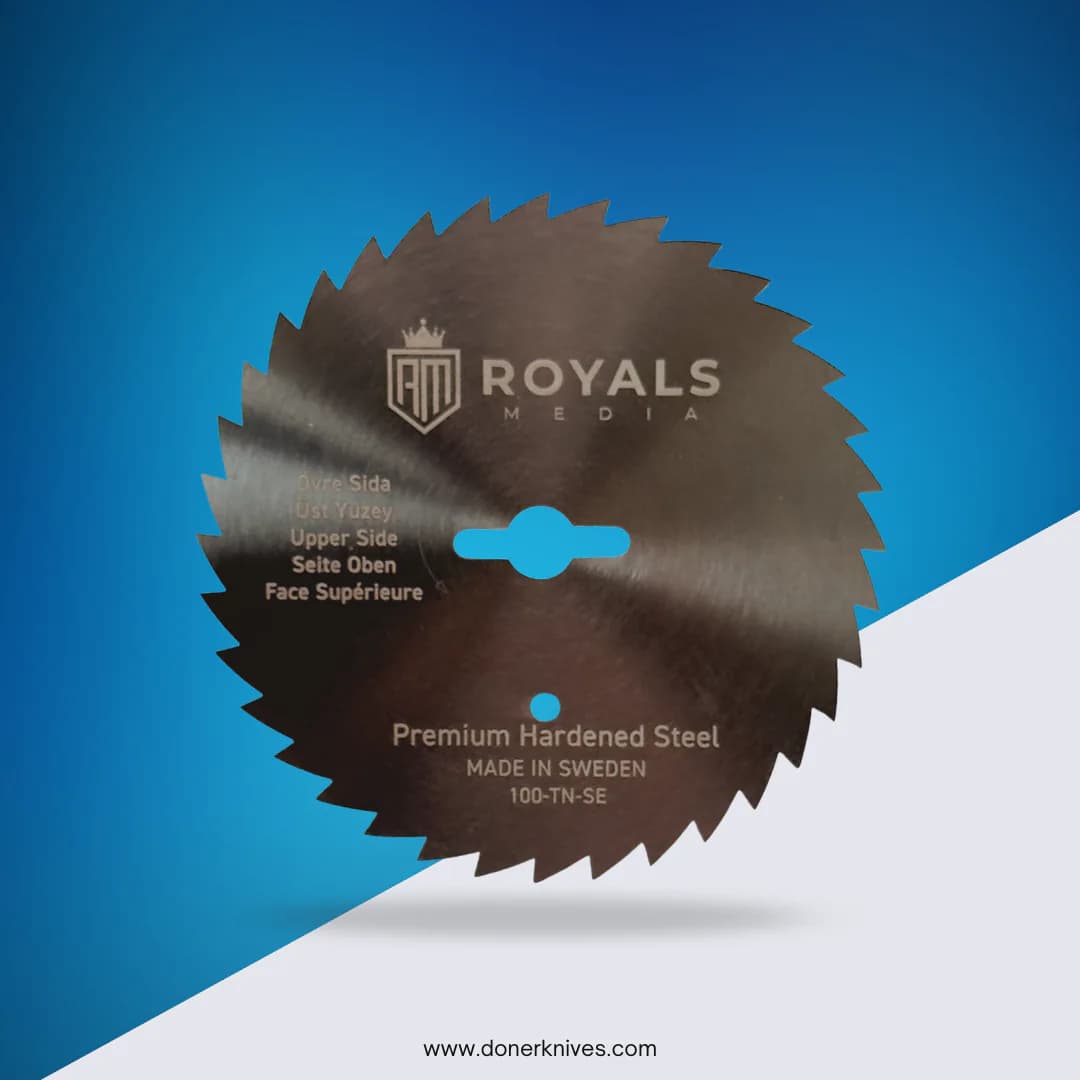
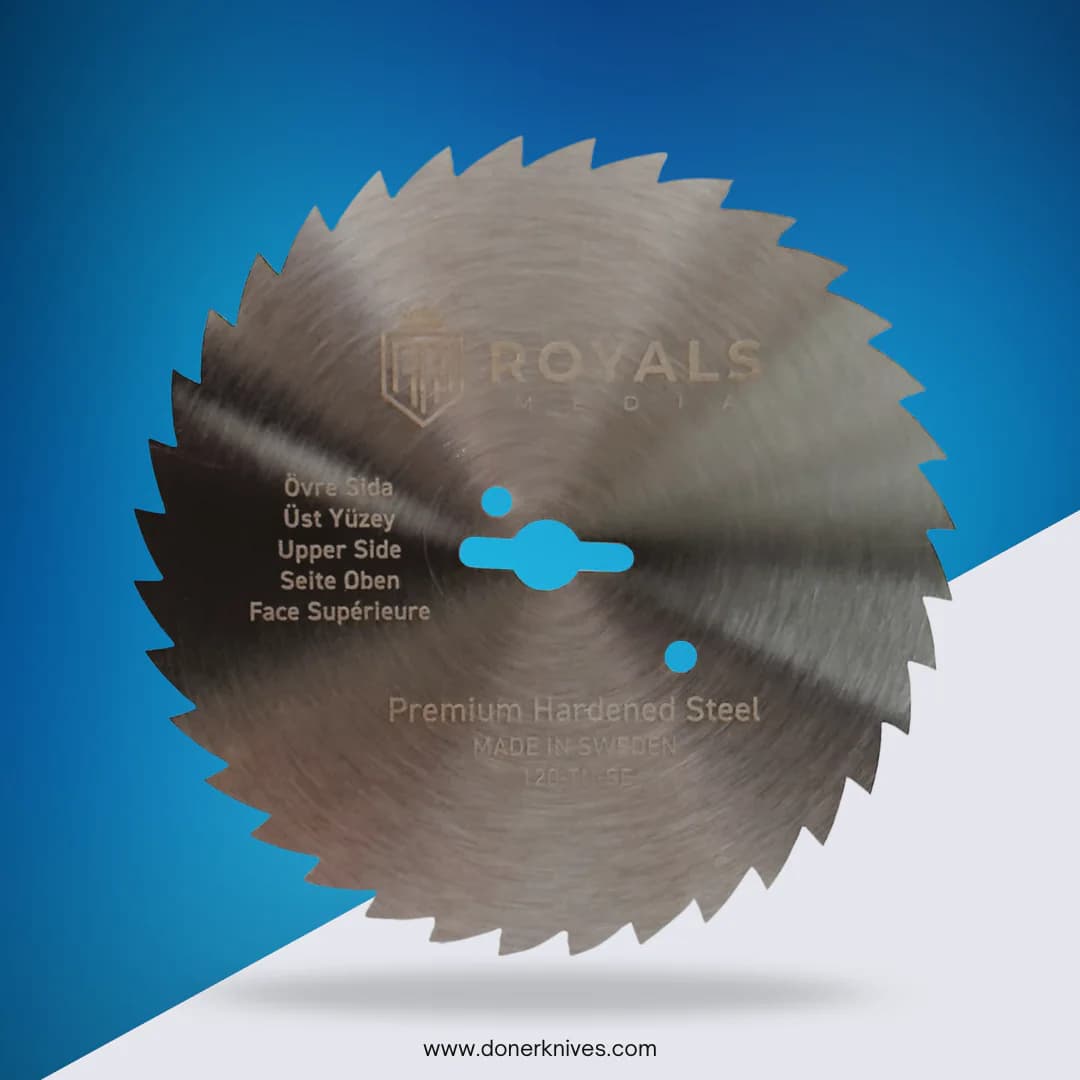
- A spare doner blade (to test whether the problem is the blade itself) — for example the 140mm Universal – 4 Hole or a blade that fits your specific machine.
Step by step: troubleshooting a doner knife blade that cuts poorly
Follow these steps in order to identify and solve the problem systematically. Start with the simplest and most common causes.
1. Check and adjust the blade tension
A loose blade is by far the most common reason for poor cuts. When the blade is not held firmly enough it vibrates and loses precision.
- Switch off and unplug the machine.
- Check that all mounting screws are properly tightened with the screwdriver. They should be firm, but do not overtighten and strip the threads.
- If the blade has a centring bushing or locking ring, make sure it is correctly seated.
- After tightening, run the machine briefly (without meat) and listen for unusual vibration noise.
2. Clean the blade and the machine thoroughly
Fat, meat residue and baked-on protein can build up on the edge and in the blade holder, which dramatically impairs cutting performance.
- Remove the blade following your machine's instructions.
- Wash the blade by hand in hot, soapy water. Use a non-abrasive sponge. Avoid the dishwasher, which can damage the fine structure of the edge.
- Carefully clean every part of the blade holder and the area around the shaft where the blade sits. Use a brush to reach awkward spots.
- Dry everything thoroughly before refitting. Moisture causes rust and affects balance.
For a deep clean, follow our detailed guide: How to Clean a Doner Knife: Safe Step-by-Step Guide 2026.
3. Sharpen the blade correctly
Every blade goes dull over time. A dull blade presses through the meat instead of cutting it. Our pro guide Sharpen Doner Knife Blades: Pro Guide for Results goes deeper into the technique.
- For maintenance honing: use a honing steel. Hold the steel at a steady angle (around 20 degrees) and draw the edge along it, from base to tip, with an even motion. Make 5–10 light passes on each side.
- For dull blades: these usually need a whetstone or a professional sharpening service. If you are not experienced, leave this to an expert so you do not ruin the edge geometry.
- Test after sharpening: cut carefully into a sheet of paper or a tomato to feel the difference.
4. Verify that the blade is compatible with your machine
The wrong blade — however good — will never perform properly. Compatibility is the key.
- Diameter (80, 90, 100, 120, 140mm): a blade that is too small will not reach the meat properly; one that is too large can be dangerous or ineffective. Check your machine manual.
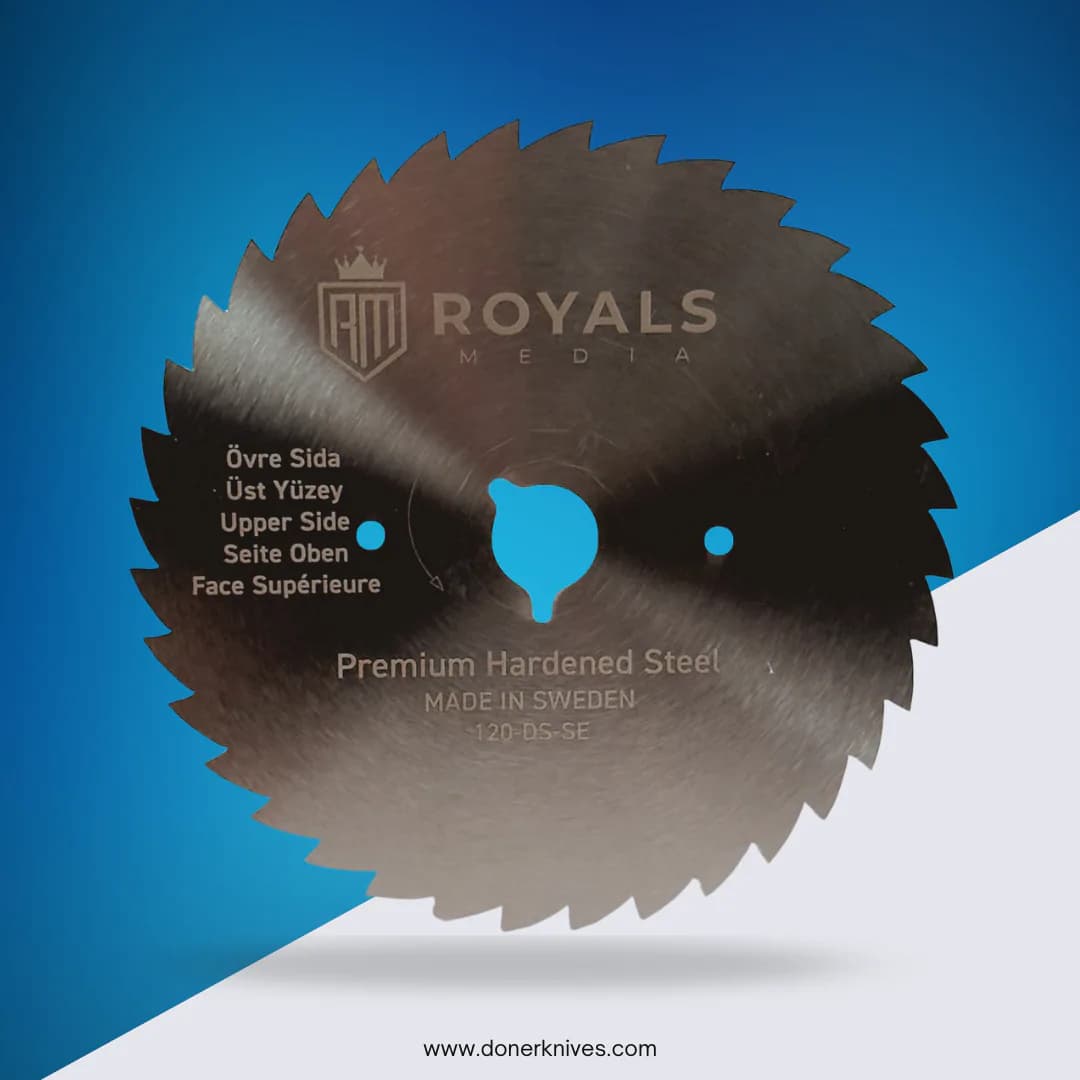
- Mounting holes (2, 3 or 4 holes): the holes must match your machine's pattern exactly for a safe and stable fit. Many larger machines, for instance, require a 140mm doner blade with 4 holes.
- Brand compatibility (Universal, Jet, Dost, Tandir): some machines use specific mounting systems. See our guide Which Doner Knife Blade Fits My Machine? Ultimate Guide 2026 for details.
5. Adjust the machine's rotation speed
The wrong speed affects cut quality. Too slow and the blade bunches the meat; too fast and the slices come out uneven.
- Consult your machine's manual to find the speed control or settings.
- Test with a small sample of doner meat. Start at a medium speed.
- Adjust up or down until you get an even, continuous slice without the blade catching or chopping.
- The optimal speed varies with the temperature and consistency of the meat.
6. Check the temperature and structure of the meat
Blade performance is directly tied to what it is cutting. Meat that is too cold or frozen is extremely hard on the edge.
- Chilled temperature: let the meat reach an even, chilled but not ice-cold temperature before slicing (around +2 to +5 °C).
- Meat quality: meat with a lot of connective tissue or uneven fat distribution can be hard to cut. A serrated or smooth blade will change the result. A serrated blade grips better in tougher meat.
- Freezing: never cut frozen meat with a doner knife blade. It dulls the edge immediately and it is dangerous.
7. Inspect the blade for damage or wear
Our blades are very durable, but extreme conditions can still cause damage.
- Examine the edge under good light against a bright background. Look for:
- Nicks or chips: small notches in the edge that tear the meat.
- A rolled edge: a section of the edge bent to one side (often visible as a shiny line).
- Corrosion or rust spots at the edge or around the holes.
- If the blade has serious nicks, a rolled edge or rust affecting the edge, it is time to replace it. A damaged blade cannot be saved by honing and is a safety risk.
- If no obvious damage is visible but the blade still will not cut after all the steps above, test with a new, compatible blade to rule out a rare manufacturing fault.
Pro tips for keeping your doner knife blade sharp
- Clean immediately after use: fat and acids in the meat attack the steel and dull it faster. Always dry it afterwards.
- Use the right blade for your meat: try both serrated and smooth to see which gives the best result for your particular recipe. A smooth blade gives cleaner cuts on softer meat.
- Let the machine do the work: do not force the meat against the blade. Let the blade's rotation and sharpness do the cutting.
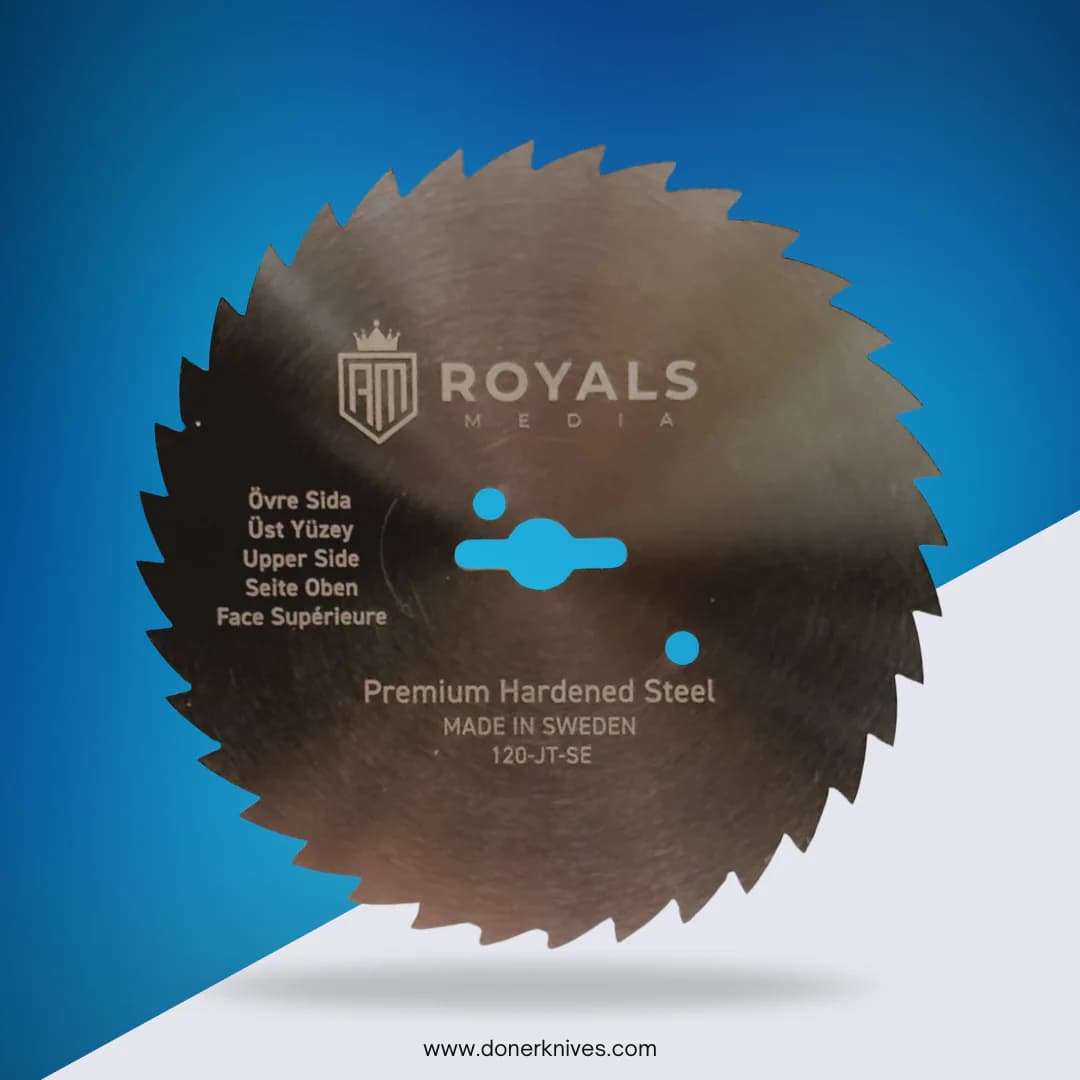
- Always keep a spare blade: for a professional operation, having a spare ready — such as a 120mm Tandir – Serrated — is essential to avoid downtime.
- Store the blade correctly: never leave the blade mounted on the machine for long-term storage. Keep it dry, separate and protected.
Common mistakes to avoid
- Using the dishwasher: the high heat and aggressive chemicals flatten the micro-geometry of the edge and cause corrosion.
- Trying to hone a damaged blade: if the edge has a nick or is rolled, it must be ground out professionally before any maintenance honing. Otherwise you make the problem worse.
- Ignoring vibration: unusual vibration or noise is often the first sign of a loose mounting or an unbalanced blade. Do not ignore it.
- Using the wrong mounting screws: always use original or manufacturer-recommended screws. The wrong length or head gives a poor fit.
- Cutting the wrong things: never use the doner knife blade to cut bread, bone, frozen goods, or as a general-purpose knife. It is a specialist tool.
Frequently asked questions about doner blades that will not cut
How often should I sharpen my doner knife blade?
It depends on use. In a high-volume restaurant, a light maintenance hone with a steel every week may be necessary. Professional grinding may be needed every 3–6 months. For lower use, honing once a month is often enough. Let the cut quality be your guide — when it starts to fall off, it is time.
Is a serrated or a smooth blade better if my meat sticks?
A serrated blade is often better for meat that is a little tougher or has a denser structure, because the teeth grip and release the slice more cleanly. A smooth blade gives cleaner cuts on very soft, well-marbled meat but can sometimes slip on the surface. Test both with your particular meat. See the comparisons in our guide to 120mm Doner Knife Blades: Comparison & Guide.
Why does my new doner blade vibrate so much?
Heavy vibration on a new blade almost always points to incorrect mounting or incompatibility. Double-check that all screws are tightened evenly and that the holes match exactly. If the problem persists, check that the blade diameter and brand (Jet, Dost and so on) match your machine. A blade that is unbalanced from the factory is very rare with quality blades.
Can I repair a doner blade with a large nick?
A small nick can sometimes be ground out by a professional with the right equipment. A large nick, crack or rolled edge, however, almost always means the blade is unusable and should be replaced. Trying to repair it can make it unstable and dangerous to use. Safety and food quality come first.
My machine is old. Could it be the machine and not the blade?
Yes, absolutely. Worn motor bearings, a bent shaft or a loose blade-holder mount can all make even a perfect blade cut badly. If you have tested several new, compatible blades (such as a 100mm Tandir – Serrated) with no improvement, it is probably time to service or reassess the machine itself.
How long does a doner knife blade last?
Lifespan varies enormously with use, maintenance and what you are cutting. A well-cared-for blade in professional service, honed regularly and never put through frozen goods, can last several years. The key is preventive maintenance: cleaning, correct storage and dealing with dullness as soon as it appears.
Summary: when your doner knife blade will not cut properly, the cause is rarely the quality of the blade itself — all our blades meet the same high standard. The problem is almost always some combination of mounting, care, compatibility or machine settings. By working systematically through the seven solutions above — from tightening the screws to checking the temperature of the meat — you will be able to diagnose and fix the problem quickly. Remember: the right tool for the right machine, plus proper care, is the foundation for perfect doner slices, every day.
Related articles
Get the right blade for your machine
Professional doner knife blades. Delivery across Europe.