June 26, 2026
Döner Knife Blade for Dost 090: Everything You Need to Know
Introduction to Doner Knife Blades for Dost 090
Do you own a Dost 090 doner slicer and are looking for the perfect doner knife blade for Dost 090? Then you're on the right track! A good blade is crucial for cutting thin, even slices of meat—just like a professional doner chef. In this article, we’ll guide you through everything you need to know about choosing, replacing, and maintaining your blades to maximize performance.
The Dost 090 is a popular model among both restaurants and enthusiasts, and to get the most out of it, you need the right blade. Both serrated and smooth blades are available, and the choice depends on the type of meat you're slicing. Want to learn more about the differences? Check out our deep dive into serrated vs. smooth blades.
Unsure which blades are compatible with your machine? We also have a guide on blade compatibility for different models, so you can shop with confidence. Whether you use 90mm or 120mm blades, there are solutions for every need. Let’s start with the basics—so you can find the best doner knife blade for Dost 090 for your kitchen environment!
What Is a Dost 090 Doner Knife?
A Dost 090 doner knife is a professional slicing knife designed to cut thin, even slices of meat from a doner or gyro spit. It’s a popular model among restaurants and street food vendors thanks to its robust construction and precision. The knife is motor-driven and uses a specially designed doner knife blade for Dost 090, which comes in various types, such as serrated or smooth blades, depending on your needs.
How Does It Work?
The Dost 090 knife is equipped with a circular rotating blade that slices the meat with consistent force. The blade is easily mounted on the knife’s head and rotates at high speed to create perfect slices without tearing the meat. It’s specifically designed for 90mm blades, offering a balance between size and efficiency.
Types of Doner Knife Blades
There are two main types of doner knife blades for Dost 090:
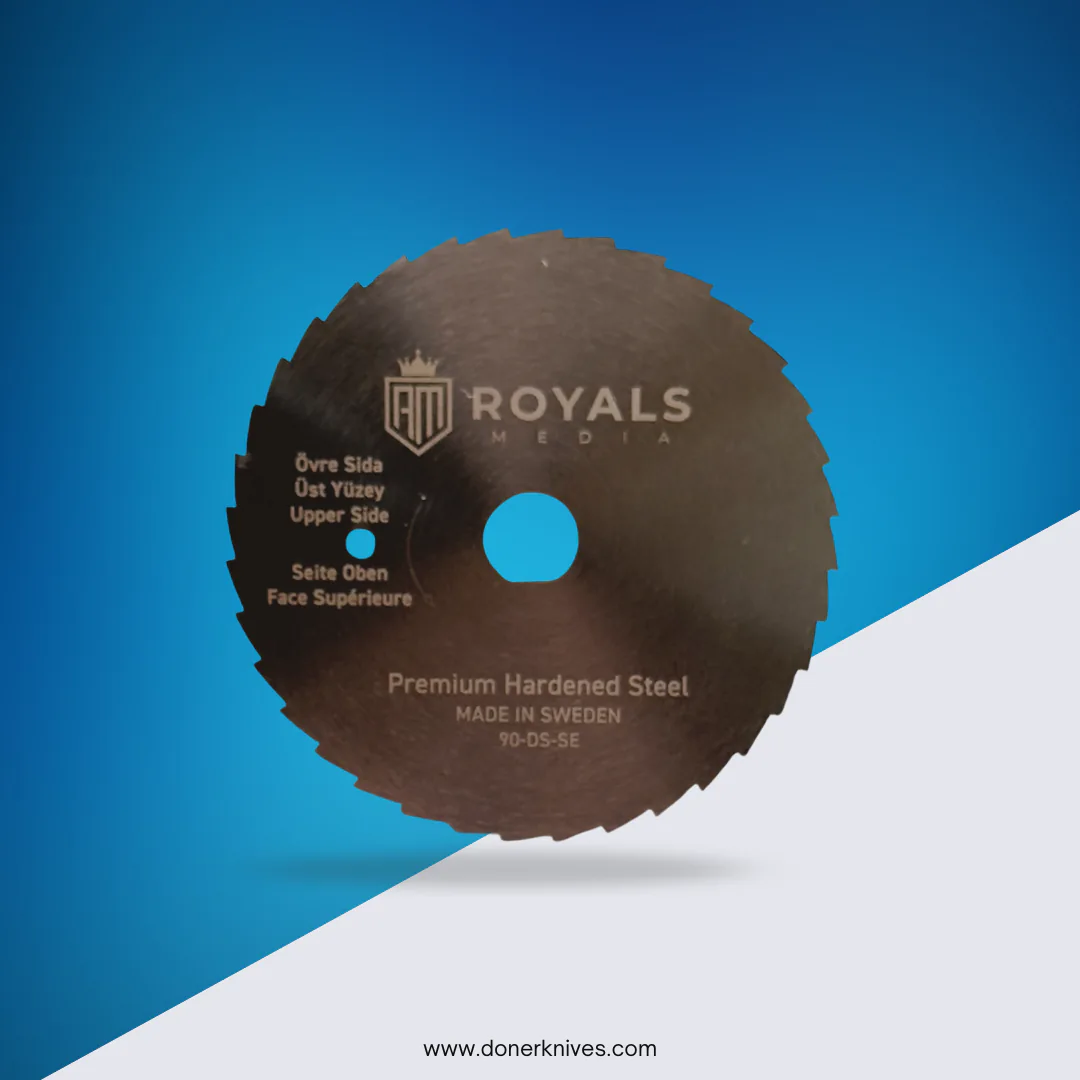
- Serrated blades: Perfect for meat with crust or fat, as the teeth grip better and reduce slipping. For example, the 90mm Dost serrated blade.
- Smooth blades: Provide a cleaner cut and are best suited for soft meat without a crust. Check out the 90mm Dost smooth blade.
These blades are made of durable stainless steel and are easy to replace when they wear out or become dull. The choice of blade depends on the meat you’re slicing and your personal preference. With proper maintenance, these blades last long and deliver consistent results.
Serrated vs. Smooth Blades: Which One Suits You?
When choosing a doner knife blade for Dost 090, you’ll often face the choice between serrated and smooth blades. Both have their advantages, and the right choice depends on what you’re slicing and how you work. Here’s a comparison to help you decide.
Serrated Blades: For Tougher Meat and Precision
Serrated blades, like the 90mm Universal – Serrated, have small "teeth" along the edge that grip the meat. They’re perfect for:
- Tougher cuts of meat like beef or lamb, where a smooth knife might slip.
- Thinner slices, as the teeth help cut without crushing the meat.
- Long-lasting sharpness—the teeth reduce edge wear compared to smooth blades.
Serrated blades are often recommended for professional use, especially if you’re slicing a lot of frozen or tough cuts. Learn more about serrated blades in our guide to 120mm blades.
Smooth Blades: For Softer Meat and Even Slices
Smooth blades, like the 90mm Dost – Smooth, provide cleaner cuts without "tearing" the meat. They’re best for:
- Softer meats like chicken or turkey, where a serrated knife might shred the fibers.
- More even presentation, as the slices are smoother and more uniform.
- Easier maintenance—smooth blades are simpler to sharpen and clean.
Which One Should You Choose?
- Serrated blade if you frequently slice tough meat or want longer durability.
- Smooth blade if you prioritize fine slices or work with softer meats.
Feel free to try both options—some even use different blades depending on the type of meat. Regardless of your choice, the doner knife blade for Dost 090 is a perfect fit for your machine.
Compatibility: Which Blades Fit the Dost 090?
Compatibility: Which Blades Fit the Dost 090?
The Dost 090 is a popular doner knife with specific blade compatibility requirements. To ensure optimal performance, it's important to choose the right doner knife blade for the Dost 090. This model is designed for blades with a 90mm diameter and uses a universal mount, meaning it fits several different blade types.
Blades Compatible with the Dost 090:
- 90mm Dost – Serrated (209kr) – Perfect for cutting through meat with crust or vegetables with tougher skins.
- 90mm Dost – Smooth (209kr) – Ideal for thin, even slices of softer meats or bread.
- 90mm Universal – Serrated (209kr) – An alternative serrated option that also works well with the Dost 090.
- 90mm Universal – Smooth (209kr) – A smooth universal blade that delivers clean cuts.
Key Compatibility Factors:
- Diameter: Only 90mm blades work optimally.
- Mount Type: The Dost 090 uses a standard mount, so all 90mm blades with universal mounting will fit.
- Material: Stainless steel is recommended for durability and easy maintenance.
If you want to learn more about compatibility for other models, check out our guide on doner knife blades for all models.
Choosing the right doner knife blade for the Dost 090 ensures both safety and precision in your cutting tasks.
How to Change the Blade on a Dost 090?
Changing the doner knife blade for the Dost 090 is a simple process, but it's important to do it correctly to avoid injuries and ensure perfect sharpness. Here’s a step-by-step guide:
Preparations
- Turn off the machine: Make sure it’s powered off and unplugged for safety.
- Clean the knife: Wipe off any grease or food residue from the old blade and handle.
Blade Replacement Process
- Loosen the screw: Use a screwdriver or the included tool to loosen the screw holding the blade in place. The screw is usually located in the center of the blade.
- Remove the old blade: Carefully lift off the old blade and set it aside. Be cautious not to cut yourself on the edges.
- Install the new blade: Place the new doner knife blade for the Dost 090 onto the handle and ensure it sits straight. For example, you can use an 80mm smooth blade or an 80mm serrated blade, depending on your needs.
- Tighten the screw: Secure the screw again, but not too tightly. Over-tightening can damage the threads.
Test Run
- Check the installation: Ensure the blade is firmly attached and doesn’t wobble.
- Start the machine: Test briefly to confirm the blade rotates smoothly without vibrations.
Tips
- Replacement tools: Some models come with specialized tools to make the process easier. Use these if included.
- Correct blade size: Make sure the new blade has the same diameter as the old one (e.g., 80mm or 120mm) to avoid imbalance.
By following these steps, you can easily replace the doner knife blade for the Dost 090 and continue with precision and safety.
Maintenance and Sharpness: How to Keep the Blade in Top Condition
Maintenance and Sharpness: How to Keep the Blade in Top Condition
To ensure your doner knife blade for the Dost 090 performs optimally and lasts long, regular maintenance is essential. A well-maintained blade cuts cleaner, delivers more even slices, and reduces wear on your knife. Here are our best tips:
Cleaning After Use
- Wipe the blade immediately after use to prevent rust and food residue.
- Use a damp cloth and mild dish soap. Avoid harsh abrasives that can damage the blade’s surface.
- For serrated blades, use a brush to clean between the teeth (90mm Dost – Serrated).
Sharpening and Edge Maintenance
- Smooth blades can be sharpened with a whetstone or professional sharpening stone. For serrated blades, a specialized sharpening rod is recommended (120mm Dost – Serrated).
- Sharpen regularly (about every 3 months with heavy use) to maintain edge sharpness.
Storage
- Store the blade dry and protected from moisture. A magnetic knife rack or protective sleeve is ideal.
- Avoid stacking other kitchen tools against the blade to minimize damage.
Warnings
- Never use a dishwasher for doner knife blades – high heat and chemicals can damage the steel.
- Regularly check for rust or damage, especially along the edges.
By following these simple steps, you can ensure your doner knife blade for the Dost 090 is always ready for perfect slicing. For more tips, check out our guide to doner knife blades.
Best Blade for Your Needs: 90mm vs. 120mm
When choosing a doner knife blade for Dost 090, you often face the choice between two popular sizes: 90mm and 120mm. Both have their advantages, but which one best suits your needs? Here, we break down the differences and provide advice to help you make the right decision.
90mm Blade: Compact and Precise
A 90mm blade is perfect if you want a lighter and more manageable knife. This size is ideal for:
- Smaller kitchen spaces – fits well in tight areas.
- Faster cutting – easier to maneuver at high speed.
- Thinner slices – offers better control over thickness, great for gyros or thinly sliced dishes.
Examples of popular 90mm options include the 90mm Dost – Serrated (209 SEK) for crusty meats or the 90mm Dost – Smooth (209 SEK) for even slices.
120mm Blade: Powerful and Efficient
A 120mm blade is a great choice if you're cutting large quantities of meat or prefer more weight and stability. The benefits include:
- Fewer strokes – the longer blade cuts through more meat per pass.
- Better for thick cuts – ideal for kebab plates or coarsely chopped meat.
- Durability – larger blades are often made from thicker materials and withstand more wear.
Check out the 120mm Dost – Smooth (299 SEK) for clean cuts or the 120mm Tandir – Serrated (299 SEK) for tougher meats.
Which One Should You Choose?
- 90mm is best if you prioritize precision and speed.
- 120mm is better for high-volume or coarser cutting.
No matter your choice, it's important to select a doner knife blade for Dost 090 that matches your work habits. You might even need both—a smaller one for fine work and a larger one for bulk processing!
Where to Buy Replacement Blades for Dost 090?
Where to Buy Replacement Blades for Dost 090?
When it's time to replace your doner knife blade for Dost 090, there are several reliable options. Here are the best places to buy replacement blades:
Specialized Online Knife Stores
Online shops like donerknives.com offer both serrated and smooth blades specifically designed for Dost 090. Their selection includes high-quality 90mm blades that fit perfectly.The Manufacturer’s Official Website
Some manufacturers sell directly to consumers, ensuring authenticity and compatibility.Local Kitchen Equipment Stores
Larger stores with professional kitchen equipment may carry Dost 090 blades, but call ahead to avoid unnecessary trips.
What Should You Look For?
- Compatibility: Make sure the blade is labeled for Dost 090.
- Material: High-carbon stainless steel for durability.
- Type: Choose between serrated (90mm serrated blade) or smooth (90mm smooth blade) depending on your needs.
Tip: Always keep at least one extra blade in reserve. Prices vary, but expect to pay 200–400 SEK for a quality blade. Avoid cheap generic options—they rarely last as long.
Frequently Asked Questions About Doner Knife Blades for Dost 090
How Do I Know Which Doner Knife Blade for Dost 090 Is Right for Me?
It depends on what you're cutting. For meats like chicken or lamb, serrated blades work best because they grip well. For vegetables or thin slices, smooth blades are more precise. Check out our guide on 90mm smooth blades for more details.
Can I Use Blades from Other Brands on My Dost 090?
Yes, but only if they have a 3-hole mount and the correct diameter (e.g., 90mm or 120mm). Some universal blades like the 140mm Universal 3-Hole fit, but double-check the measurements first.
How Often Should I Replace the Blade?
If you use the knife daily: every 3–6 months. Dull or damaged blades (e.g., chipped teeth) should be replaced immediately—they can be dangerous and produce uneven cuts.
Can I Sharpen a Serrated Doner Knife Blade Myself?
Yes, but it requires special tools (e.g., a round file). Beginners are advised to buy a new blade or hire a professional sharpening service. Smooth blades are easier to sharpen with standard whetstones.
Why Does My Blade Vibrate During Use?
Possible reasons include:
- Loose mount: Check if the screws are tightened.
- Uneven sharpening: Try a new blade to rule out manufacturing defects.
- Improper installation: Ensure the blade is aligned correctly on the shaft.
Are There Special Blades for Frozen Meat?
Yes, extra-thick or reinforced blades (often 2–3 mm thick) handle harder materials better. Look for blades labeled "heavy-duty" or "frozen meat."
More questions? Visit our product page or contact our support team!
Conclusion: Choose the Right Blade for Your Dost 090
Conclusion: Choose the Right Blade for Your Dost 090
Selecting the right döner knife blade for Dost 090 is crucial to maximizing the performance of your slicer. Whether you prefer a serrated blade for extra grip or a smooth blade for cleaner cuts, there are options to suit your specific needs.
Summary of Key Choices:
- Serrated blades (e.g., 90mm Dost – Serrated) are perfect for meats with tougher textures, as they provide better control and less slipping.
- Smooth blades (e.g., 90mm Dost – Smooth) are better suited for precision cutting and leave smoother surfaces, ideal for thinner slices.
Additional Tips:
- Check compatibility – Ensure the blade fits your specific Dost 090 model.
- Maintain regularly – Sharpen and clean the blade to extend its lifespan.
- Invest in quality – A good blade (like those in our range) delivers better results and lasts longer.
Finally, consider your use case. Is it professional döner production or home use? Both serrated and smooth blades are available for 209 SEK, so you can easily test what works best for you.
With the right choice, every cut becomes a pleasure!