December 15, 2025
Doner Knife Blade Guide: Choose the Right One
Selecting the correct doner knife blade is crucial for efficient and safe doner meat production. Contrary to common belief, it’s not about finding the "best" blade, but the right blade for your specific doner machine and workflow. All our blades at Doner Knives are made from the same high-quality stainless steel. The only differences lie in compatibility. This guide walks you step-by-step through four key factors: machine brand, blade size, tooth pattern, and mounting holes. Let’s begin.
Factor 1: Machine Brand and Model – The Most Important Step
The first thing to check is your doner machine’s brand and model. Different manufacturers design their shafts (spindles) differently. A blade made for a Jet machine won’t fit a Dost or Tandir, and vice versa. Attempting to install an incompatible blade can be dangerous and damage both the machine and the blade.
The most common categories are:
- Universal Blades: Compatible with a wide range of machines from lesser-known or older brands. You’ll often need to check the number of mounting holes (2, 3, or 4).
- Brand-specific Blades: Such as Jet, Dost, and Tandir. These are precision-designed to fit each brand’s spindle perfectly. If you own a machine from these brands, this is your safest choice.
Tip: If unsure, consult your machine’s manual, look for the model number on the machine itself, or take a photo of the spindle where the blade mounts and compare it to our product images. You can also read our detailed guide on how to choose the right doner knife blade for Dost, Jet & Tandir machines.
Factor 2: Blade Diameter (Size)
Blade size, measured in millimeters (mm) of diameter, is directly tied to your machine’s size and capacity. A larger blade isn’t necessarily "better"—it’s designed for bigger machines. Using the wrong size can lead to inefficient cutting or damage.
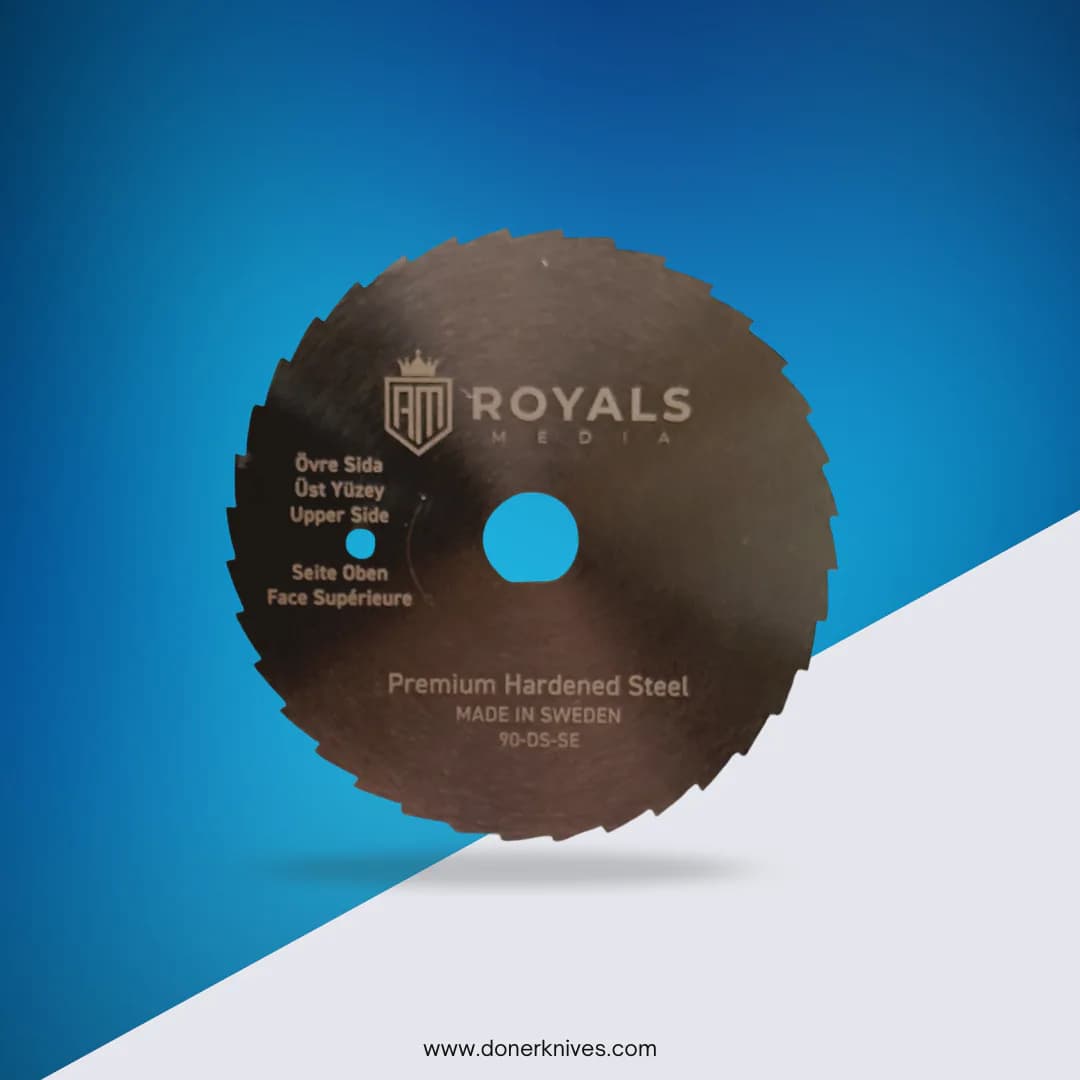
- 80mm & 90mm: Smaller blades for compact or home-use machines.
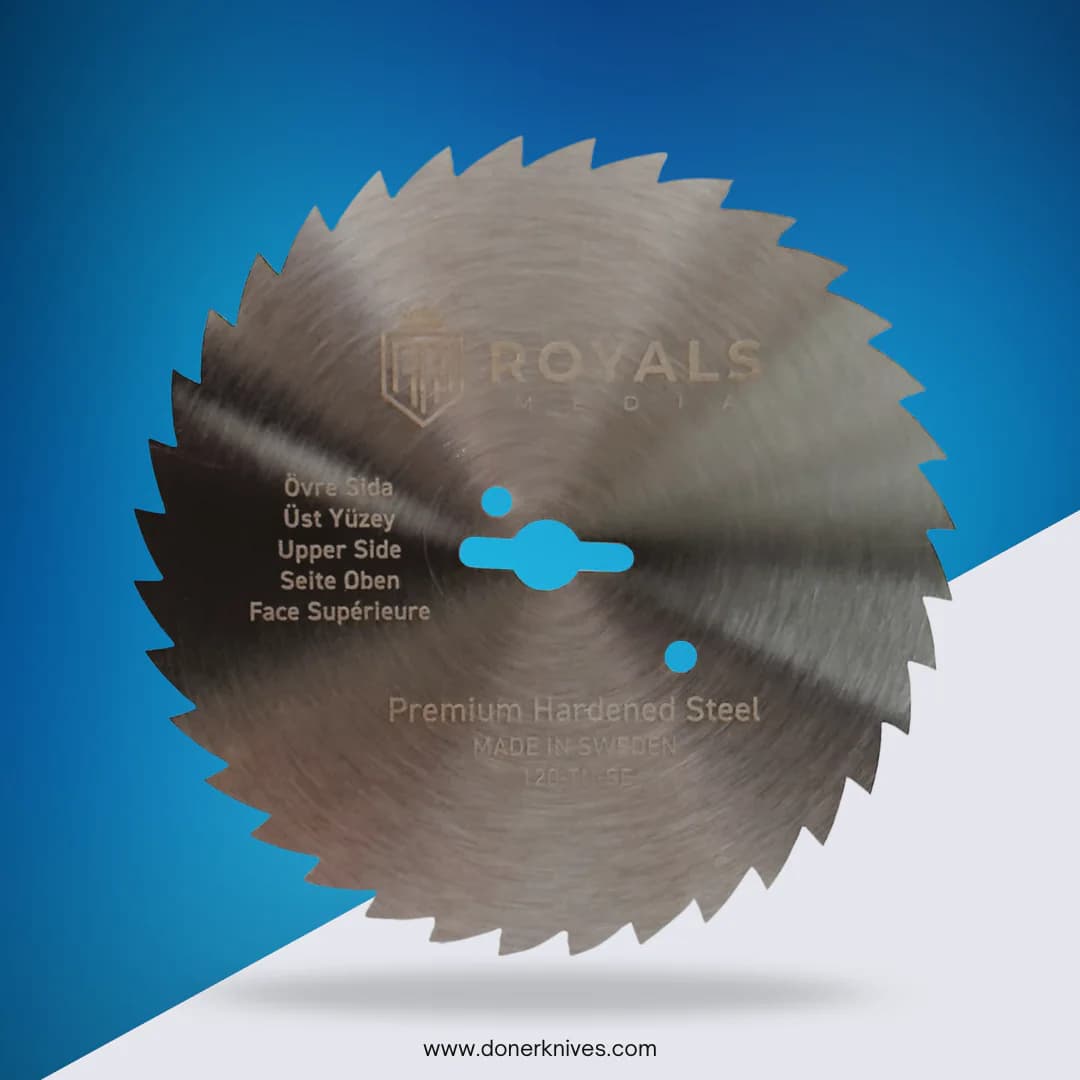
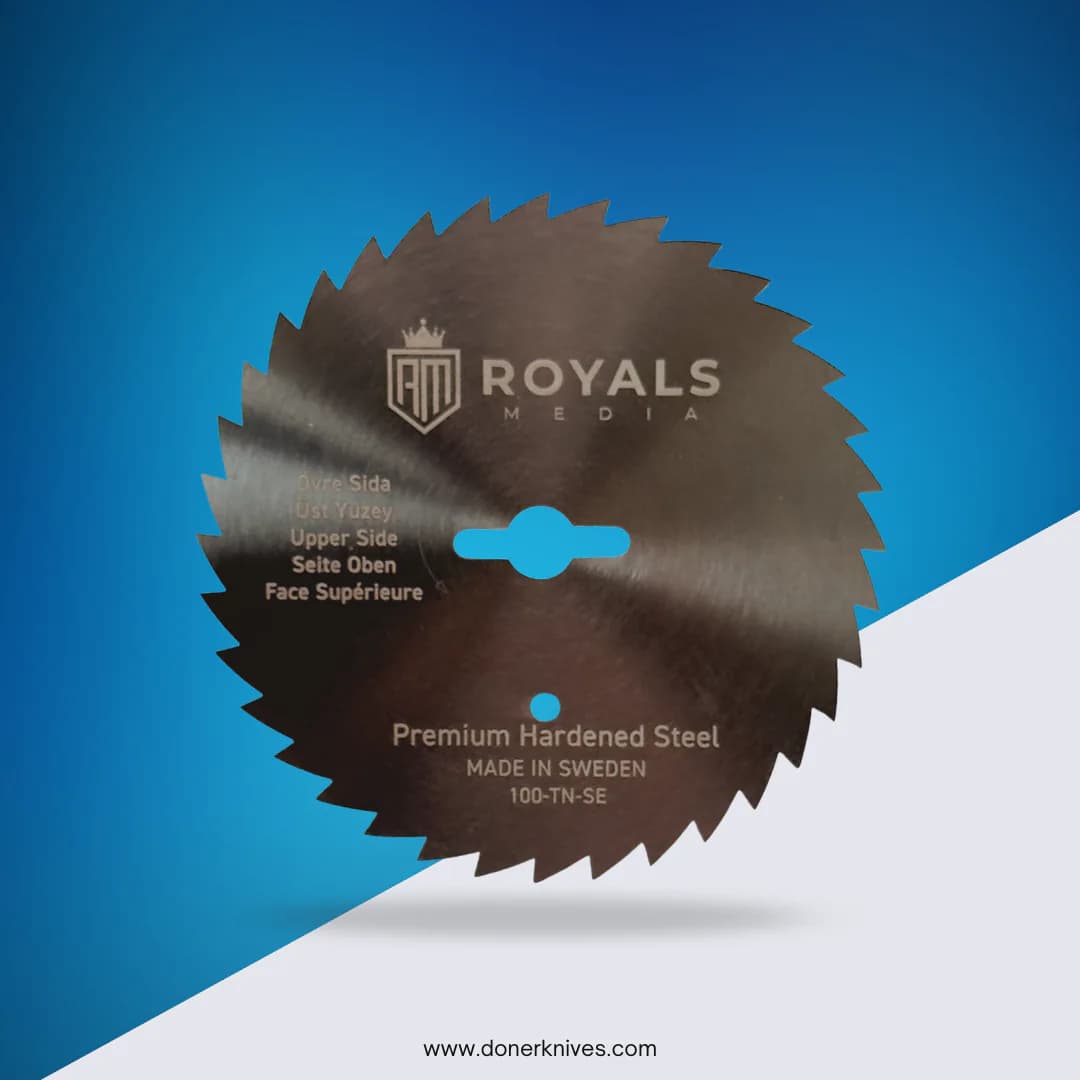
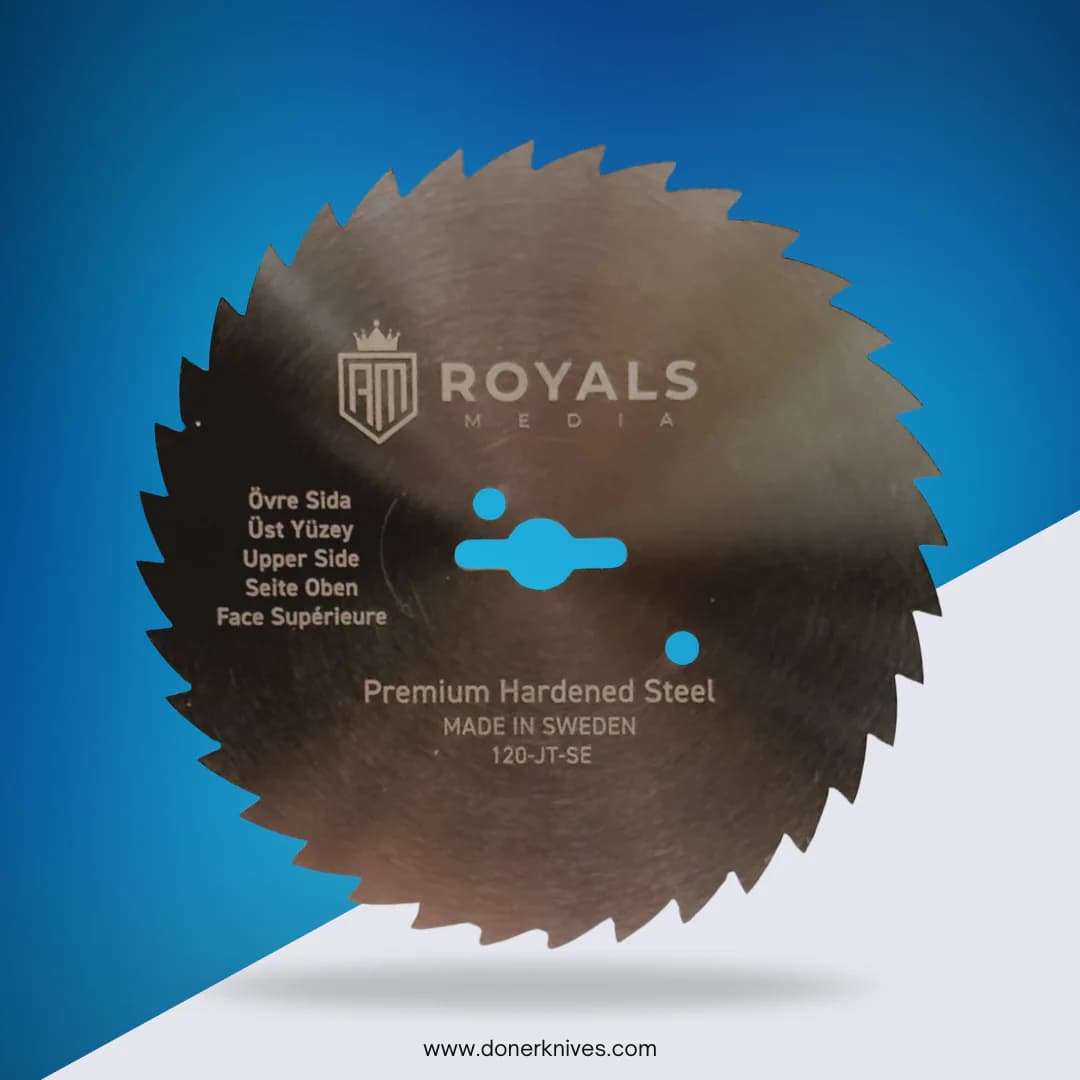
- 100mm & 120mm: The most common size for professional, mid-sized doner machines. Ideal for most restaurants and mobile kitchens.
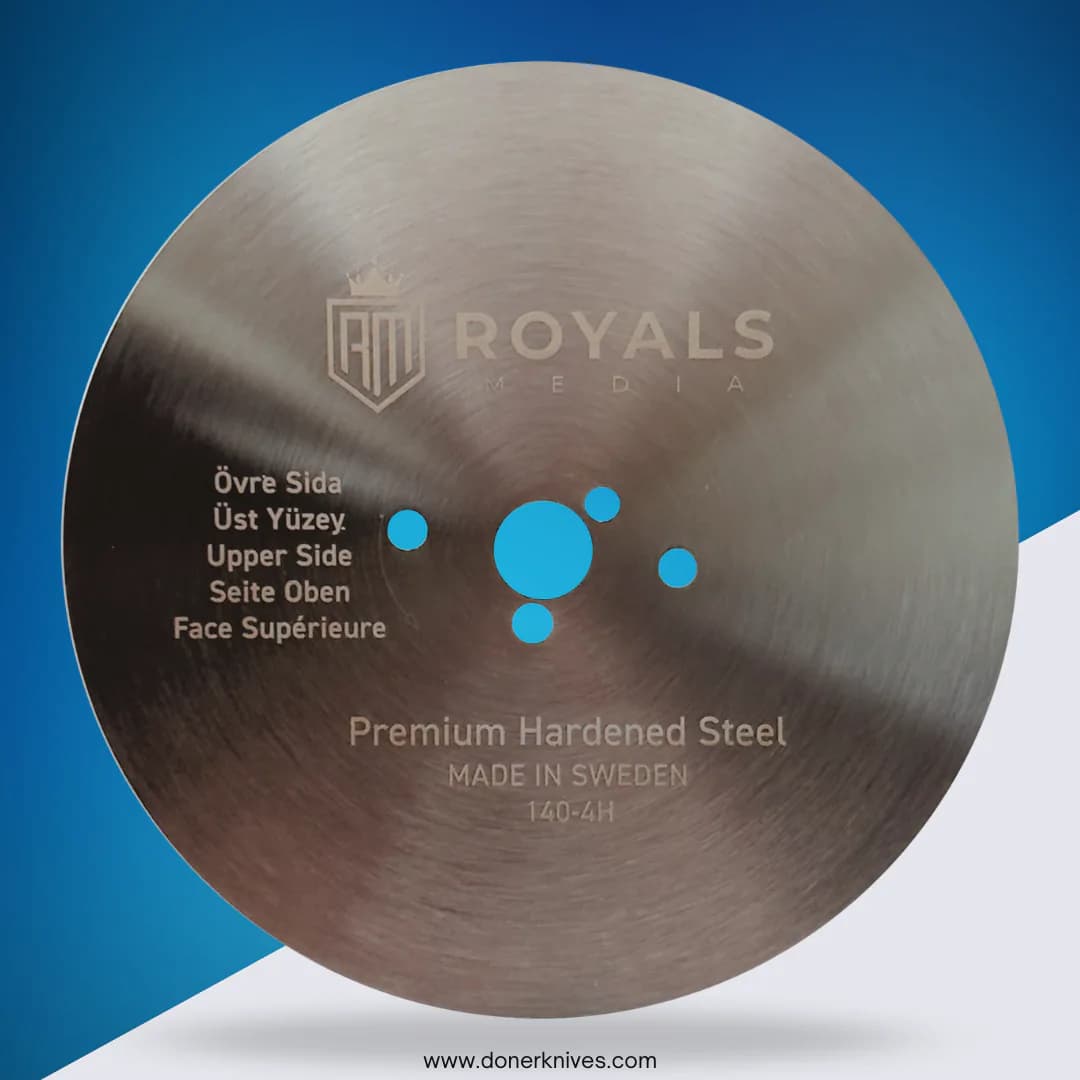
- 140mm: Large blades for industrial machines with high capacity. See our selection of 140mm Universal – 4 holes, 140mm Universal – 3 holes, and 140mm Universal – 2 holes.
Measure the diameter of your current blade or check the distance from the spindle center to the blade’s edge. Even one millimeter can affect safety.
Factor 3: Toothed (Serrated) or Smooth Edge?
This choice comes down to personal preference and meat type. Both variants are made from the same high-quality steel.
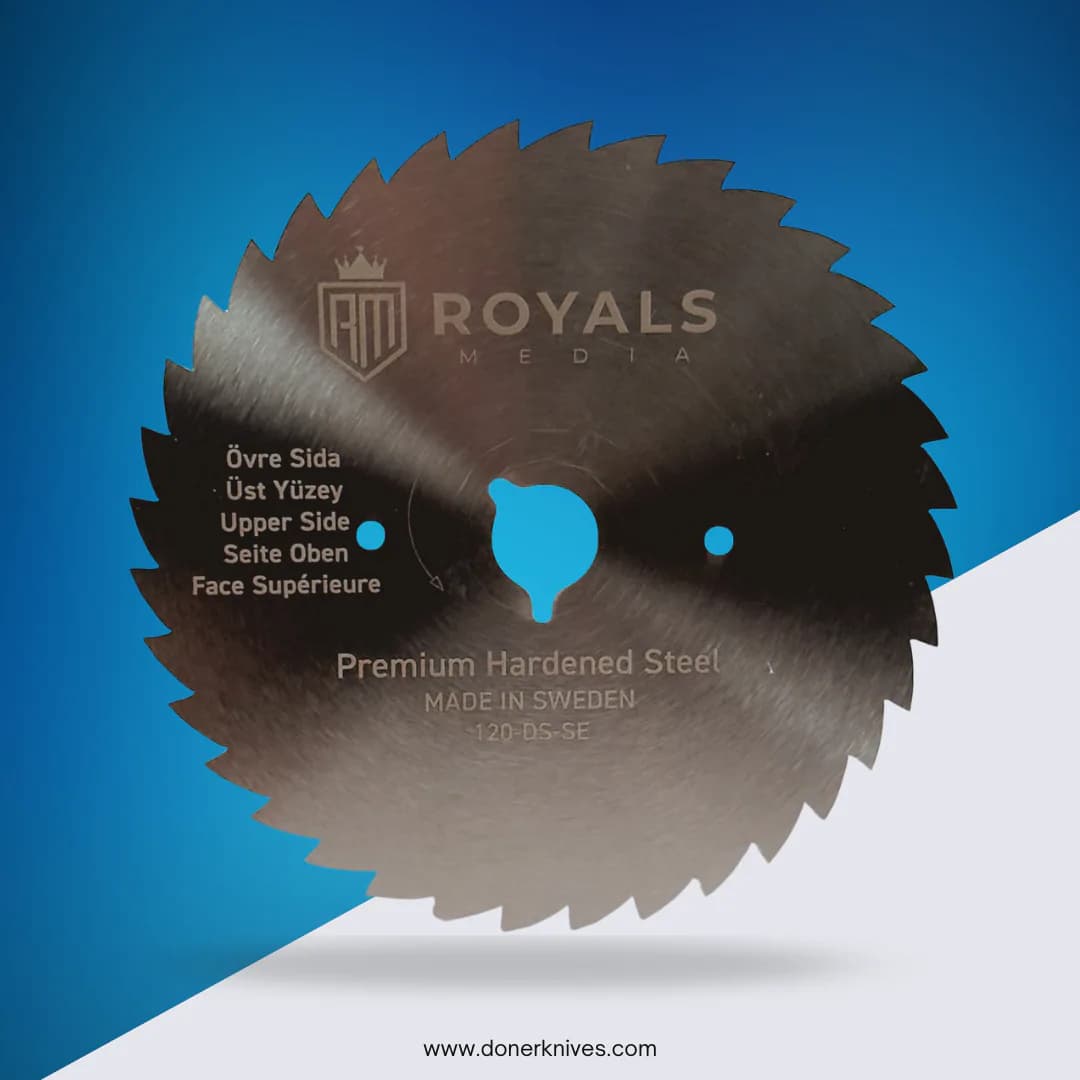
Toothed Blades (Serrated): Toothed edges—small notches along the blade’s edge—act like a saw. They provide better meat grip, beneficial for slicing cold or tougher meat, or if you prefer a slightly "rustic" cut. This is a popular and reliable option in many kitchens.
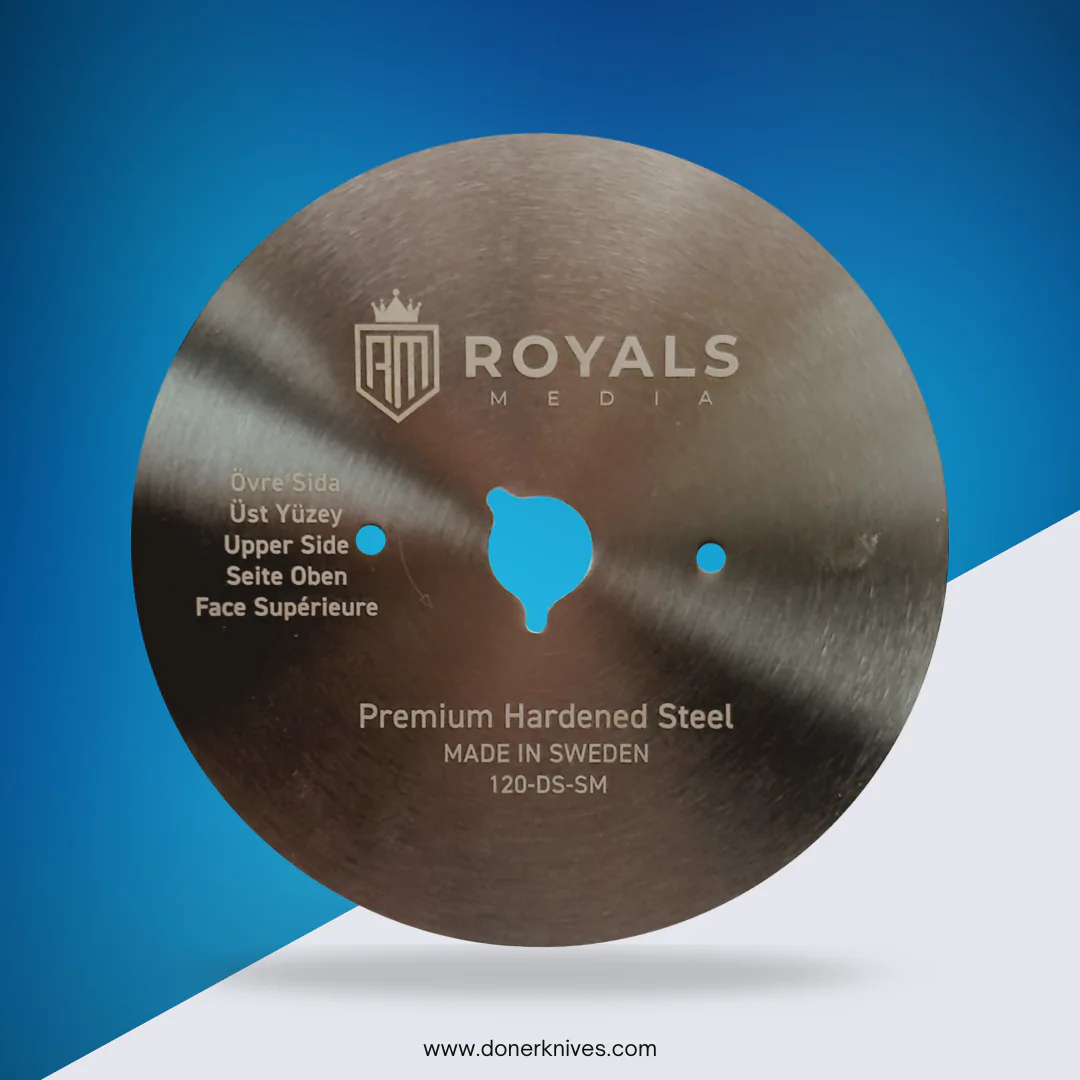
Smooth Blades: A completely straight, smooth edge delivers exceptionally clean and precise cuts. Ideal for thin, even slices that present meat neatly. Requires slightly sharper slicing technique and works best with well-cooked, tender meat.
Need a deeper comparison? We have a full article exploring advantages of toothed vs. smooth doner knife blades.
Factor 4: Number of Mounting Holes
The final piece is ensuring the blade’s mounting holes align with your machine’s spindle. The most common are 2, 3, or 4 holes. Universal blades are available in all these variants for maximum compatibility. Brand-specific blades (e.g., for Jet, Dost) typically have a fixed number of holes tailored for that machine—no guesswork needed here.
Always verify: Remove your old blade and count the screw holes, or examine the spindle’s construction. Forcing a 3-hole blade onto a 4-hole spindle won’t work and is unsafe.
Blade Overview by Machine Type
Blades for Jet Machines
Jet is a leading brand. Our Jet-specific blades are designed for perfect fit. We offer them in the popular 120mm size, available in toothed (serrated) or smooth (non-serrated) versions. If you own a Jet machine, these are your top choices.
Blades for Dost Machines
Dost machines also have their own brand-specific blades. Our range includes 120mm blades for Dost, available with toothed edge or smooth edge. Compatibility is guaranteed.
Blades for Tandir Machines
Tandir is another major name in the industry. For these machines, we offer blades covering various sizes and edge types. Alongside 120mm in toothed and smooth variants, we also provide 100mm toothed blades for smaller Tandir machines.
Universal Blades
If your machine isn’t from Jet, Dost, or Tandir, or if you’re unsure, Universal blades are your best bet. They come in the largest size, 140mm, with multiple hole variants for maximum compatibility. Choose between 4 holes, 3 holes, or 2 holes depending on your machine’s requirements.
Quick Reference Table: Machine & Compatible Blades
| Machine Brand/Type | Recommended Blade | Available Sizes (Example) | Important Info |
|---|---|---|---|
| Jet | Jet-specific blade | 120mm | Choose between toothed or smooth edge. |
| Dost | Dost-specific blade | 120mm | Choose between toothed or smooth edge. |
| Tandir | Tandir-specific blade | 100mm, 120mm | Available in both toothed and smooth variants. |
| Others/Universal | Universal blade | 140mm (80mm, 90mm, 100mm also available in some markets) | Check the number of mounting holes (2, 3, 4) on your machine. |
Common FAQs About Doner Knife Blades
How do I know for sure which blade fits my machine?
The safest method is to consult your machine’s manual. Alternatively, take a photo of the spindle (without the blade) and compare it to our product images. The number of holes and spindle diameter are critical measurements.
Is a larger blade always better?
No. Blades must match your machine’s design and capacity. An oversized blade can be hazardous and inefficient, while an undersized blade won’t cut meat properly. Use the size recommended for your machine model.
Can I sharpen a toothed doner knife blade myself?
We strongly advise professional sharpening for toothed blades. Improper sharpening can damage the serration geometry and reduce performance. For maintenance tips, read our guide on how to maintain your doner knife blade for longevity.
How often should I replace my doner knife blade?
Depends on usage. A well-maintained and regularly sharpened blade can last long. Replace if you notice reduced sharpness requiring excessive force, or if the edge has chips or irregularities. Safety and efficiency come first.
Which is more common in professional kitchens: toothed or smooth blades?
Both are used, but toothed blades are slightly more popular due to their reliable grip on various meat types. However, the choice is highly personal and depends on preferred cutting style and meat texture. Our guide "Toothed Doner Knife" dives deeper into the benefits.
Is there a quality difference between blades on your site?
No. All our doner knife blades are crafted from identical high-grade stainless steel. Differences lie solely in size, mounting system (for different machines), and edge type (toothed/smooth). Price variations reflect size and manufacturing complexity, not material quality.
Why is stainless steel important for kitchen tools?
Stainless steel is hygienic, easy to clean, and durable. It resists corrosion from meat juices, grease, and cleaning agents, aligning with global food hygiene standards and ensuring tool longevity. All our blades meet NSF-approved stainless steel specifications for commercial kitchens.
Summary: How to Choose the Right Doner Knife Blade
Selecting the correct blade is about precision, not guesswork. Follow this four-step checklist:
- Identify your machine: What brand and model? (Jet, Dost, Tandir, or another?)
- Determine size: What diameter (e.g., 120mm) is needed? Check your existing blade or measure directly.
- Choose edge type: Prefer the secure grip of a toothed (serrated) blade or the clean cut of a smooth (non-serrated) blade?
- Verify mounting: How many mounting holes does your spindle have? (2, 3, or 4). This is especially critical for universal blades.
By following this process, you ensure a safe, efficient, and long-lasting solution for your doner meat production. Every blade we offer provides the same exceptional quality—your task is to find the perfect fit. Still have questions? Contact our experts anytime.
Related articles
Get the right blade for your machine
Professional doner knife blades. Delivery across Europe.