August 17, 2026
90 mm Smooth Doner Blades: When the Smooth Edge Is Right — and Which Fits Your Machine
The underrated choice
90 mm is the most common size for handheld doner slicers, and most people re-order serrated out of habit. But the smooth edge is the right call more often than its reputation suggests: it gives the cleanest cut face, the thinnest controlled slice and the easiest resharpening. The question is not whether smooth is "worse" — it is whether your meat and your service suit it.
When 90 mm smooth is right
- Presentation matters. A smooth edge leaves a flat, clean cut face — slices look carved, not torn.
- You slice thin. For 2–3 mm slices, a freshly sharp smooth edge is superior; see our thin slicing guide.
- Firm, well-frozen cones. On firm meat the smooth edge bites without skating.
- You sharpen in-house. A smooth edge is simpler to maintain than teeth — the sharpening guide is here.
When serrated is better
Soft, fibrous or heavily marinated cones (typically chicken shawarma) can make a smooth edge skate on the surface. That is where teeth grip — the full trade-off is in the serrated vs smooth comparison.
Two mounts — pick by your machine
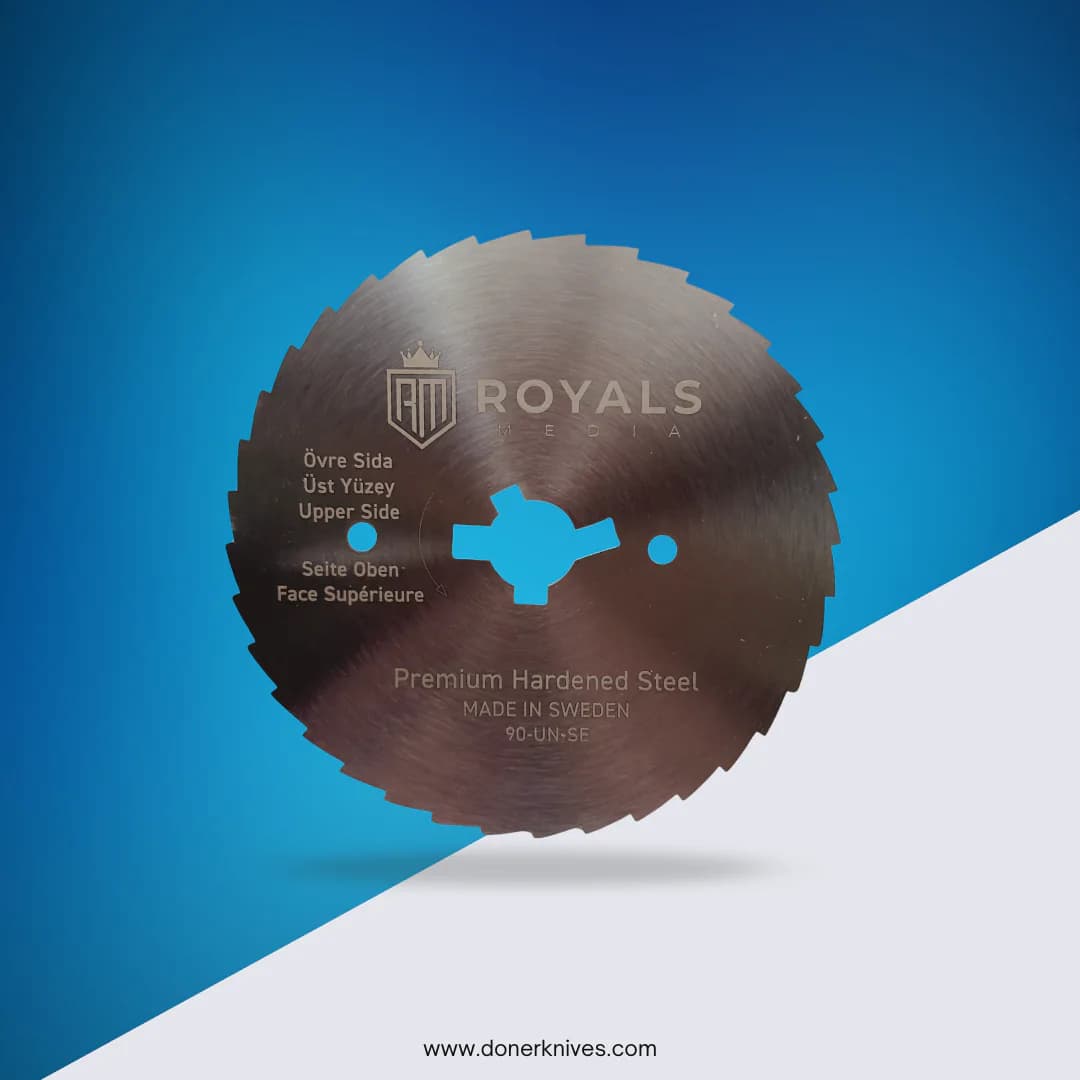
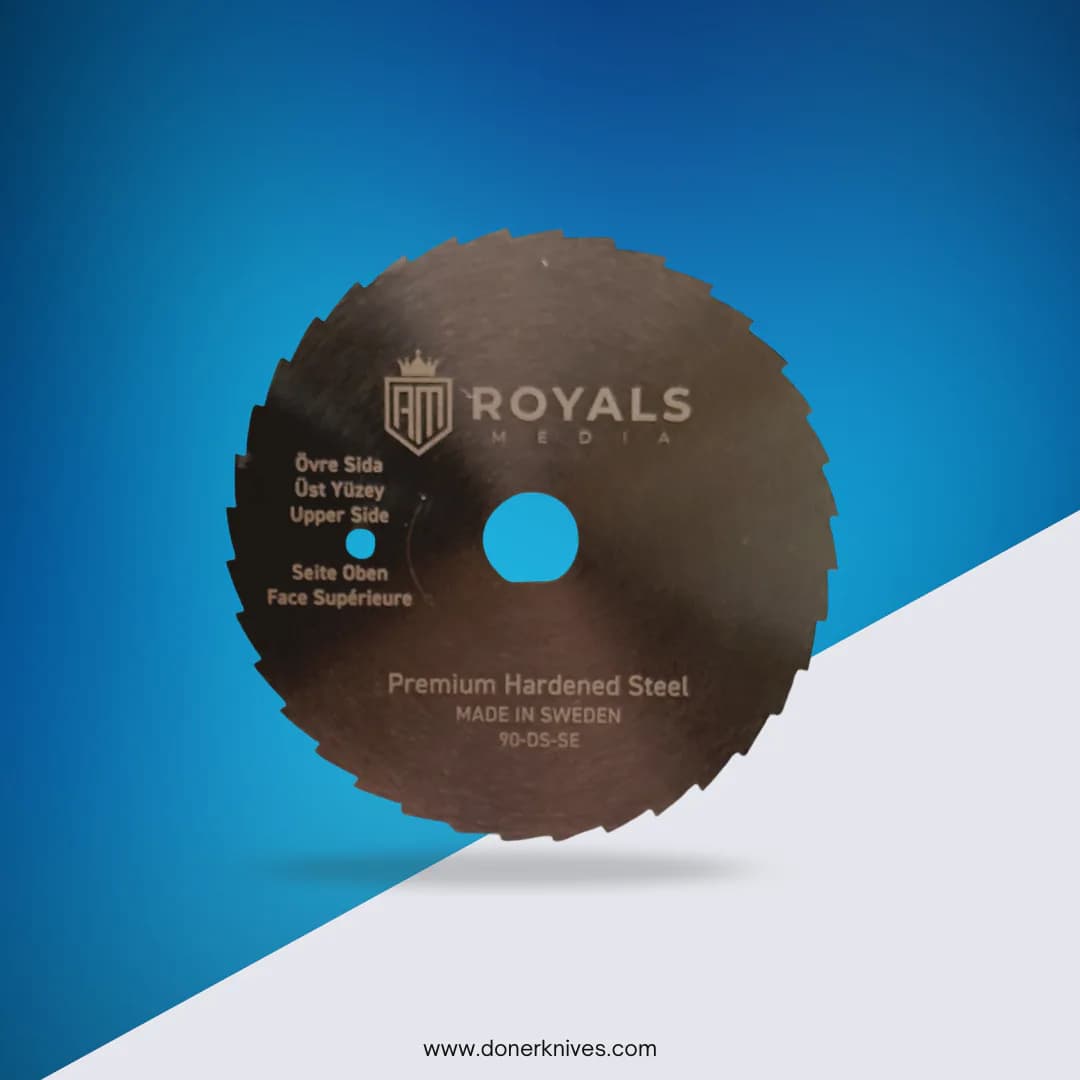
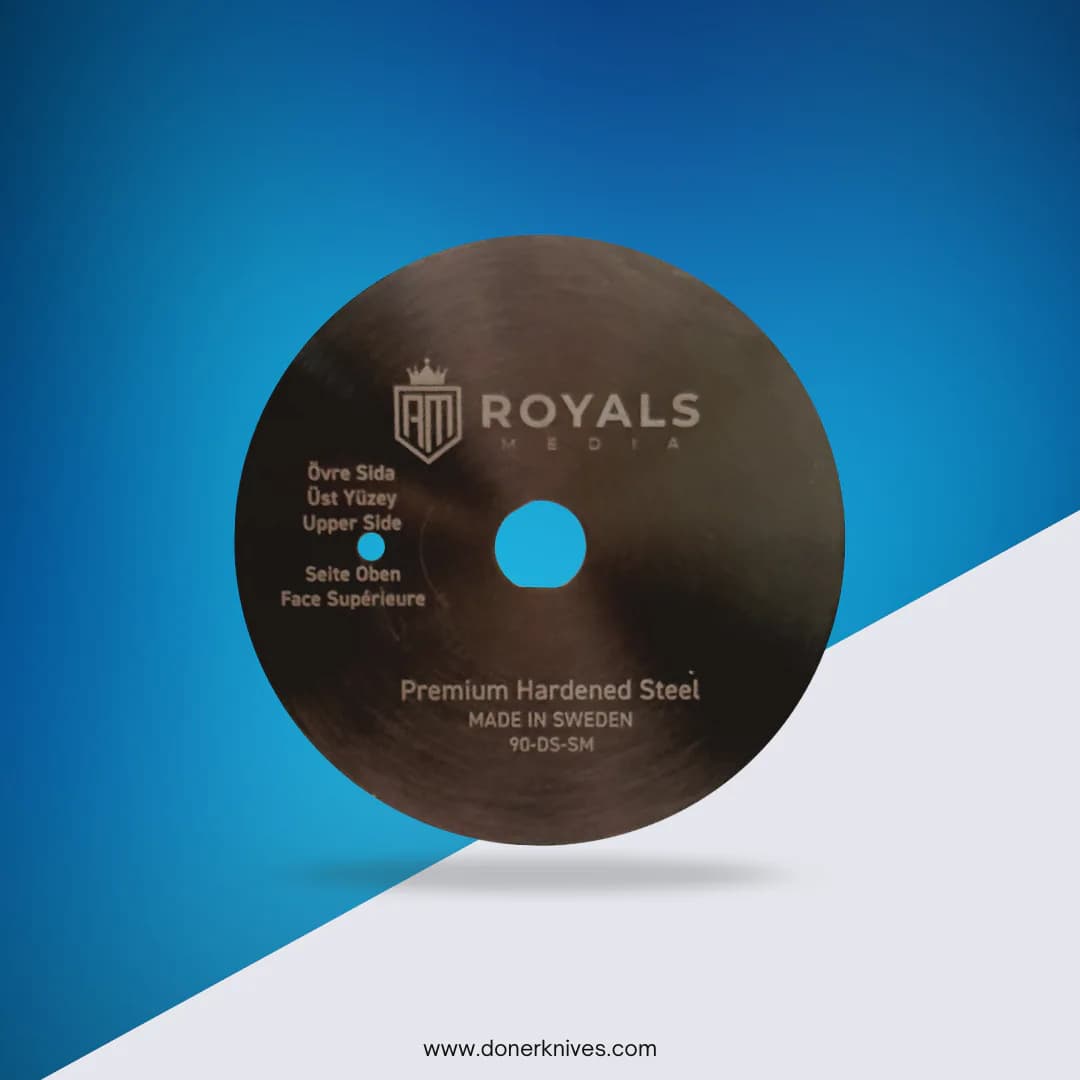
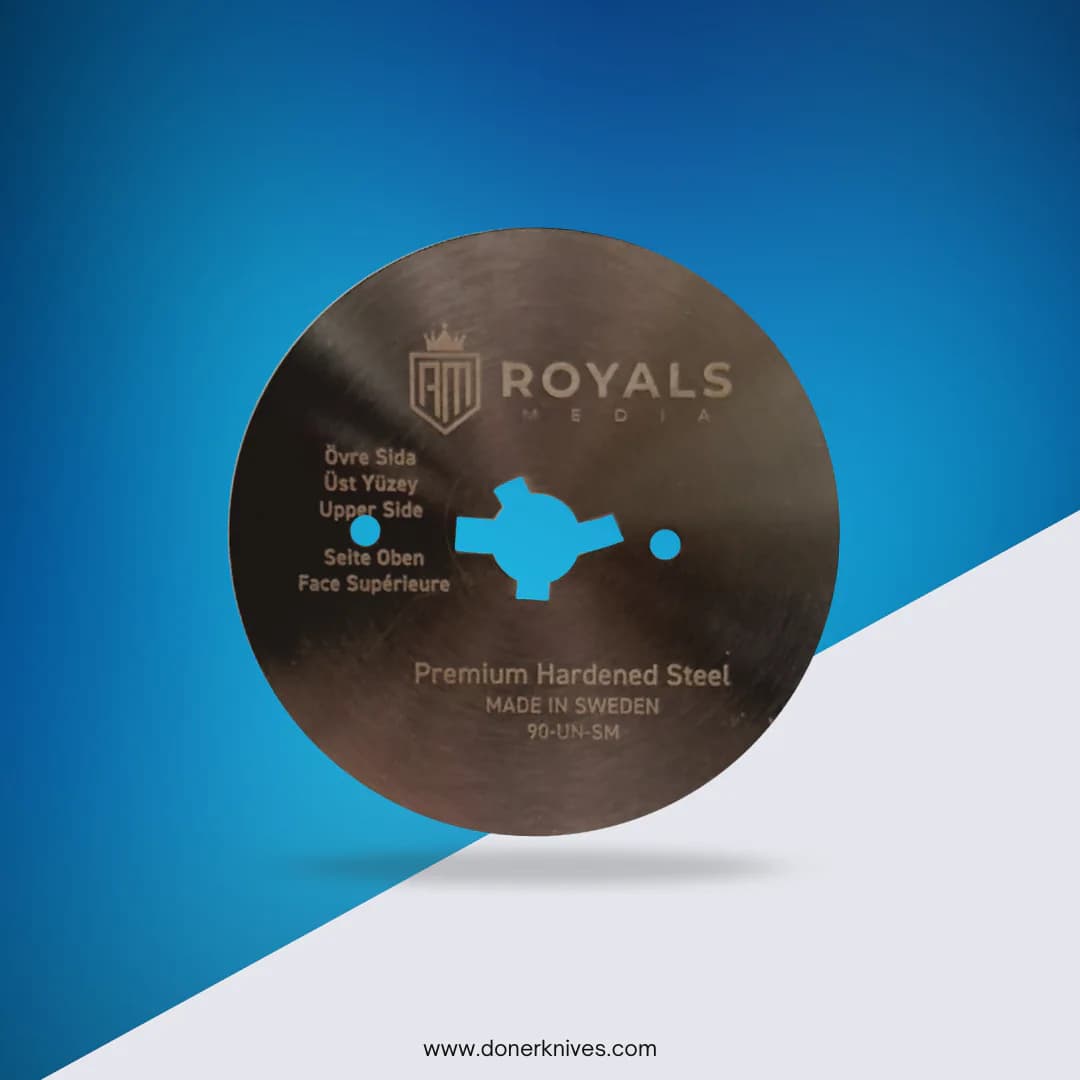
90 mm smooth comes in two versions, and the difference sits in the centre:
| Blade | Mount | Fits |
|---|---|---|
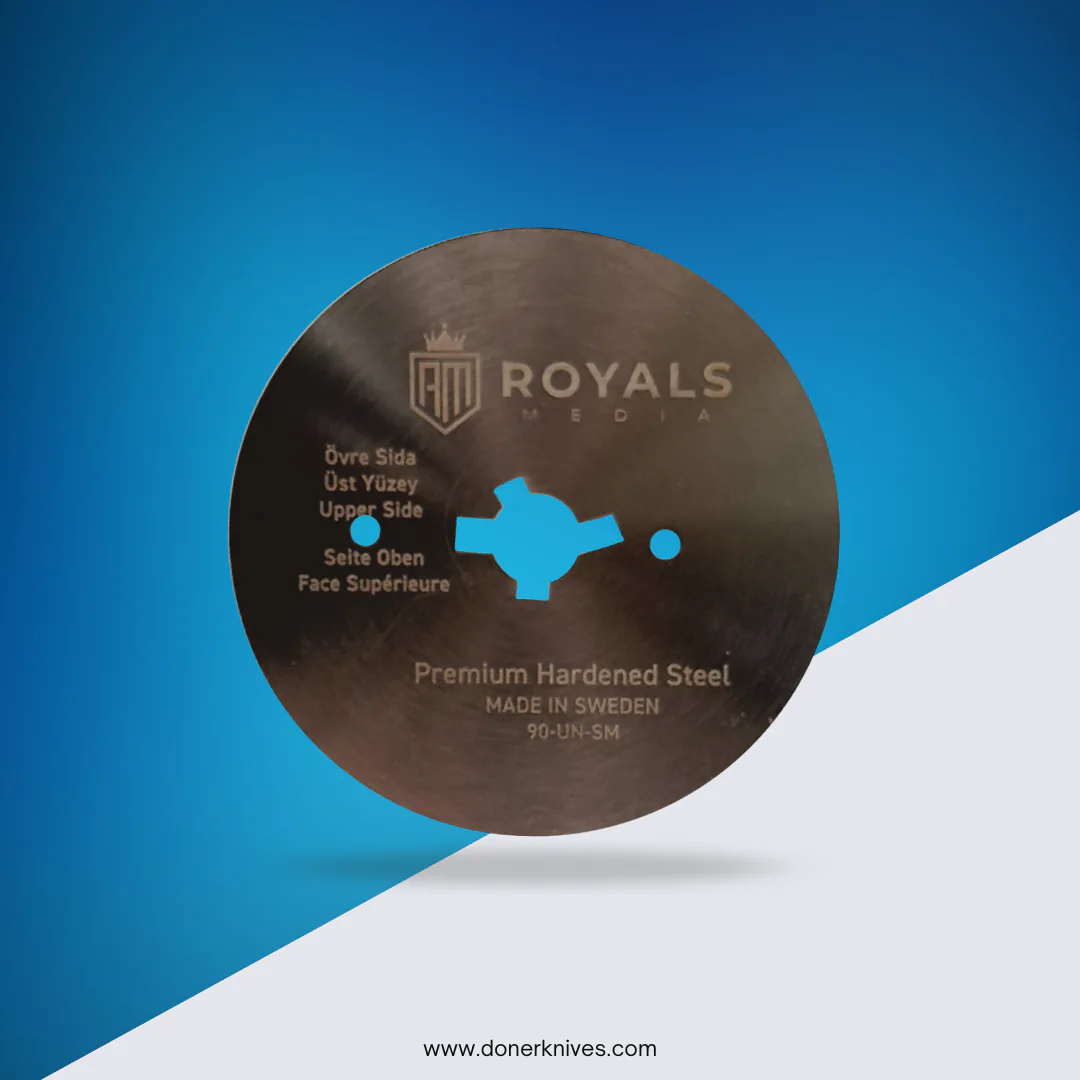
| 90 mm Universal smooth | Keyhole with side pin hole | Most 90 mm machines (universal mount) |
| 90 mm Dost smooth | Round centre hole | Dost machines |
Compare the centre cut-out with your old blade before ordering — right diameter with the wrong mount does not fit. Unsure? The specifications guide decodes every marking.
Price and practicalities
Both 90 mm smooth blades sit around €19 excl. VAT, in hardened premium steel with 2–5 business-day delivery. A common setup for 90 mm machines is owning both edge types: smooth for presentation and calm shifts, serrated when volume and marinated meat take over.
FAQ
Which machines take 90 mm smooth blades?
The Universal version fits most 90 mm machines with a keyhole mount; the Dost version fits the round shaft of Dost machines. The diameter must be 90 mm in both cases.
Does a smooth edge dull faster than a serrated one?
It feels that way because the whole edge carries every cut. With a daily touch-up a smooth edge holds up excellently — and it is easier to resharpen than a serrated one.
Can I switch between smooth and serrated on the same machine?
Yes, as long as mount and diameter match. The swap itself takes about a minute.
What does a 90 mm smooth blade cost?
Around €19 excl. VAT, in both Universal and Dost versions.
Related articles
Get the right blade for your machine
Professional doner knife blades. Fast delivery across Europe.