November 22, 2026
Jet Rotary Blade 140mm Spare Parts Guide
What is a Jet Doner Knife 140mm Spare Part?
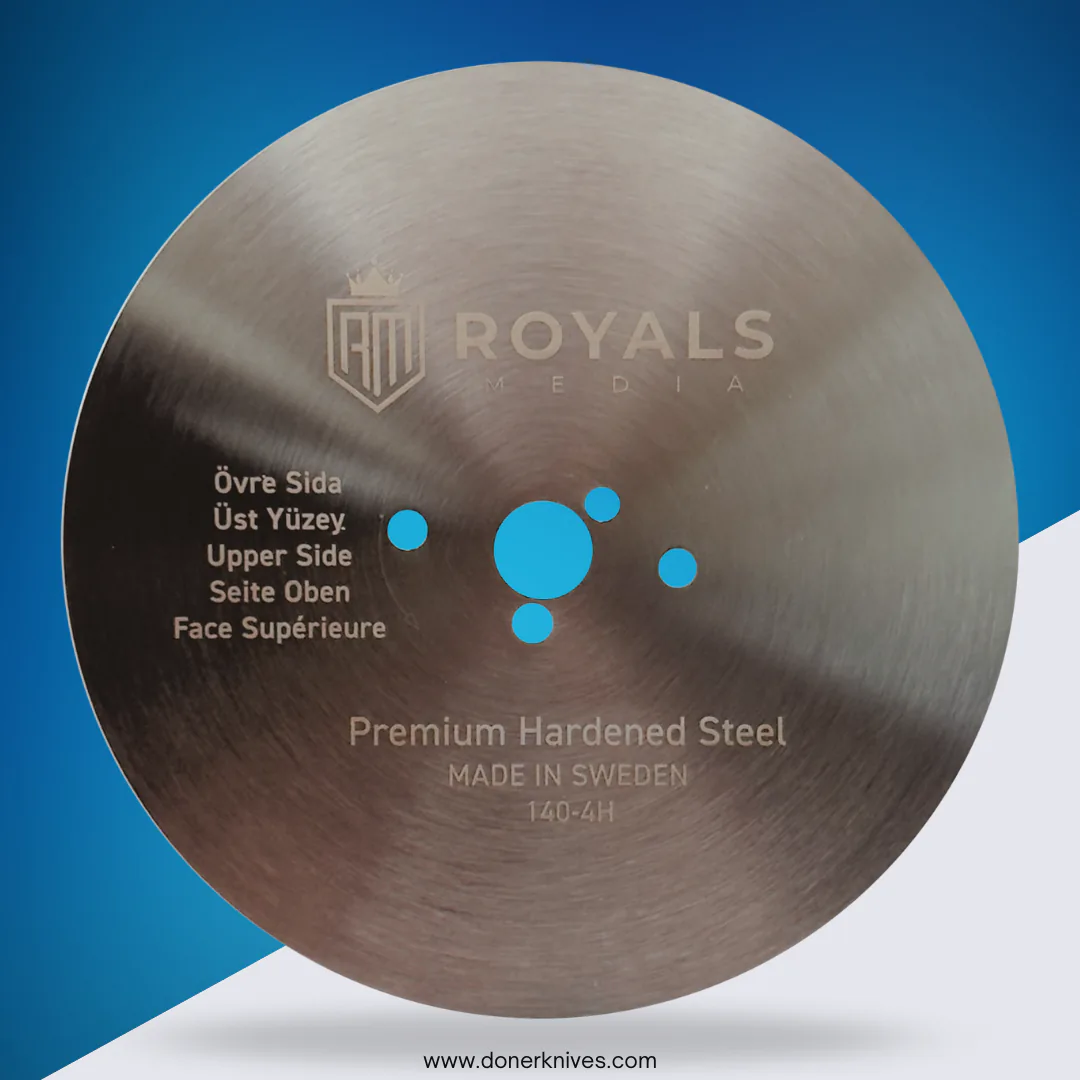
A jet doner knife 140mm spare part is a circular cutting disc made of high-carbon stainless steel, used in electric doner cutting machines to slice meat into thin, even portions. This blade is not a hand-held knife; it has no handle, tip, or spine. Its entire circumference serves as a cutting edge, and it is secured to the machine via a mounting hole in its center.
This spare part is a critical component that directly affects your machine's performance. A dull or damaged blade crushes the meat fibers, ruining the appearance and reducing portion yields. Choosing an original-sized jet doner knife 140mm spare part reduces the load on your machine's motor and ensures long-lasting use.
These blades, with a 140mm diameter, are manufactured with different mounting holes depending on the machine type. Options with 2, 3, or 4 holes fit various brands and models. Additionally, flat or serrated edge options allow you to achieve ideal results based on the temperature and texture of the meat being cut. To choose the right blade, simply check your old blade's diameter, center hole, and hole pattern.
Which Machines Does the 140mm Doner Blade Fit?
The 140mm doner blade is one of the largest diameter discs in the industry, and this size is determined by the distance between your machine's motor power and the blade shaft. Therefore, the 140mm blade fits not a specific machine brand, but according to the mounting hole pattern. When searching for a jet doner knife 140mm spare part, you should first check the number of holes on your existing blade.
Here is a brand-based compatibility table:
- Alkadur, IDM, and Korkmaz models use a 3-hole 140mm Universal blade. These machines typically use three-point fastening.
- Atalay brand doner machines work with a 4-hole 140mm Universal blade. Four-hole mounting is ideal for motor shafts with a wider surface.
- Potis brand supports both 80mm and 140mm Universal blade options. If you own a Potis, you can choose one of the 2, 3, or 4-hole options depending on your machine's shaft structure.
If your machine is not on this list, never guess. The safest way is to remove your old blade and measure its diameter, center hole, and hole pattern. Alternatively, you can take a photo of the mounting attachment and verify it using the 140mm compatibility guide.
Remember: 140mm blades are only manufactured with these hole patterns. Choosing the one that fits your machine's shaft structure is critical for both safe rotation and homogeneous meat cutting. To find the right model, you can review the 140mm Universal 3-hole or 140mm Universal 4-hole options.
140mm Blade Mounting Holes: 2, 3, and 4 Hole Options
Mounting on 140mm blades is designed with 2, 3, or 4 holes depending on your machine's shaft structure. This number of holes is positioned around the central void of the blade and determines the placement of the screws that secure the blade to the rotating shaft. Choosing the correct number of holes is critical for vibration-free operation and even slicing.
2-Hole Option: Typically found on simpler, older machines. This system, secured with two opposing screws, is compatible with the 140mm Universal 2-Hole Blade. The symmetrical placement of the screws facilitates centering the blade.
3-Hole Option: These holes, forming a triangular pattern, provide a more balanced grip. They are standard on machines from brands like Alkadur, IDM, and Korkmaz. Our 140mm Universal 3-Hole Blade model is a perfect fit for these machines.
4-Hole Option: Offering the most robust mounting, this system grips the blade from four points with four screws. This pattern, used on Atalay machines, prevents blade slippage even at high motor speeds. You can achieve this secure mounting with the 140mm Universal 4-Hole Blade.
If you are unsure which hole pattern your machine has, simply remove your current blade and count the holes, or take a photo of your machine's mounting surface and send it to us. This detail is the most important factor in avoiding incompatibility when choosing a jet doner knife 140mm spare part.
Flat and Serrated Edge: Which One Should You Choose?
Flat or serrated? The answer to this question depends entirely on the condition of the meat and your presentation style. Both edge types do the same job; however, the resulting slice texture and cutting performance differ.
Flat (smooth) edge is ideal for fully cooked, rested, and tender meats. The blade slices smoothly and evenly without crushing the meat. Especially when you want thin slices, the flat edge provides the cleanest cut and retains the meat's natural juices. If your doner is always at the right consistency, the flat edge will give you the most professional result.
Serrated edge comes into play with tougher, slightly frozen, or freshly refrigerated meats. The serrations grip the hard outer surface, preventing the blade from slipping and allowing you to cut with less pressure. This way, you can slice the meat without forcing or shredding it. Additionally, the serrated edge is much more successful on seared and crusted meats than the flat edge.
A practical rule: If you usually cut your doner fresh and tender, choose a flat edge; if you frequently cut meat straight from the deep freezer without letting it rest, choose a serrated edge.
Both options are available; to find the model that fits your machine, you can check the 140mm Universal – 2-hole or 140mm Universal – 4-hole pages. Keeping this distinction in mind when searching for a jet doner knife 140mm spare part directly impacts your business's speed.
Blade Maintenance and Lifespan
The lifespan of your doner blade is directly related to proper maintenance habits. The jet doner knife 140mm spare part, made of hardened stainless steel, requires regular attention for hygienic and sharp slicing. The most critical rule is to never put the blade in the dishwasher. Dishwasher detergent chemically corrodes the cutting edge, accelerating dullness. Therefore, wash the blade by hand immediately after each use with warm water and a mild detergent. Be careful of the sharp edge during washing; using a soft cloth instead of a hard sponge protects the surface and increases safety.
After washing, be sure to dry the blade thoroughly. Moisture can cause staining over time, even on stainless steel. After drying, store the blade in a dry environment where it won't come into contact with other metal equipment. Keep the blade on a flat surface or in a protective cover to prevent damage to the sharp edge.
Another factor that extends the blade's life is correct usage. The blade must fit the machine perfectly, and you should check the center hole and screw seats before each mounting. A loose connection causes vibration, which both unbalances the blade and leads to premature wear. A regularly maintained blade will retain its performance like new for a long time, even under heavy use.
140mm Blade Replacement Steps
Replacing the blade is not as complicated as it seems, but it requires care and the correct sequence. First, unplug the machine and ensure the blade has completely stopped. Safety comes first; never touch the cutting edge with bare hands; use a thick cloth or gloves.
1. Remove the Old Blade Loosen the central nut or screws with the appropriate wrench. 140mm models typically have 2, 3, or 4 bolts. Support the blade with one hand before completely removing the screws, then carefully detach it from the machine.
2. Clean the Mounting Surface Wipe away any accumulated meat residue or grease from the shaft and flange surface where the blade sits with a damp cloth. This ensures the new blade fits perfectly and operates without vibration.
3. Position the New Blade Align the holes on the new jet doner knife 140mm spare part with the pins or screw seats on the machine. Ensure the number of holes (2, 3, or 4) is exactly the same as your old blade. Do not force a blade with the wrong hole pattern; this will damage both the blade and the machine.
4. Tighten Screws Crosswise Insert the screws and turn them by hand first to ensure the threads engage. Then, tighten the opposing screws evenly, one by one (following a cross pattern). This prevents the blade from warping. Perform the final tightening with a wrench, but do not over-tighten.
5. Test It Rotate the blade one turn by hand to check for friction or wobble. Then, run the machine briefly to observe if it spins balanced. If everything is fine, your blade is ready for use.
Frequently Asked Questions
How do I know which machine my 140mm blade fits?
The most reliable way to determine compatibility is to measure your old blade. Confirm its diameter is 140mm, then check the number of mounting holes (2, 3, or 4) and the shape of the center hole. If your brand is listed, you can go directly to the correct product: For Alkadur, IDM, and Korkmaz machines, choose the 140mm Universal 3-hole model; for Atalay, the 140mm Universal 4-hole model; and for Potis, the 3-hole version. If your brand is not listed, the best course of action is to take a photo of your old blade showing the mounting surface and contact us.
Should I choose a flat or serrated edge?
This depends entirely on the condition of your meat. If you are using tender meat rested at room temperature, a flat edge (smooth) gives the cleanest and most even slices. If you are cutting meat that is refrigerator-cold or firmer, a serrated edge provides much better grip and cuts without crushing the meat. A serrated blade also stays sharp longer, but you may not achieve as thin slices as with a flat blade. Both options are made of hardened stainless steel; the only difference is the edge geometry.
Can I wash my blade in the dishwasher?
No, absolutely not. Dishwasher detergents chemically attack the blade's sharp edge, causing it to lose its sharpness quickly. All our blades, including the jet doner knife 140mm spare part, should only be washed by hand with warm water and a soft sponge. Dry them immediately after washing and do not leave them wet.
How often should I replace my blade?
While it varies depending on usage intensity, when you feel the meat being crushed or the blade straining during cutting, it's time for a replacement. With regular use, this period is generally between 3-6 months. If you see nicks or wear on either surface of the blade, replace it without delay.
Does a 140mm blade fit a 120mm machine?
No. The diameter is determined by the machine's shaft structure and protective guard. A 140mm blade only fits machines designed for a 140mm diameter. If you don't know your machine's model, measure the diameter of your old blade to ensure you choose the correct product.
Conclusion
Choosing a 140mm blade directly affects your machine's performance. After deciding on the correct mounting hole count and edge type, you can choose from options like the 140mm Universal – 4-hole or 140mm Universal – 2-hole. Remember, the most critical step when choosing a jet doner knife 140mm spare part is to correctly identify the number of holes and center measurement on your old blade. After taking these measurements, with a quality blade made of hardened stainless steel, you'll get cleaner cuts and extend the life of your machine. You can maintain its sharpness for a long time by hand-washing and drying your blade after each use. The right blade both speeds up your work and allows you to present better to your customers.